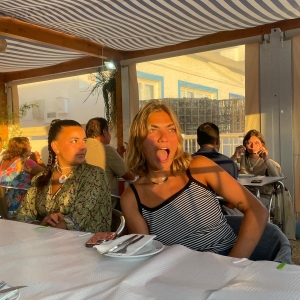
Bloquons Tout Strike Sparks International Solidarity
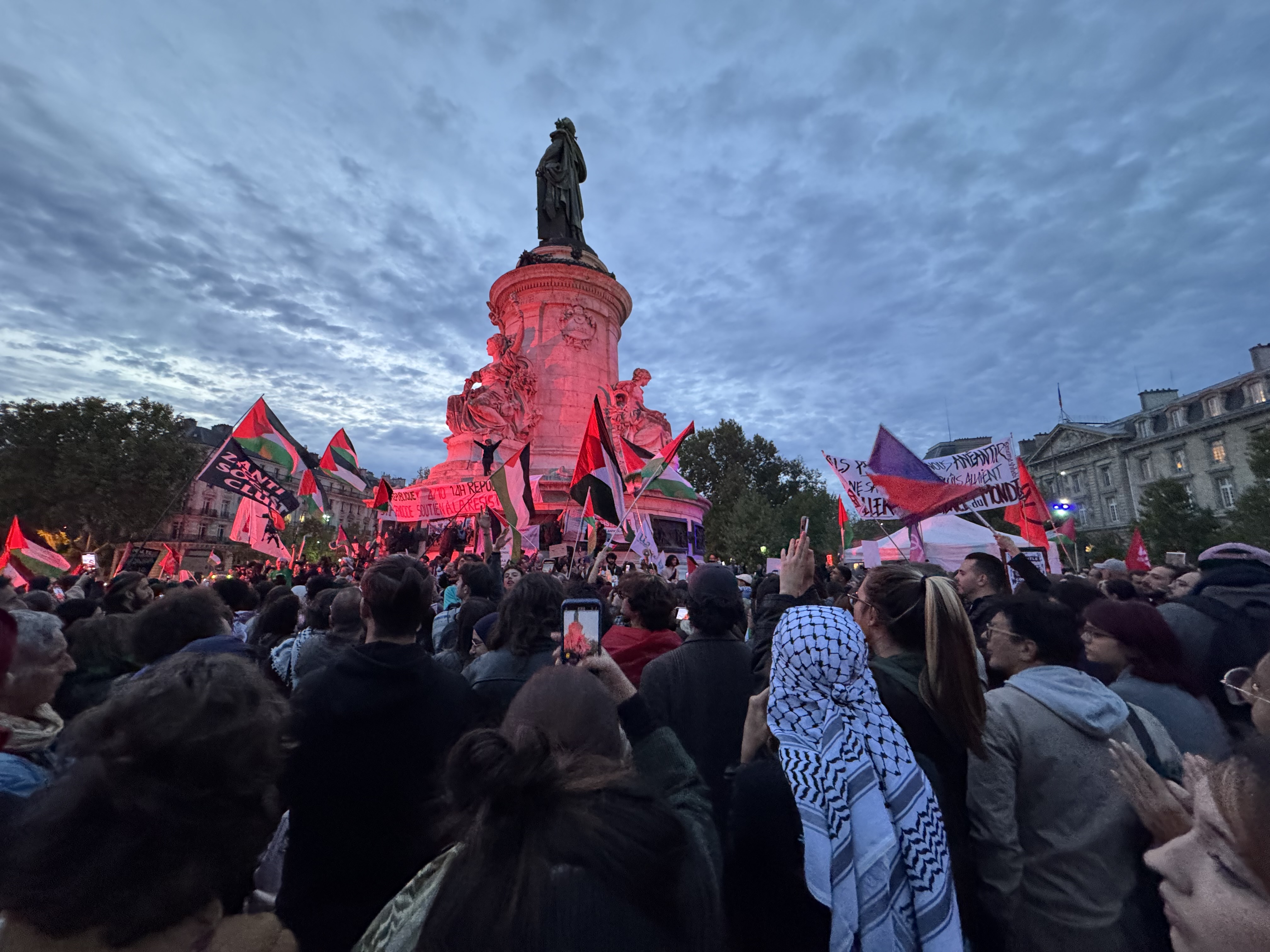
Hundreds of thousands of people gather on the streets of Paris, protesting for their rights and their freedoms. Above the voices, you do not hear French songs, but Italian words, "siamo tutti antifascisti" translated to "we are all anti-fascists". Despite people coming from different cultures and speaking different languages, they remain united, showing that when there is a common goal powerful enough to unite people from various backgrounds, it can bring them together. The French singing in Italian, with Italians, while they protest in Paris. "It shows how our different countries' histories are actually extremely similar, same issues and feelings, just different places," says G.S.
On September 10th, adults, school children, professors and professionals gathered in the streets of Paris, in unity for the Bloquons Tout (Block Everything) protest. The aim is to block everything. According to Le Monde "812 actions, including 550 rallies and 262 blockades, took place. In total, there were 540 arrests and 415 people held in police custody". Around 17,500 (according to the Interior Ministry) people came together, preparing to stand up for their beliefs. The rallies and blockades are the reality of the voice of the people not being heard. It is a result of a collective need for change and action on a much bigger scale. Bloquons Tout was sparked by anger at austerity policies and the rising cost of living. Protesters accuse Macron’s government of eroding public services and ignoring working-class hardship.
To add fuel to the already burning fire, Sébastien Lecornu takes office as the new prime minister for President Emmanuel Macron. Lecornu was being investigated in 2023 for "prise illégale d’intérêts" (illegal taking of interest or conflict of interest).
"Block everything" was the child between two political movements. The left, advocating for austerity measures, high costs of living and against Macron's reforms, fight for workers' rights, anti-capitalism and social justice. The right, focusing on sovereignty, anti-immigration and anti-government grievances, fight against Macron and institutions, but from a nationalist framing.
Parties Involved
Prior to him taking the position of Prime Minister in September, Sébastien Lecornu served as Armed Forces Minister, tasked with actions towards the war between Russia and Ukraine. Joining politics at 19, he served the Les Républicains party before joining Macron's centrist movement En Marche in 2017.
On September 8th, French lawmakers in a vote of no confidence voted out Prime Minister François Bayrou. Appointed in December 2024, he led a minority coalition government, advocating for a "refined" country and department budget. This included proposing reforms to only government spending, such as a €5 billion cut on healthcare and public holidays like Easter Monday and Victory Day to make up the department.
Background on the boys
On the night of September 9th in Milan, four boys were packing their car to drive the nine and a half hours to Paris, all for the sake of joining the Bloquons Tout protest. They were not planning on seeing the Eiffel Tower, nor the Arc de Triomphe, but to join the masses to march on Rue du Sebastopol and in République. Arriving just after 22:00, only for the protesting to begin the morning on the 10th. So why would four Italian boys drive almost ten hours to join a protest against the French government?
Milan, often called the fashion capital of Europe, is also home to the working, ordinary, not-so-fashion-forward person. G.S. grew up seeing a side of the glamorous city that isn't always that pretty to look at. He saw the deterioration of his city, the homeless population growing, the rising costs and he saw how that was impacting his community. With the fashion industry and tourism, "Milan is becoming more and more smoke and mirrors", meaning that the city's appearance is becoming more and more deceptive and superficial.
Intersezionalita Delle Lotte
Intersezionalità Delle Lotte is about building cross-cutting solidarity, recognizing how systems of oppression overlap, and making movements more inclusive and effective. It is not so much a trait of a single person's appearance, but rather how a person embodies multiple interconnected struggles in their life and identity through activism. It goes beyond borders and nationality. Intersectionality is both a strength and a source of tension, bringing people together.
It is “us” against “them”. Us being the people, the common man, woman and child. “I came to the protest to express my anger and frustration towards the government, particularly against the increasingly repressive policies and the economic depravity we are living in and the state's complicity in the ongoing genocide in Gaza." says G.S. The issue that G.S. is facing is not explicitly one thing. His anger about the genocide in Gaza, government policies affecting the common person and social injustices are all geared towards one aim: the right to basic needs and rights as humans.
But you might ask, what does the genocide in Gaza have to do with the protests in Paris?
That is precisely the link I want to draw. Four boys, coming from Italy to join their protest, not for a single reason, but because Intersezionalità Delle Lotte deals with these struggles we face against the government, capitalism and genocide. These are all seen on a horizontal scale, not a vertical. All these movements are seen as equal and not one above the other. They are about being seen and heard as a collective voice. Whether or not it directly affects you does not mean it should not be advocated for.
As the people walked in unison, putting their hands above their heads, clapping along to the rhythm of the chant “siamo tutti antifascisti”, on September 18th, it was a moving sight to see. G.S. said, "This manifestation was part of the national mobilization against austerity, against budget cuts, for fair taxation, and for a real political shift."
Antifascism today cannot be separated from the broader fight for justice, a reminder that struggles against oppression are deeply interconnected, from workers' rights to feminism, racism and climate justice. "When we talk about the intersectionality of struggles, we mean that none of these battles can be won alone," G.S. says, "Chanting on that crowd, I felt this solidarity become real."
As G.S. was walking into the crowd, the message was clear: when struggles between people connect, the hope for a solution multiplies. Bloquons Tout may have been born from frustration and anger, but what it carried through the streets of Paris was a sense of hope.