Why Are There No Student Actors at AUP?
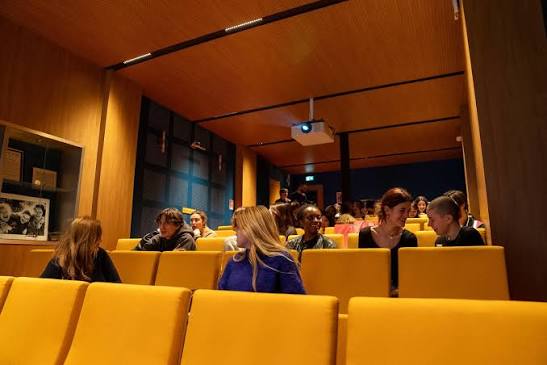
Theater is an important part of a liberal arts education because it encourages creativity, collaboration, critical thinking, improvisation, and an understanding of different perspectives and cultures. For students, theater can be both an academic discipline and a practical space to develop communication and interpersonal skills. Although the American University of Paris claims to offer opportunities for students interested in theater, the lack of a proper theater space, adequate technical equipment, and sufficient academic opportunities creates significant challenges for students who want to practice and study theater.
As the president of the AUP Theater Club for the past two years, and a member for three, I have experienced these hurdles firsthand. The club has come a long way since its founding in the Fall of 2020, when five students and a staff member created VIVRE Performing Arts "over lunch on the hills of Montmartre" writes Hera Soysal. I later rebranded it to the Theater Club to increase student engagement, and we saw massive growth. The Theater Club has put on numerous plays, scenes, musicals, and cabarets in the auditorium in Monttessuy and at the American Church in Paris, as well Combes. Our Spring 2025 production of Lauren Yee’s Hookman directed by me in Combes, and our Spring 2026 production of David Auburn’s Proof directed by Annika Decken brought in record-breaking crowds of over 350 audience members in a single weekend. Yet as our ambitions expand, we find ourselves held back by two persistent, interrelated issues: a lack of proper performance spaces and a resulting shortage of student actors.
This begs a fundamental question: are the spaces available to us at AUP truly meant to be used as stages? Currently, the club is forced to juggle three makeshift venues, each presenting distinct challenges. First, the Olivia de Havilland auditorium in Monttessuy (M-013), labeled as a "theater" by the school's official website. In reality, it is a tight auditorium that barely fits a two-meter stage. Because the seating is sharply inclined, audience members in the back can barely see the lower half of the actors' bodies. Furthermore, it lacks a backstage area or curtains for scene changes, and the built-in lighting and sound are designed for lectures, not performances. Our second option, the Combes classrooms (C-103 and C-104), hold natural priority for academic classes. They are booked throughout the week, leaving us with just a single weekend per semester to set up our platform stage and run a show. Finally, while the American Church in Paris offers an elevated stage, it is poorly maintained, with aging curtains and zero integrated tech. The venue requires booking a year in advance, conflicts with the Dance Club, and remains closed on Sundays, severely limiting a standard Friday-to-Sunday show weekend.
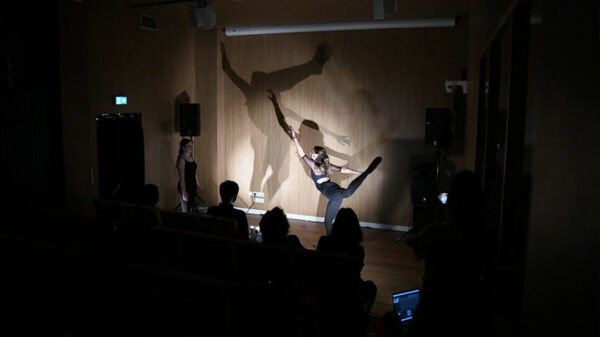
These spatial deficits directly impact our technical execution and student engagement. Forced to use cheap LED lights controlled manually via a glitchy phone app called GVM LED, our lights regularly cycle on and off mid-scene. Our sound systems are relegated to standard classroom wall speakers or portable JBL speakers. When faced with a club that lacks a designated stage, a lighting board, a soundboard, or a spotlight, it is completely understandable why student interest is extremely low. Who wants to audition or work backstage when the infrastructure lacks basic structural support?
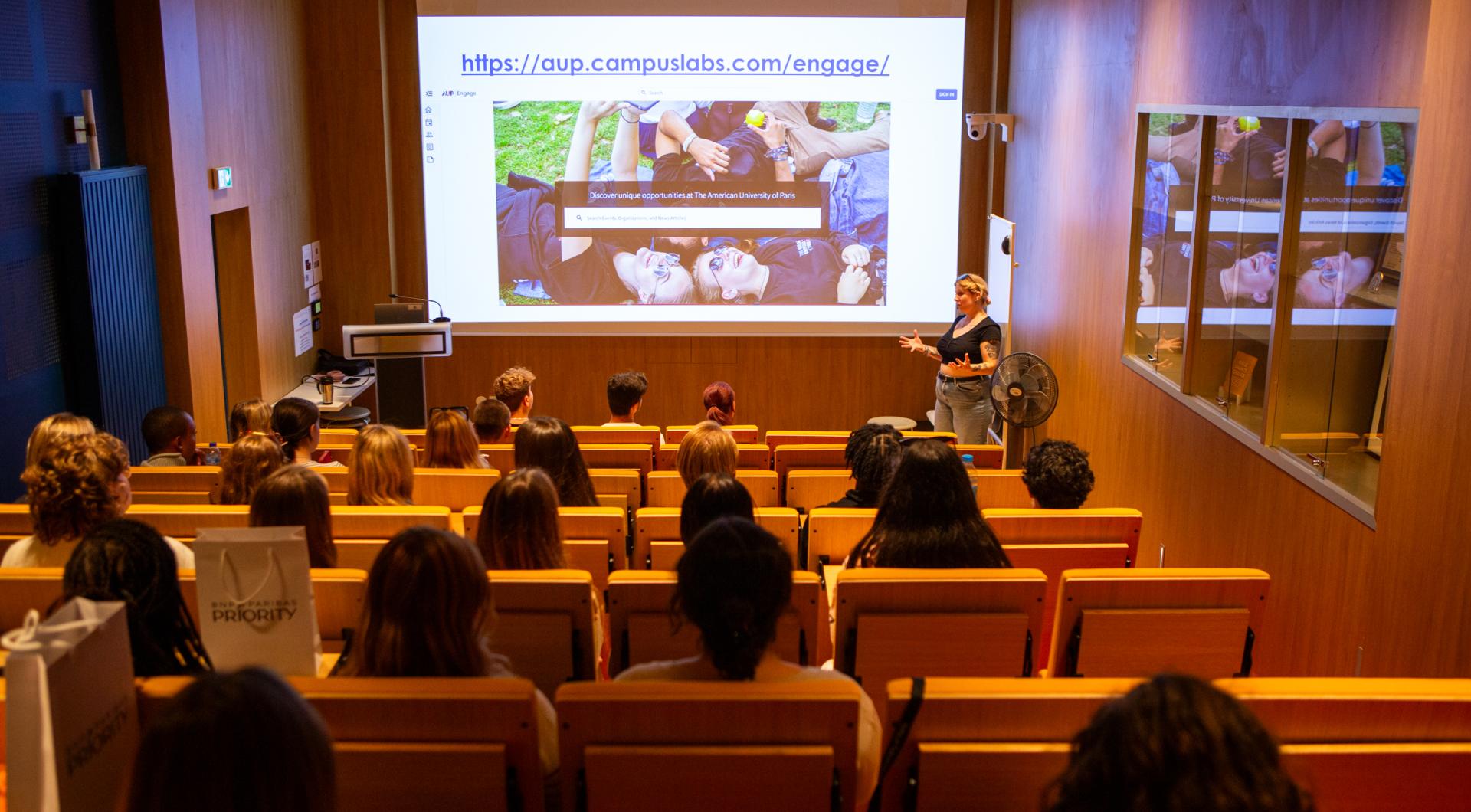
This institutional neglect extends to AUP's academic offerings. The university proudly offers a theater minor, but provides only three courses. To actually complete the minor, students are forced to take the exact same class twice with the same professor. I spoke with Professor Sei Shiomi, the professor for Theater courses and he lamented the fact his Theater Arts course was cancelled due to a "low amount of students who signed up for the course". This lack of academic depth raises broader questions about whether this is a universal problem for small liberal arts colleges, or a unique issue at AUP? My most important question is: How can one actually practice theater at AUP?
Navigating this environment often means that student producers/directors have to request funds a full year to 6 months in advance in order to secure outside space for rehearsals and performances. The experience of the Theater Club also prompts questions about what institutional support for student theater could look like at AUP. The university's support of the Dance Club provides one possible example: assigning a staff member to help the club negotiate discounted deals with professionals, designated spaces for rehearsals and performances. A similar approach could hopefully make it easier for Theater Club students to access appropriate stages while reducing some of the financial and logistical challenges that come with producing theater at AUP.
Theater is far more than simply putting on a show; it requires physical space, technical equipment, academic support, and a community that feels encouraged to participate. Without these vital resources, students interested in the dramatic arts are left wondering if there is truly a place for them at AUP. A functional theater club is important because it benefits all of us, it allows students an opportunity to perform, creates a space for creativity, collaboration, confidence and self-expression. By providing students with the resources and support to participate in theater, AUP could help foster a stronger sense of community while giving students a meaningful outlet to explore and develop their skills.