You Are What You Wear
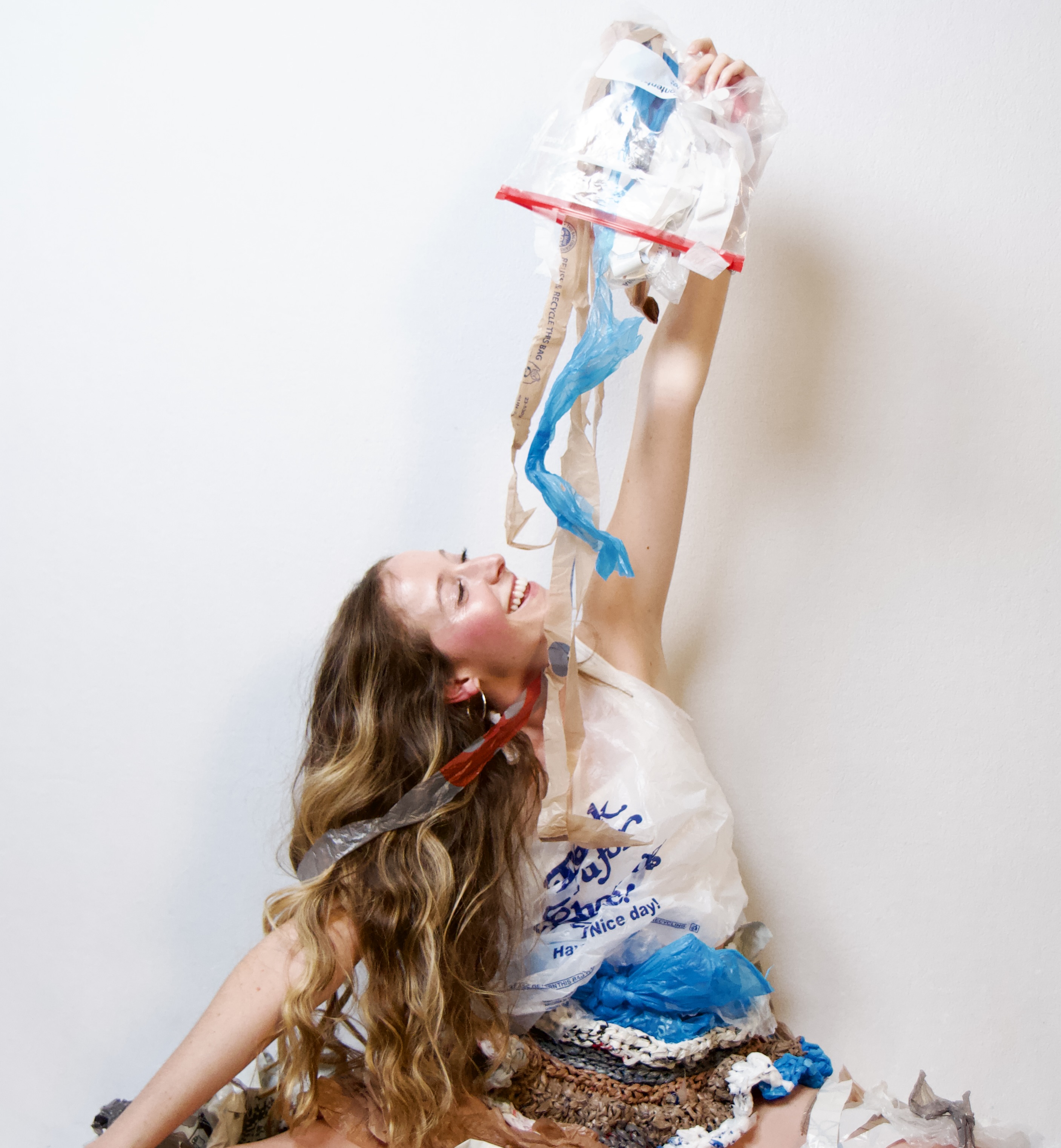
The clothes we put closest to our bodies, bring us skin to skin with a material that is terrorizing our food chain and ecosystems: plastic. The plastic pollution in our clothing is one of the most invisible perpetrators of fast fashion's consequences. When we see a beautiful skirt, the last thing we think about is how it is going to end up in the landfill, slowly trickling microplastics into our food chain. As a graduate student studying fashion communications, it feels like no one is speaking about this issue. The more I learn, the more helpless I feel. I want to make a difference in the fashion industry, with no idea where to start. While doing research on plastic pollution in our clothing, I came upon the work of Steven Meisel, and was incredibly inspired by how he uses fashion photography to make powerful criticisms of the industry. Going through gave me a drive to stop waiting for someone else to make a statement, and to use the resources I had here and now to speak on this issue.
Plastic in our clothes
Every time we wash our clothes, microplastics are released from the synthetic fibers, such as polyester, nylon, elastane, and polyamide. According to the Textile Exchange Report, about 50% of our clothing is made from plastic. As well,The Ellen MacArthur Foundation reports 22,000 million tonnes of microfibers will be released into the ocean between 2015 and 2050. These statistics are huge, and feel insurmountable to even address. However, I think in informing people through fashion imagery, there is a chance to influence consumer knowledge.
Does fashion photography work?
Fashion photography as a form of journalism tends to be seen as unserious and unwarranted. Contrary to these criticisms, I believe that fashion photography is one of the strongest visual tools we can use to influence consumption habits. In Megan Le Mansurier's commentary of fashion photography, Like Water & Oil? Fashion Photography as Journalistic Commentary, I was introduced the the work of Meisel, a photographer who worked for Vogue Italia under editor Franca Sozzani. Together they used fashion as a platform to speak on social and political events. For instance, in August of 2010, Meisel called out the oil industry in response to the Deepwater Horizon Oil Disaster in the Gulf of Mexico in his photoshoot, Water & Oil . In which he depicted models in beautiful couture outfits, covered in oil, washed up on the beach, and resembling dying sea birds that were affected by the ecological disaster. Whether it was criticism, outrage, or praise that Meisel and Sozanni received from the public, it undeniably had people talking about the role of fashion in journalism, and left a stark image in their heads about the oil disaster. It had a duel message, one that highlighted how the boundaries of journalism are not as strict as previously thought, and that fashion photography has the power to use the brand names, fashion media outlets, and criticism to widen its reach.
The making of the plastic skirt
Taking inspiration from Meisel's work, I started to brainstorm how I could bring the issue of plastic pollution, fashion photography, and journalistic criticism together. I decided to start with my own abilities. I have always been an up-cycler, I love using found materials and giving them a new life, while still honoring what they were before. I believed seeing a new use for trash is a power that I can use to make a statement, so I started scouting my materials.
Myself, like most people, had accumulated a plastic bag full of other plastic bags in my kitchen, and had just picked up the hobby of crochet. These two factors seemingly having nothing to do with each other, ended up being the driving force of my project. Sitting for hours at a time, for a two month period, I made plastic yarn and crocheted it into something new. Cutting strips of 'plarn' looping them together, crocheting, and repeat. I eventually began to outsource other people's plastic bag collections, helping them recycle their bags into something new.
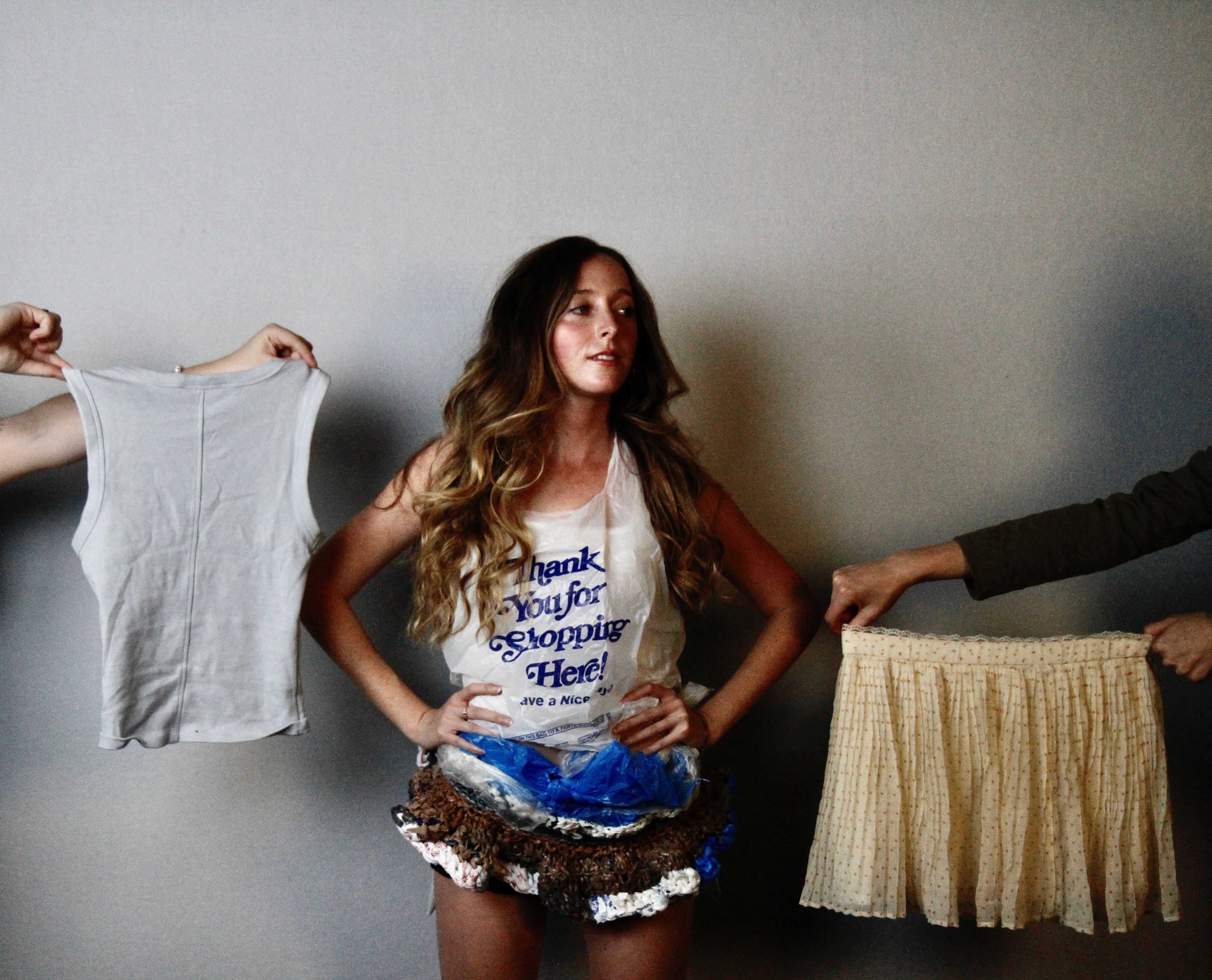
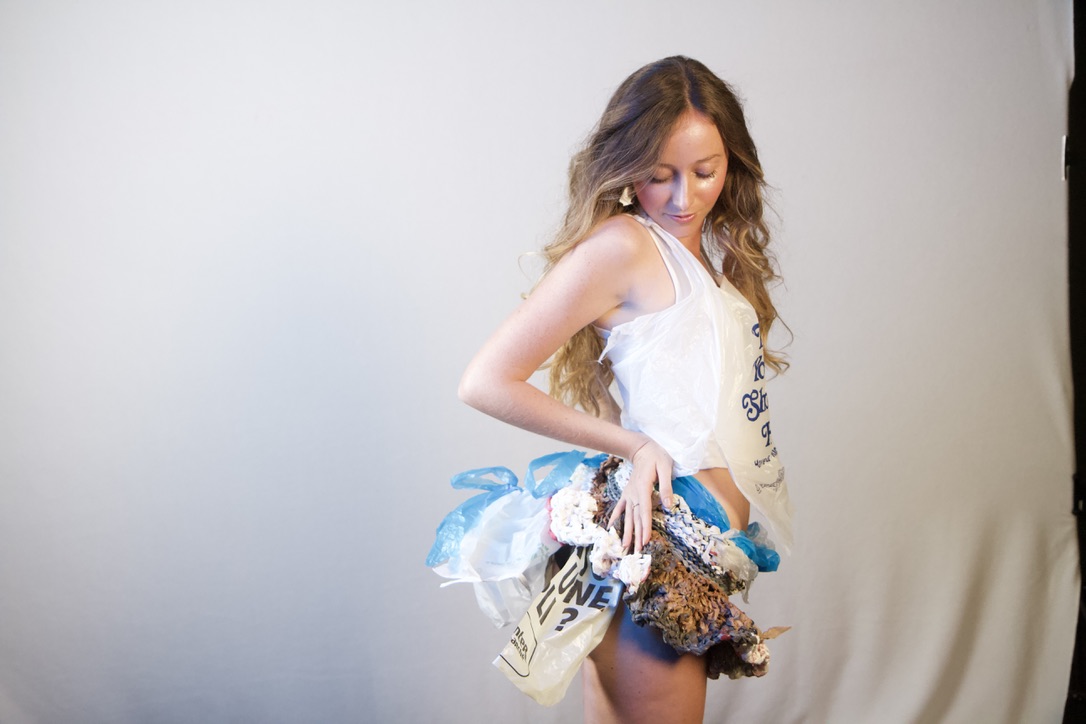
After hours taken off my life from putting together my plastic Frankenstein miniskirt, it was time to photograph it. I drew a lot of inspiration from the women in old cigarette ads. These old ads depict women happy, carefree, and living their best life thanks to Camel cigarettes. Inherently, fashion has a very similar message: "buy this article of clothing and become a better version of you". What fashion and old cigarette ads have in common is that how they affect our health is completely ignored in advertising. My goal with these photos was to reveal that, to strip back the fabric and show people what their 100% polyester outfit looks like.
In conclusion..
In this world where everything is rushed, my design and photographic project aims to make people stop and question what we are putting on our body. I hope in the hours spent making this project come to life I can make one person see their closet in a different light.