AUP Students Should Protest More
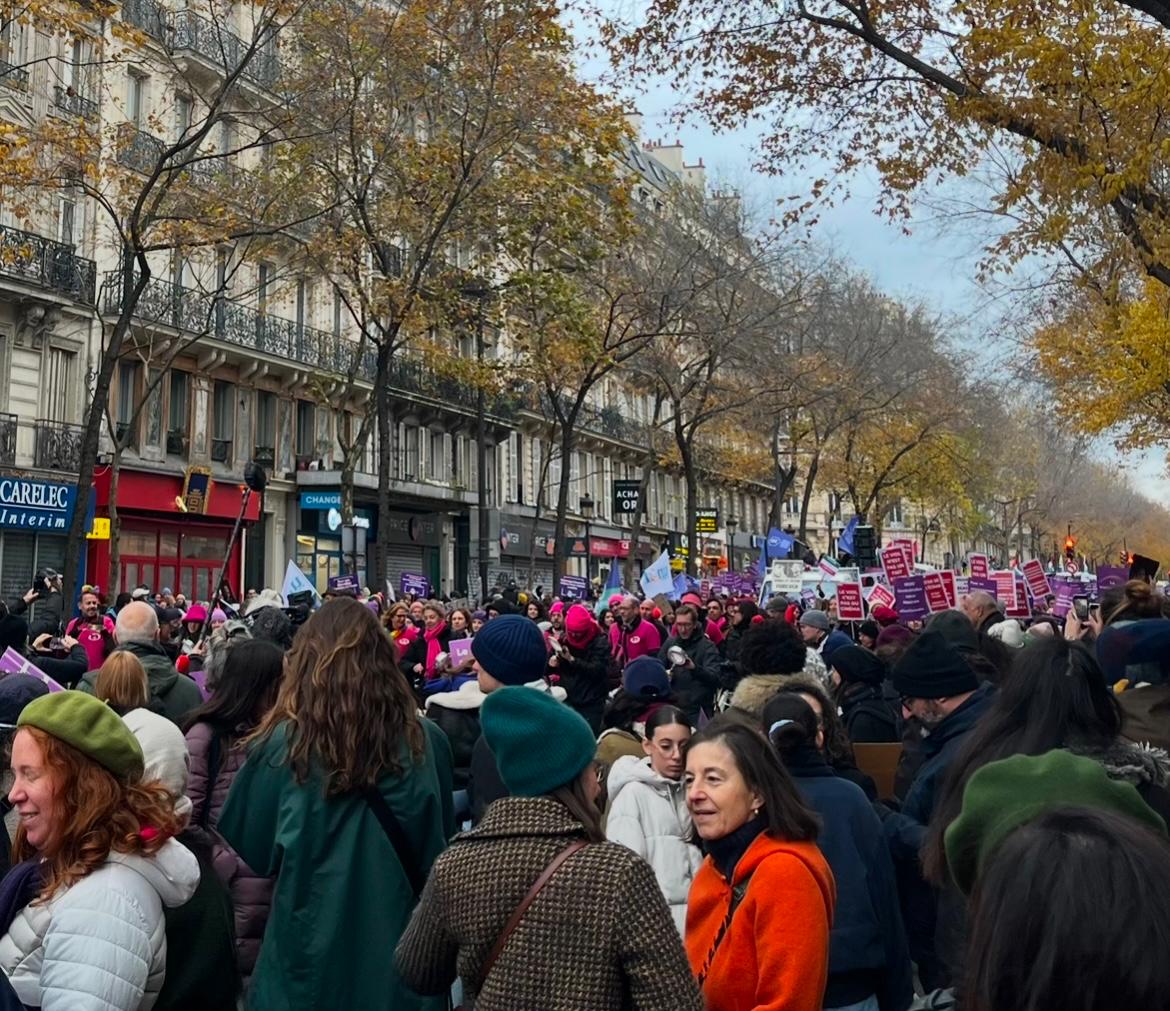
AUP is full of political opinion, but no-one's doing anything about it. Many of us contribute passionately to class debates, and politics students make up a large percent of the student body. That being said, there is a disturbing lack of concrete participation in politics among AUP students.
A Campus Full of Opinions, but Little Action
Time and time again, I encounter students who care deeply about issues that are currently being protested for in the streets of Paris—recently, the ongoing genocide of Palestinians and environmental issues most prominently, but also issues of the government's collapse and women's rights in the Gisele Pelicot case last semester—who feel it isn't their place to participate in protest. I have noticed this to be mostly due to a lack of citizenship, a lack of understanding of the language, a lack of understanding of French politics or a lack of knowledge as to where to get protest information before they occur.
Daniel Yslas, another concerned AUP student, introduces another set of reasons: a lack of community spaces for inter-student organizing; and, as he puts it, “the higher income bracket—the majority of students who come to AUP—don't have a direct need or want to participate in those programs”. It is, in many ways, a continuation of the dreaded “AUP bubble”: many don't have friends outside of AUP and end up disconnected from the city. But living in Paris, subject to the governments put in place and represented by the actions of those in office, should be reason enough to express our political beliefs in the public forum of protest.
A Culture Shock Around Protest
For Americans, there is also a distinct difference in the culture of protest itself to contend with. We are, as a country, bad at protesting. We show up on the streets occasionally on well-publicized days and only for the most grievous of harms. As American AUP students migrate to a new country and culture, this inherited method of expression and activism should be modified to reflect our current location. Political participation is a key part of feeling at home—like your voice matters—and finding people who are fighting for the things you care about.
AUP is saturated with lovely people, educated in their topics and knowledgeable about theory, but whose action with regard to their beliefs ends as soon as they leave the classroom. This is tragic, particularly because of Paris's famous history of political action. From the French Revolution to Mai ‘68, the 2005–6 movements to the Gilets Jaunes a couple of years ago, and even through Bloquons Touts this fall, mobilized student action is not only a legitimate force for change in France, but also a kind of cultural rite of passage. To live in a city so shaped by student action and voices to then silence yourself, particularly as a student of politics, constitutes a massively squandered opportunity.
Where to Begin: Finding Your Way Into Local Activism
It’s understandable; maybe you feel passionately about a subject, but none of your friends do. Or maybe you don't speak the language, and the idea of stepping out of your comfortable routine to go walk in a line with a bunch of strangers seems pretty terrible. For those of us in that situation, I'd recommend finding an American, or otherwise English-speaking, organization.
Nowadays, the easiest way to organize, in English or not, is through Instagram and Facebook. Where you'll go to find out how to get out there will depend on your values, of course, but the most surefire thing to do is find an organization you agree with and follow the events they create or repost.
Most major demonstrations are announced openly on Instagram through organizations like student unions, feminist collectives, environmental groups and Palestine solidarity networks, all of which regularly post their event information. Searching keywords such as “manif Paris”, “collectif”, "rassamblement" or “solidarité” will surface dozens of groups and following a few will quickly fill your feed with upcoming actions. You can also check local news outlets and citywide event accounts that repost protest schedules. Once you know where to look, Paris’ political life becomes visible everywhere.