
Sabor a México Brings Pre-Hispanic Flavors to Paris
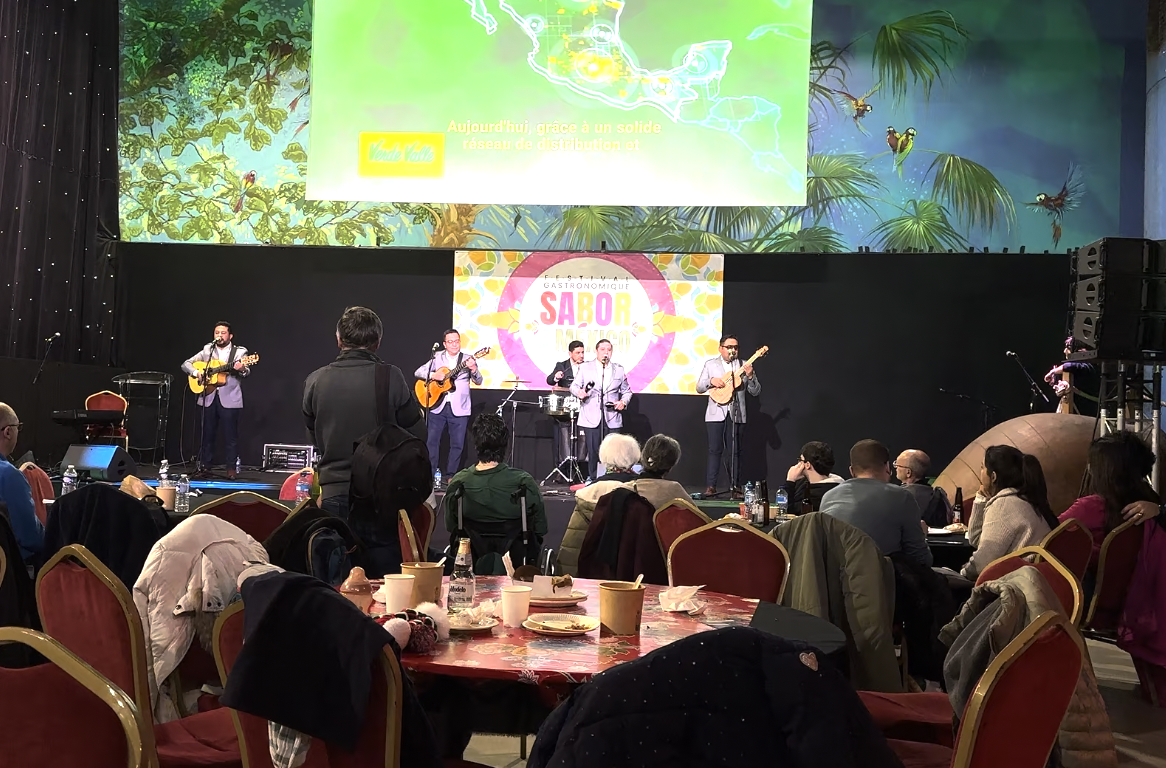
On November 22 and 23, the normally quiet edge of the 15th arrondissement turned into a small slice of Mexico. The Sabor a México Gastronomic Festival—organized by Paris/Mexico Association with support from the Mexican Embassy in France and the Chambre Économique du Mexique en France—brought chefs, musicians, artisans and vendors together for a two-day celebration of Mexican culinary heritage.
Held at La Palmeraie, on the edge of the 15th arrondissement, the festival ran from 11 a.m. to 10 p.m. with an admission fee of 10 euros, drawing a large turnout of both Mexicans living abroad and curious French attendees.
Inside the vast, slightly tropical venue, complete with an artificial lake cutting through the center from the neighboring Aquaboulevard waterpark, visitors moved between food stalls, tastings, performances and back-to-back masterclasses.
More than 10 chefs led hour-long cooking workshops each day in one room while, just steps away, mariachis, bolero singers and folklórico dancers performed for crowds lining up for tacos, soups, quesadillas, pastries and regional specialties.
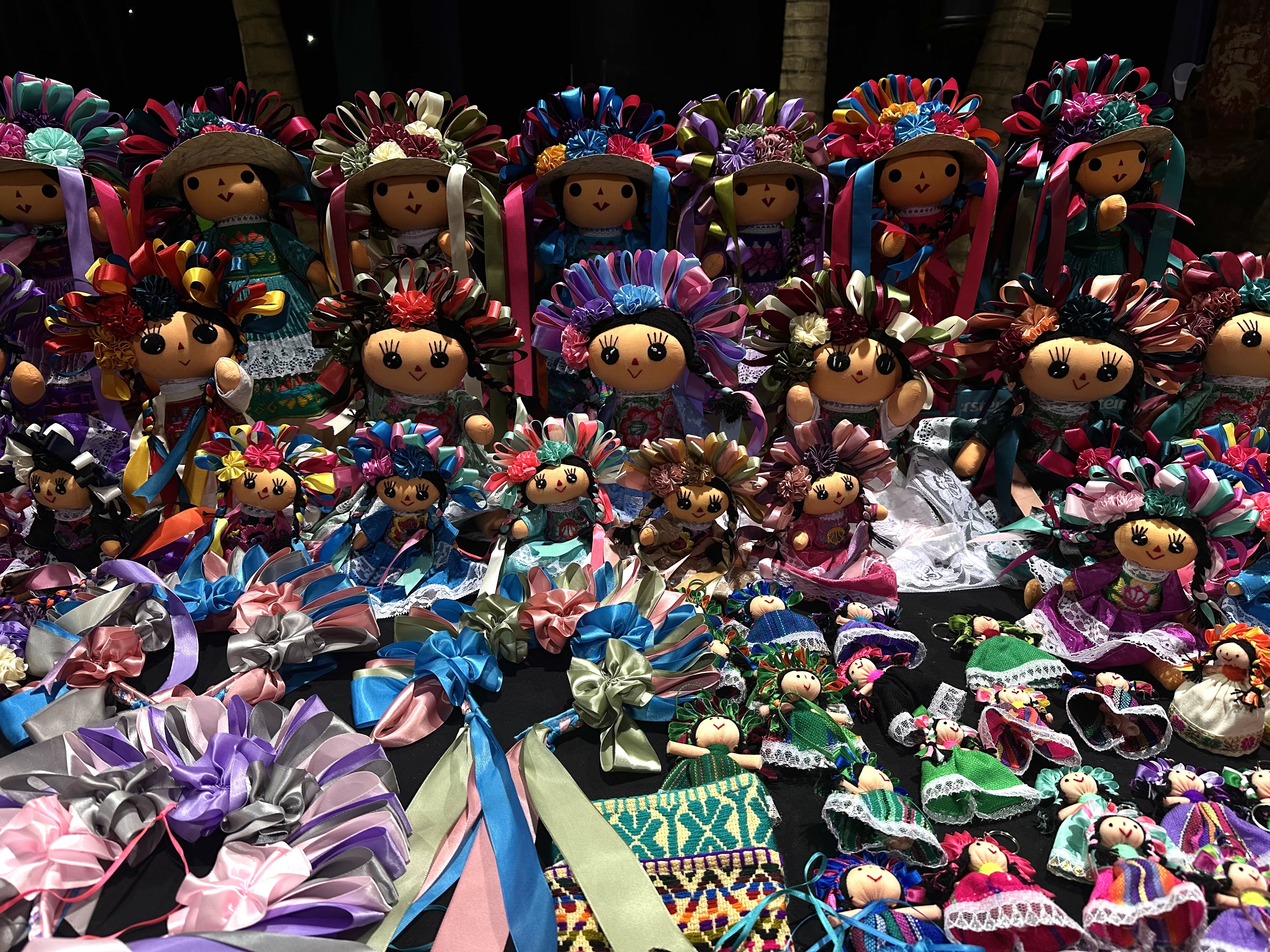
Vendors from Paris-based Mexican shops offered embroidered clothing, candies, toys, tortillas, beans, hot sauces and artisanal products, creating a marketplace atmosphere that mixed nostalgia with discovery. The audience was evenly split between Mexican and French attendees—an indicator of how deeply Mexican cuisine resonates within Paris’s international community.
One of the weekend’s most anticipated presenters was Chef Jorge Orozco, Mexico’s Ambassador of Pre-Hispanic Cuisine, who gave a masterclass on the origins and symbolism of Mexico’s ancestral foods. His session blended historical explanation with showmanship. Audience members sampled edible ants and worms paired with tequila, and three volunteers climbed onstage to try a whole scorpion while mariachis played behind them.
Orozco opened by grounding Mexican cuisine in its ancient roots. “Mexican gastronomy begins with the Maya and the Aztecs,” he said, noting that many everyday ingredients—including the tomato—originated in pre-Hispanic Mexico. With humor, he added, “The Italians wouldn’t have pizza if we hadn’t given them the tomato.”
He emphasized that ingredients now considered globally essential first began in Mexico. Corn, he told the crowd, was the foundation of pre-Hispanic life, and the tortilla was originally shaped as a tribute to the Sun God.
Orozco reminded the audience that Mexico’s influence on global cuisine extends far beyond tacos and guacamole. He emphasized that many ingredients the world now considers universal—like tomatoes, cacao, corn and avocados—are rooted in pre-Hispanic agricultural traditions.
“Mexico has contributed an enormous amount to world gastronomy,” he said, noting that this deep historical legacy is precisely why UNESCO recognized Mexican cuisine as an Intangible Cultural Heritage of Humanity.
This global recognition, he explained, is not symbolic but structural. It affirms the sophistication of Indigenous food systems and the way Mexican cooking continues to shape culinary cultures across continents. For a Paris audience, the message was clear that Mexican cuisine is not just popular but has shaped global culinary traditions through its iconic ingredients.
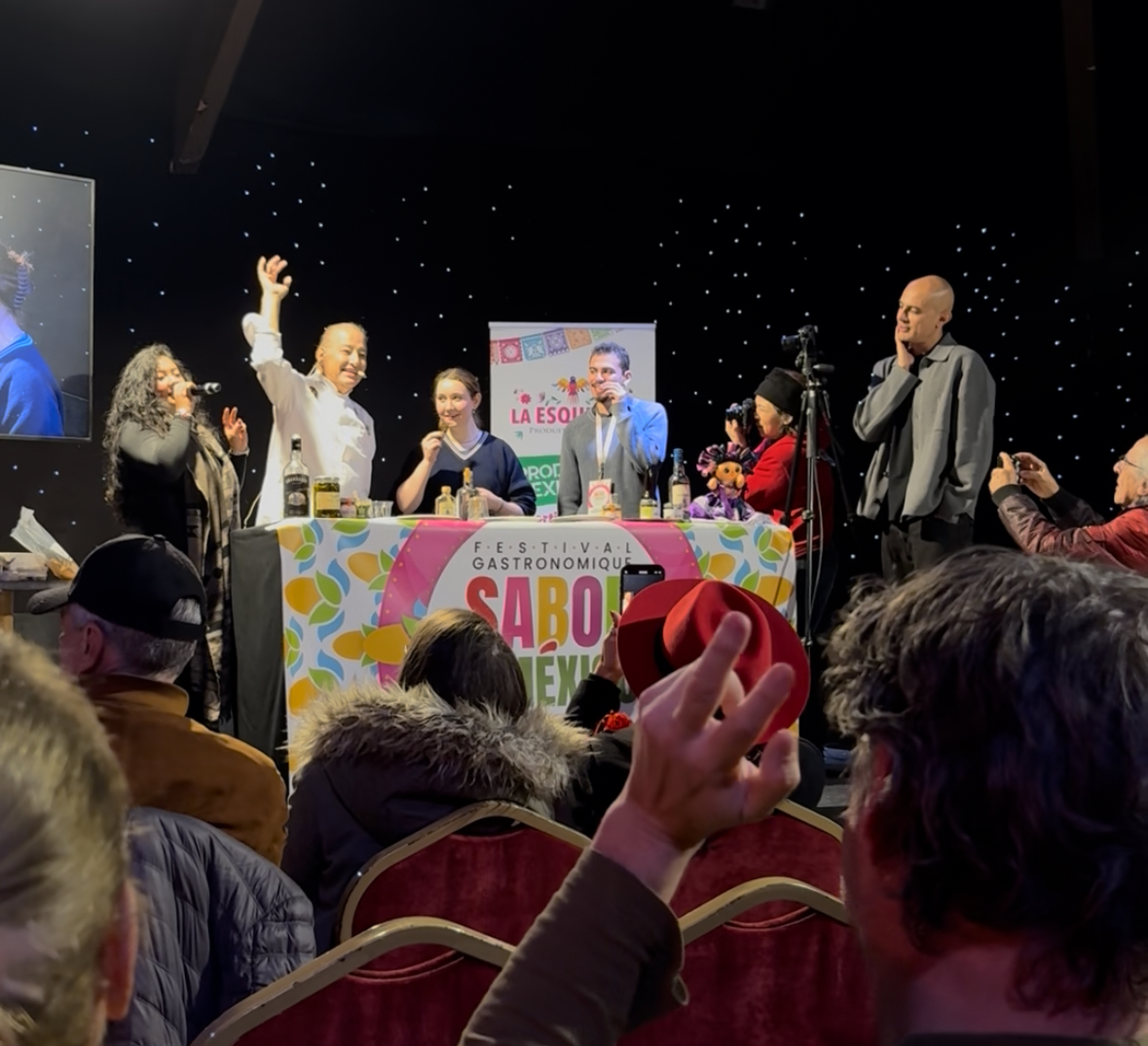
Orozco demonstrated traditional tools like the molcajete and metate, underscoring the techniques that existed long before blenders or mills. The vendor assisting him chimed in that while large-scale production now relies on technology, she still aims to preserve the texture and methods of classic salsas.
The class ended with a lesson on tequila and mezcal, including a warning for European consumers to look for certified 100% agave products.
“Always choose the 100% agave tequila… look for the CRT code,” he said, before explaining the relationship between tequila and mezcal: “Tequila is actually a type of mezcal. Tequila is like the ‘first name,’ and mezcal the ‘surname.’”
By the end of the session, the room felt energized—not just from the tequila but from the sense of cultural pride running through Orozco’s talk. For Mexicans living abroad, it offered a moment of connection; for French and international visitors, it provided a deeper look at a cuisine often reduced to clichés.
Sabor a México succeeded not only as a festival but as a reminder of how food carries history, memory and community across borders. In Paris, a city defined by its global residents, this celebration of pre-Hispanic heritage felt right at home.


