
What are French Tacos?
For Americans across generations, the French have been revered for their mastery of fine cuisine. When we think of French food, we might think of steak frites, escargot or confit de canard—rich, luxurious dishes traditionally associated with the refined tastes of Paris. Now, however, a new dish has hit the market: French tacos. The combination of "French" and "tacos" in the same phrase may sound incongruous, but these hybrids have become a late-night staple in the French capital. But what exactly are they?
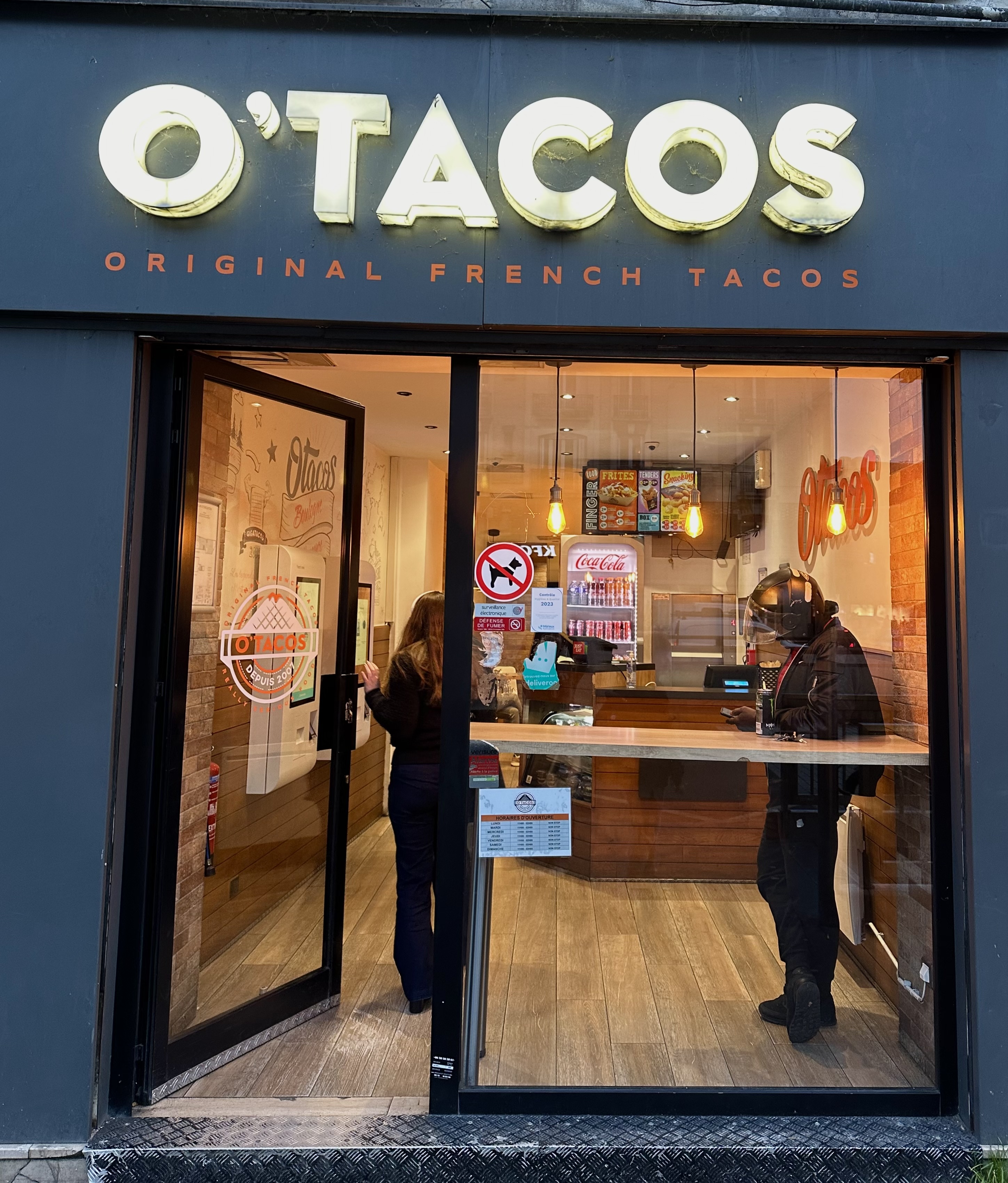
According to a New Yorker article, the origins of the French taco are disputed. The general consensus, though, is that they were invented sometime in the late '90s to early 2000s in the suburbs of Lyon by snack vendors. In the article, Loïc Bienassis of the European Institute for the History and Cultures of Food is quoted saying that French tacos are a "mutant product," a mélange of the different culinary cultures around France, creating "France's own junk food." The snack rose to prominence, though, in the late aughts, when the chain O'Tacos was founded in 2007 by Samba Traore, Patrick Pelonero, Sauroutou Diarra and Silman Traore, according to a profile from Tracxn. O'Tacos is now the market leader for French tacos, with over 300 restaurants in Europe.
The word "taco" is used loosely here. French tacos don't involve corn tortillas, pico de gallo, salsa or really any of the ingredients we typically associate with traditional Mexican tacos. As the New Yorker put it, "French tacos are tacos like chicken fingers are fingers. Which is to say, they are not tacos at all."
A French taco usually consists of a flour wrap stuffed with heaps of meat and fries, smothered in cheese sauce, then wrapped and toasted into a compact, grilled packet. The most popular place to find them in Paris is the aptly named chain O’Tacos. With 70 locations in the greater Paris area, both native Parisians and AUP students are likely to find themselves outside one of its branches late at night, basking in the orangey glow from the windows while chowing down on a wrap.
An Assault on the Senses (and the Stomach)
With all their popularity, you might assume French tacos are delicious—after all, meat, fries and cheese all wrapped into one sounds like a winning combination, right? Wrong. I’ve had the misfortune of eating O'Tacos on several occasions, and somehow, despite all the components, the flavor always ends up resembling what I can only describe as “beige.”
Lesly Meyers-Gelin, a junior at AUP, told me, “It honestly tastes like wet cardboard,” while Carolann Norris, also a junior, went as far as to call it “an abomination” and “an insult to tacos everywhere.” Bela Sallaberry, a third-year, described it as “some of the most wretched food [she’s] ever tasted.”
In almost every conversation I had about these so-called “tacos,” the responses were remarkably similar: they lack flavor, they sit in your stomach like a brick and no one can understand how they became so popular.
The French, however, seem to love these tacos. According to a report by Innovorder—a French company specializing in smart kiosks for fast-food restaurants—O'Tacos ranks as the eighth most popular fast-food chain in the country, and the most popular of French origin. Young people are especially drawn to the chain for its convenience and the ability to customize their meals.
For Alicia-Idaly Molina, a senior at AUP, what began as a casual introduction quickly turned into a regular craving. “I first tried O'Tacos about a year ago when a friend suggested it. At first, I just saw it as typical fast food—convenient, nothing special. But over time, it really grew on me. It became a go-to because it was easy to get, affordable and honestly, it just tasted really good.” Alicia may be one of the few American students at AUP who shares the French enthusiasm for O’Tacos—but she’s proof that the love can cross borders.
Lost in Translation—or Just Lost?
So, what’s behind this fast-food fault line between young French and American people? Is it the disconnect between what Americans picture when they hear the word taco and what actually ends up on their plate? Is it French people's lack of experience with traditional tacos? Even with gag-worthy reviews from AUP students, French tacos seem here to stay.
Maybe it’s the novelty, maybe it’s the cheese sauce or maybe it’s a cultural blind spot we haven’t yet identified. Either way, French tacos aren’t going anywhere—and whether you love them or hate them, they’ve secured their spot among Paris’s favorite late-night bites. So if you decide to give them a try, proceed with caution—and bon appétit... I guess.


