
Printing the Legend of Orson Welles
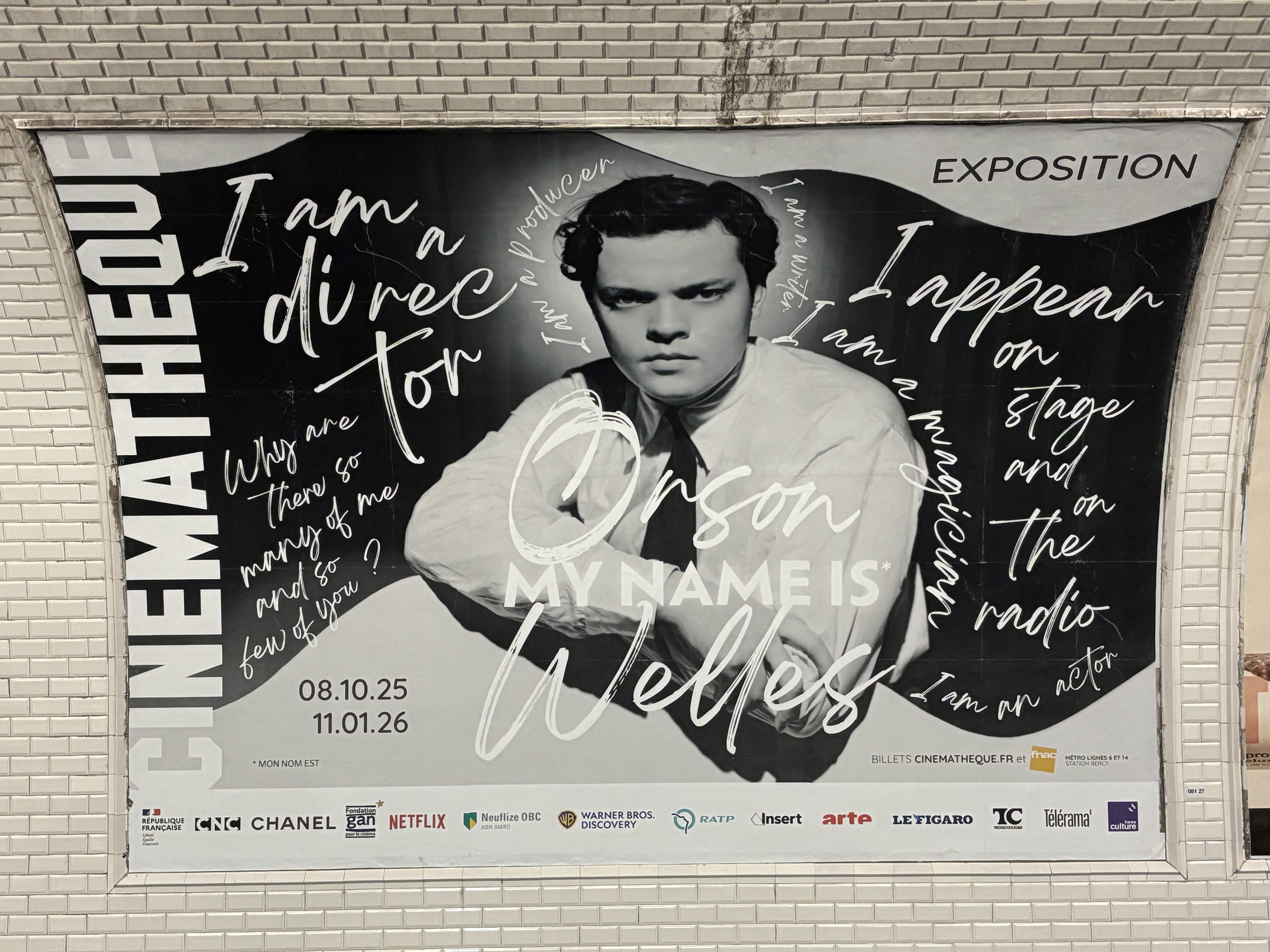
A testament to the city's undying love for cinema, La Cinémathèque Française is a funky-looking museum/movie theater hybrid that has attracted cinephiles from all around the world for decades.
The two components of theater and museum often work in tandem, offering a series of films related to a concurrent museum piece. This fall's attraction is “My Name is Orson Welles”: an exhibit exploring the long and tumultuous career of American entertainment's most prolific myth-maker, and a multi-week retrospective series on his œuvre.
The French film-going public, from its highest echelon of critics to its everyday patrons, have long been obsessed with the works of American auteurs. In the past year alone, they have held expansive exhibits for James Cameron, Wes Anderson, and now Mr. Welles.
A star is born
Upon stepping out of the museum’s elevator to the exhibit’s floor, visitors were met with a booming voice that could be heard coming from the convention space around the corner. The same voice that once scared and intrigued a generation of radio listeners with an all-too-realistic rendition of H.G Wells War of the Worlds - a fitting first impression.
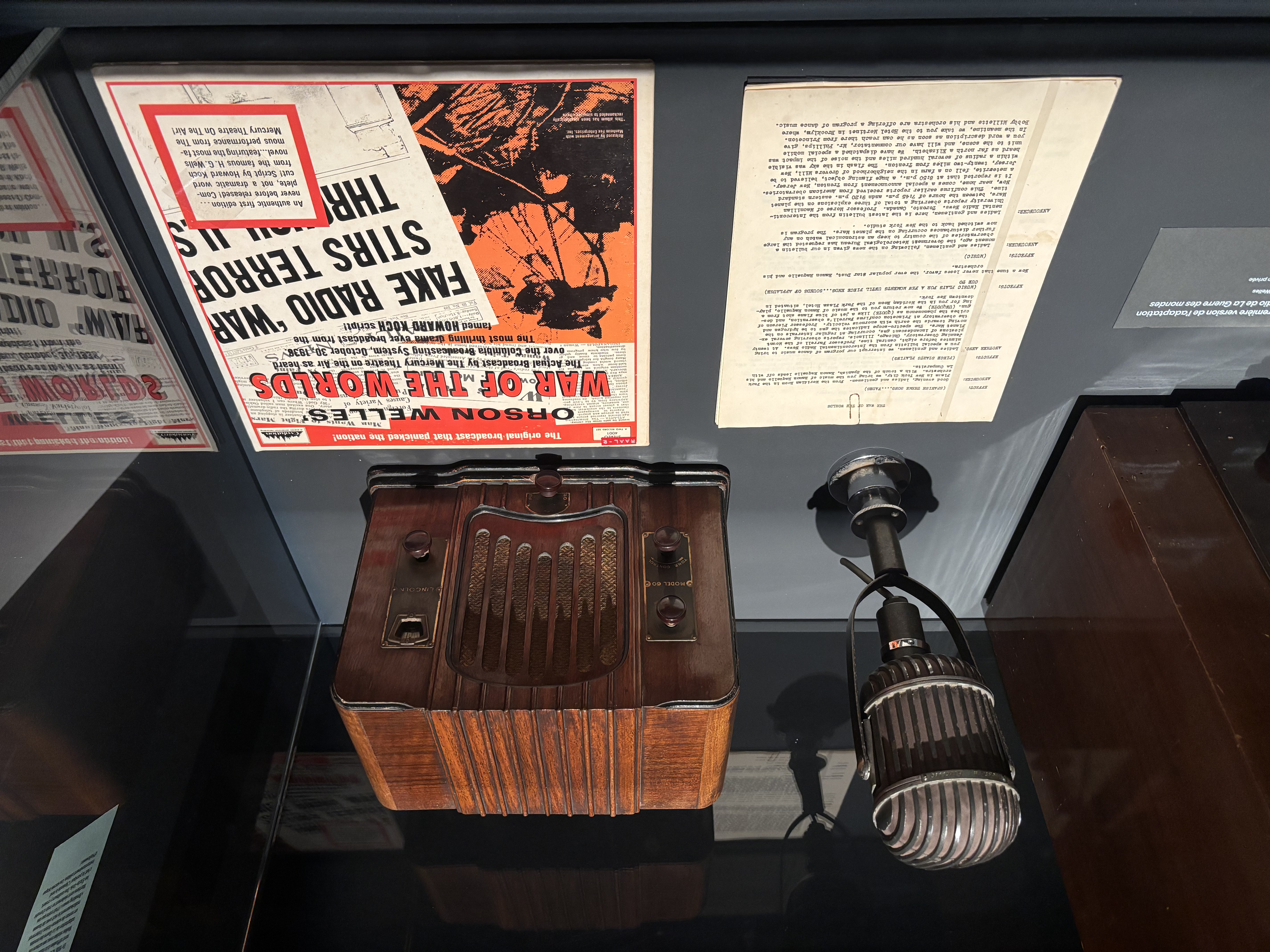
Museum visitors are then taken on a chronological tour of Welles’ artistic life, starting with his precocious childhood in the midwest and through his pivotal journey to Ireland as a teenager. From there, the exhibit provides ample evidence of the young Mr. Welles bluffing and boasting his way through Dublin's theater scene, where he got his first professional acting gig at the Gate Theatre by pretending to be a well-known stage actor back int he states.
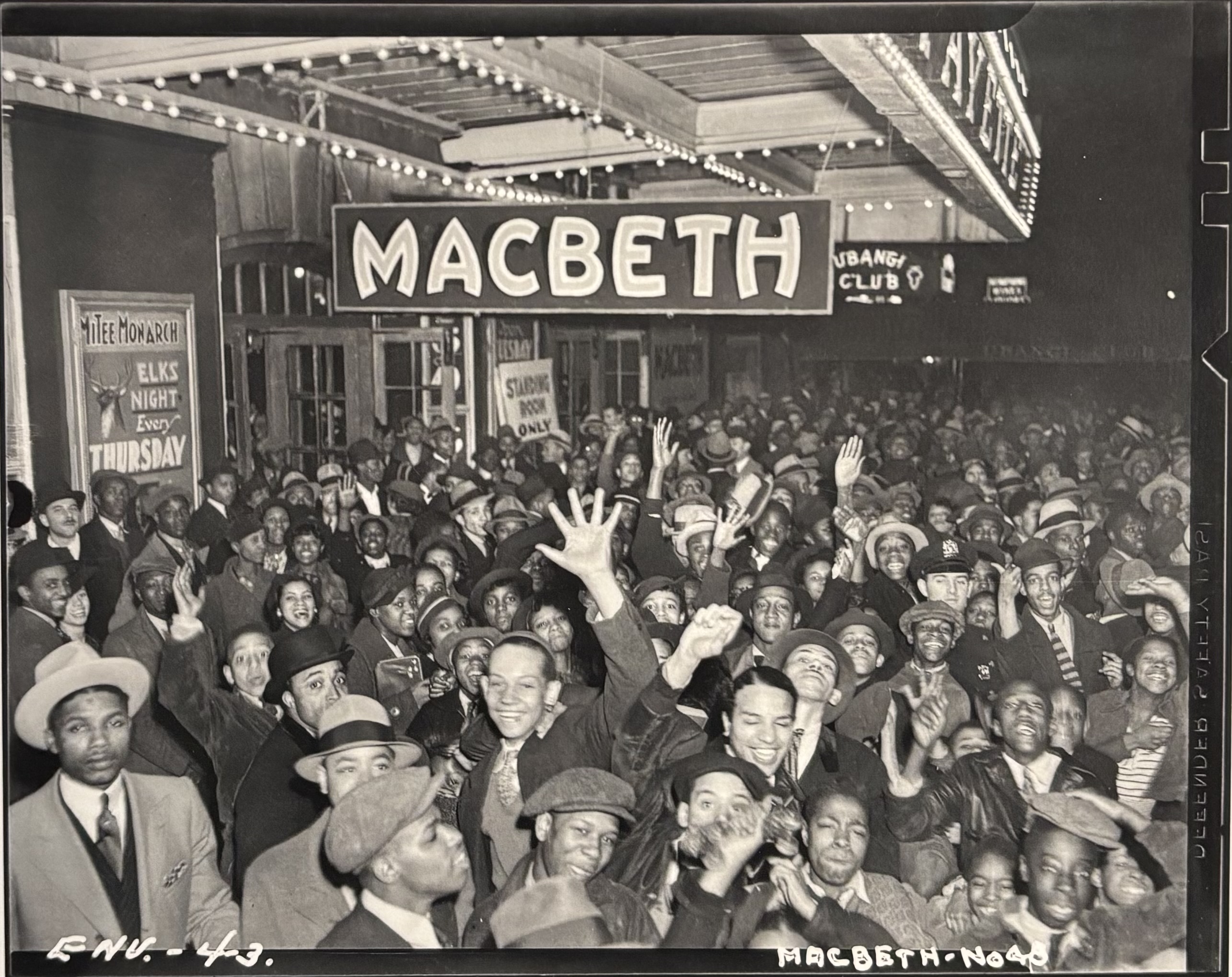
By the time Welles reached his early '20s, he had made a name for himself on Broadway not only as an emerging artistic talent, but also as a piercing critic of the contemporary social and political environment. His "Voodoo Macbeth," which transposed the classic play from 11th-century Scotland to 19th-century Haiti with an all-Black the cast, was a met with rapturous applause and lines around the block. His Cesaer, staged in 1937, portrayed Shakespeare's tragedy with contemporary politics, dressing the roman characters as Nazi party members and drawing attention to the fascist swell overtaking Europe.
Following a string of fantastic successes on the stage and the airwaves, the young artist had already become a living legend. La Ciémathèque does well to inform its guests of how this legend grew and how Welles himself played a part in growing it.
Welles, meet Kane
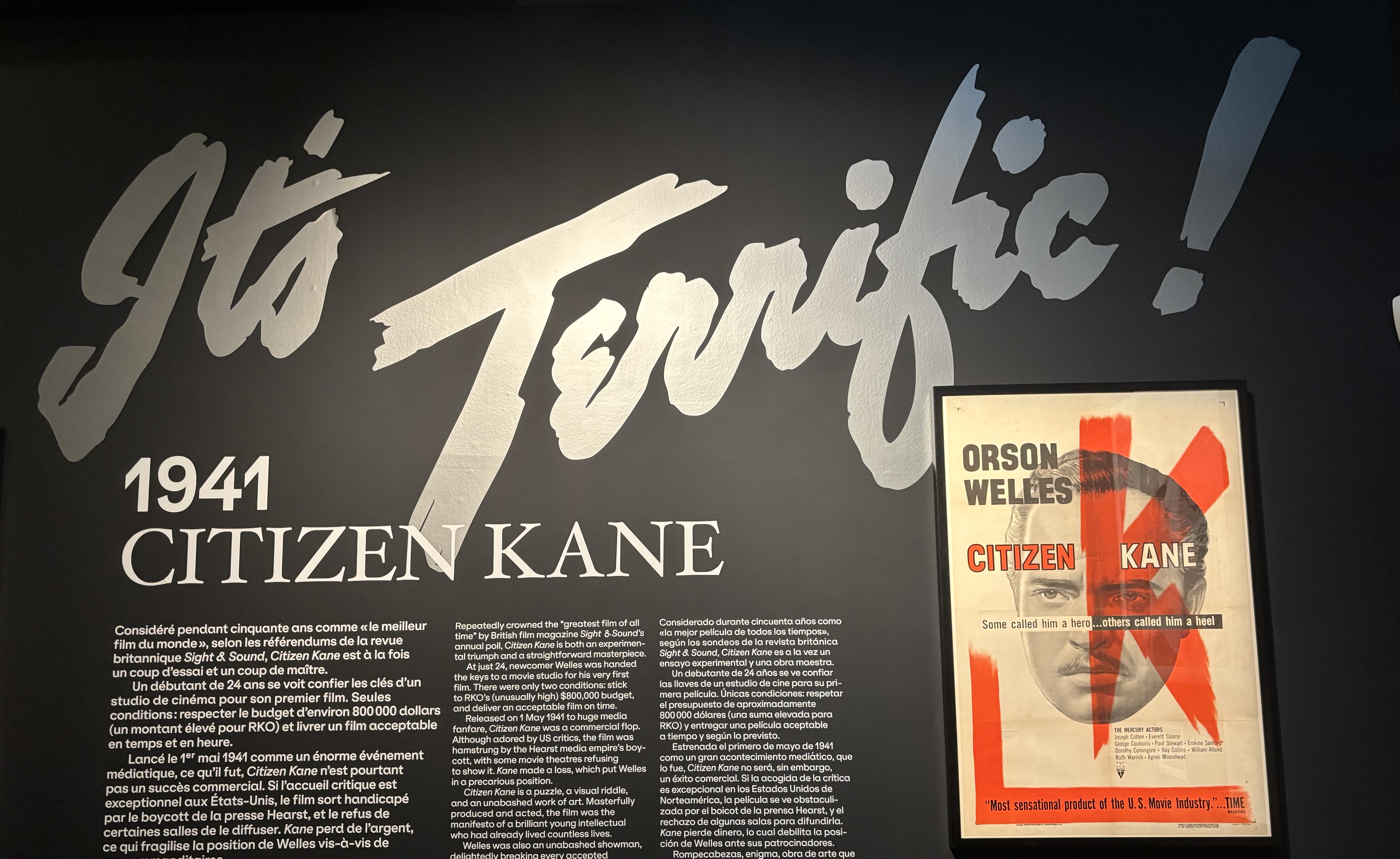
Around the bend in the exhibit hall, the tour transitions from his stage and radio career to his breakthrough into film: directing, producing, starring, and co-writing Citizen Kane at the age of 25. How's that for a multi-hyphenate?
Although he made critical creative partnerships with cinematographer Greg Tolland, screenwriter Herman J. Mankiewicz, and RKO president George J. Shaefer, it was the singular talent of Welles which brought this masterpiece to the big screen and assured its place in the American film canon forever.
Welles, always a teller of tall tales, leveraged his growing stardom in showbiz to make sure that his screen debut would match the highest heights of his ambition.
The film tells the story of Charles Foster Kane, loosely based on newspaper magnate William Randolph Hearst, and his insatiable ambition to amass wealth and influence in an attempt to fill the void of an unhappy childhood. The film failed at the box office when it was released in 1941, but has since been reclaimed and is often cited among the greatest films of all time.
Beyond Rosebud
From this meteoric rise, the exhibit takes us through his equally impressive fall from Hollywood’s graces through a series of compromised projects that found little financial success.
These projects were created during a period of simultaneous personal and legal strife with intense artistic productivity. The one-time poster child of a new Hollywood was now fleeing tinsel town as a tax-evader and box office failure. In this era Welles became the preeminent independent filmmaker, blazing a trail that would be followed by Hollywood outsiders for generations.
Among these cinematic exploits abroad are his slew of Shakespeare adaptations, building off a fascination that Welles had harbored since childhood.
His Macbeth and Othello are low-budget but beautifully designed expressionistic works that follow the source material rather faithfully, and Chimes at Midnight (a dizzying amalgamation of Shakespeare's scenes featuring the Falstaff character) is generally regarded as his second masterpiece.
The tour finishes in a gallery of the artist's life in exile after his falling out with Hollywood. Artifacts, film excerpts, photos, drawings and more can be absorbed to contextualize the shabby latter-half of his career.
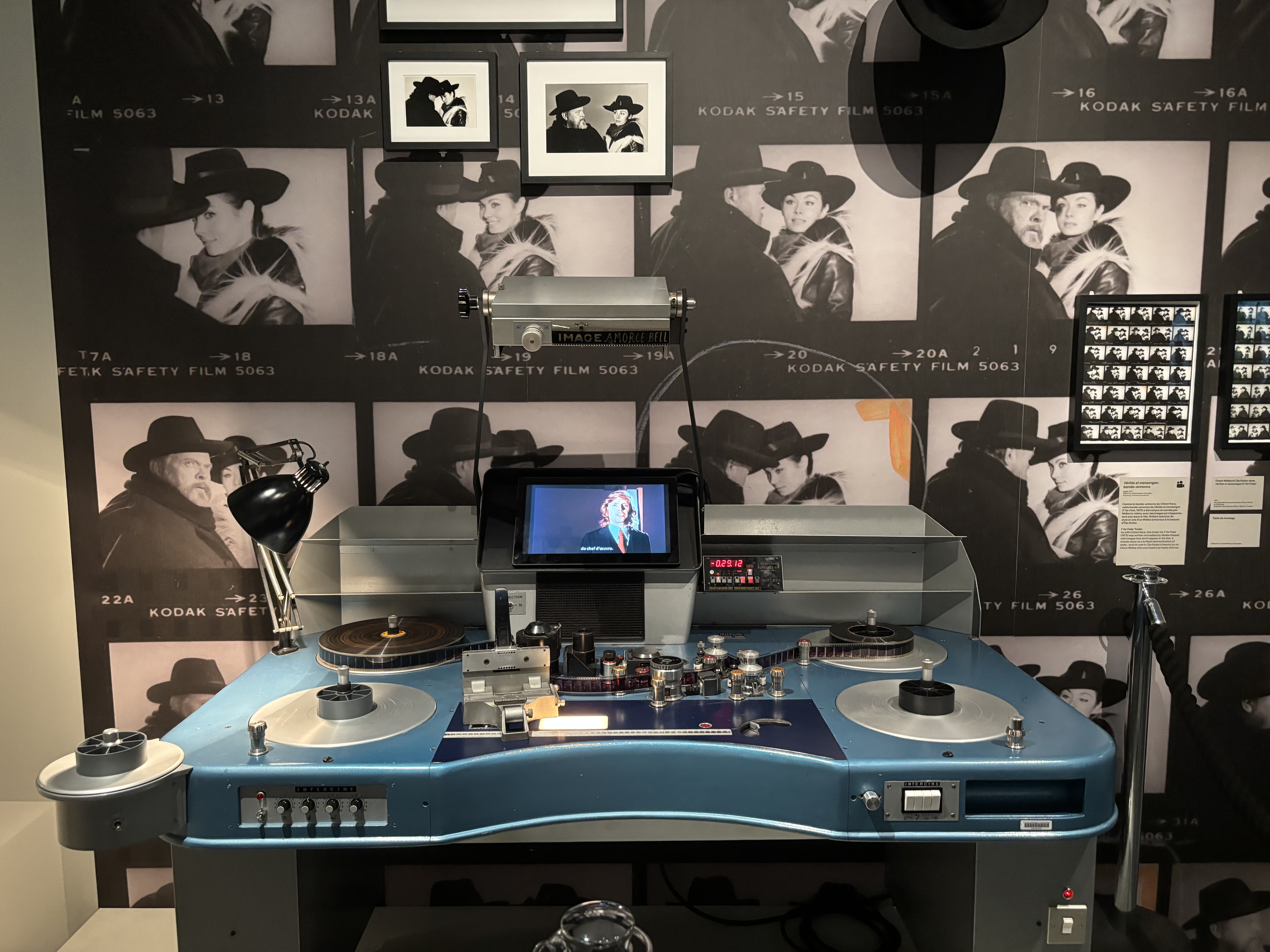
However, it was during this period that Welles created his final masterpiece, F for Fake: a "film essay" on forgers, fraudsters, magicians, and their impacts on storytelling. This blend of fiction, hearsay and documentary is possibly his most significant contribution to the development of the film medium after Citizen Kane.
Whether his legacy will be remembered most as a great smooth-talker, a radio/cinema boundary-breaker, or a ham sandwich in international alcohol commericals will vary based on when you became aware of the artistic giant. In any case, La Cinémathèque Française offers a detailed and comprehensive guide to his artistic journey for fans and newcomers alike.


