Pets in Paris
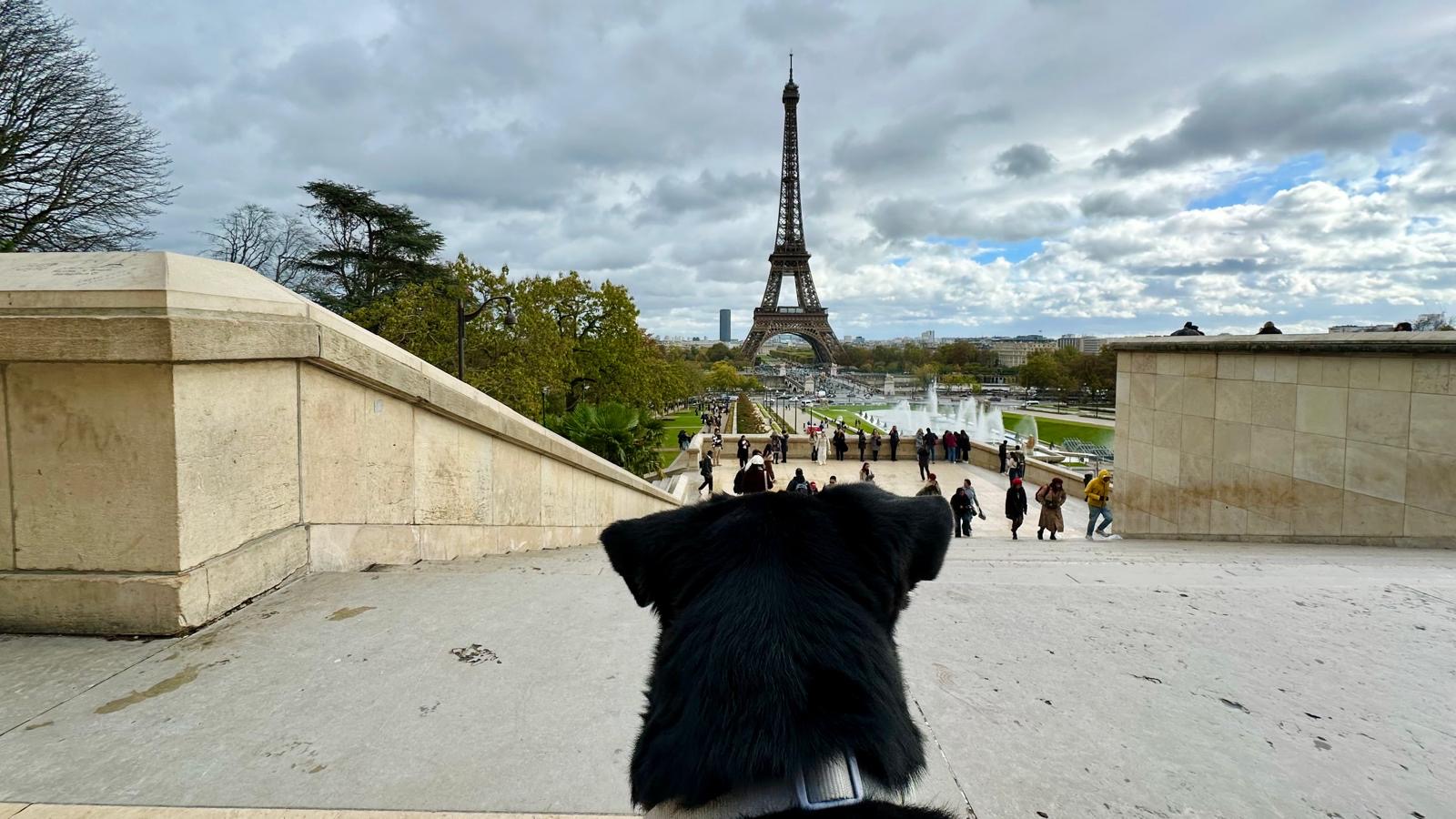
One of the most difficult parts about moving overseas is leaving your friends and family behind. This is especially true for canine or feline friends/family members that give love so freely and ask for very little in return – well, except for treats, belly rubs, cuddles and the occasional walk.
If you've been luck enough to have a pet, then you know firsthand the joy, humor, love and (quite honestly) personal growth, being a pet parent can bring into your life. So, it should come as no surprise that for some students at AUP an essential component to moving abroad was bringing their pet with them. In fact, for many, it's non-negotiable.

"If I could not bring Molly, I would not be coming...she is always there for me, so if she wasn't able to come [to Paris] I wasn't going to come," explained Mary Jo Rockholt, an MA candidate in Global Communications. She brought her black Labrador/German Shepherd mix, Molly, from Minnesota.
THE PROCESS
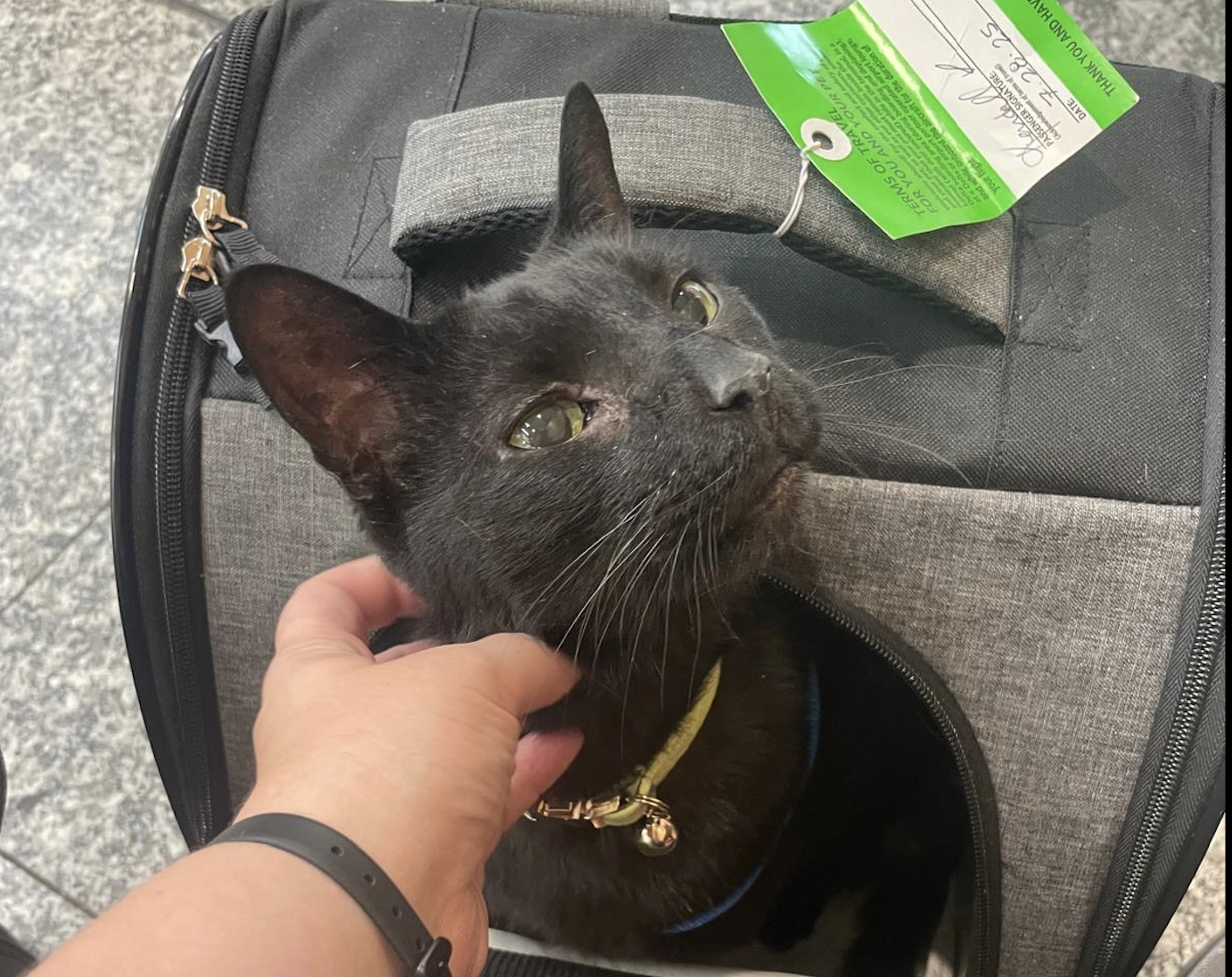
It's hard enough trying to get a human being from one country to another with visas, vaccines, and flight bookings to consider, but adding a pet in the mix makes it that much more challenging. Pet travel from the United States to France is managed by the United States Department of Agriculture. This was a surprising realization for Kendall Packman, a graduate student in Creative Writing, who came from Los Angeles to Paris with their cat, Benicio del Gato, in tow. "He's not a cow! I'm not taking my herd of steer [to Paris] I'm taking my emotional support animal!" they said between laughs.

The process involves a multi-step process that requires extreme attention to detail because one missed step could significantly delay or entirely prevent your pet from being able to come abroad. First, your pet must meet the EU's microchip and rabies vaccination requirements. "The struggle for us was for the rabies vaccinations" says Ali Wible, a graduate student whose King Charles Cavalier Spaniel, Dash, made the journey. "If they lasped in rabies...even for a day, it's considered invalid," she continued, "so luckily [Dash's] had been done like on the day they expired, so it worked out, but that was incredibly stressful."

Second, you must receive an EU health certificate from an accredited veterinarian. Third, you have to have the USDA endorse the EU health certificate. Lastly, you have to arrange for your per's travel to your destination, being certain to follow whatever additional steps the airline might require for your pet to fly.
Brianna Holt, a graduate student in Creative Writing, who's in Paris with her mini-Australian Shepherd, Romee, suggests that if you want to bring your pet abroad, you should "start the process early in advance. The same way you wouldn't book a flight overseas the week before you plan to travel...give yourself enough [time], like maybe two months to start that preparation." The total cost can vary from around $700 USD to $1,000 USD or significantly more, depending on your pet's circumstances and how they are being transported.

Once your pet has met all of the necessary requirements, the next step is the actual travel. Ali wasn't the slightest bit worried about Dash, "she's an excellent flyer and has spent every year of her life on a plane. I think that my dog has flown more than most people in their lifetime!" For some pets (and pet parents), flying can be a nerve-wracking experience, especially if the pet has never traveled. Often, pet parents will give their pets a safe dose of a sedative to abate any anxiousness and keep them calm for the duration of the flight. Many pets have to be transported underneath the plane in the cargo hold, while others – because of their smaller size and/or service qualifications – may be able to fly on board with their pet parents, but this varies by airline. Pets also have to go through security clearance, as Kendall recalls "I [had] to take [Benecio] out of the backpack [and] just like hold him over my shoulder and we [went] through the little metal detector. We did have to have a pat down - He got a pat down! We both got a pat down!"
LIFE IN PARIS
Finding a new home for you and your pet is another challenge. Apartment hunting in Paris can feel a lot like The Hunger Games.
The demand is significantly higher than the supply, and an available apartment can go in a matter of minutes. However, a major upside for pet parents looking for an apartment in Paris is that French law, specifically Law No. 70-598 of July 9, 1970, prevents any landlord from forbidding pets. There are a few exceptions related to type of pet, the breed, and the nature of the rental contract, but for most apartments, you're perfectly fine to have a cat or dog. Even with this in mind, it's probably best to mention that you have a pet to your landlord in advance.

This approach proved helpful for Brianna while looking for an apartment for her and Romee. "I just made sure that when I was looking for apartments they were apartments that allowed pets – just so there wouldn't be any issues", she shared.
Dogs are welcomed in most stores, several parks, and many restaurants. Ali and Dash have definitely taken advantage of being able to spend time together while dining out, Ali explains, "[Dash] LOVES Paris. She loves to sit at cafes because there's food on the ground. She's a big café girlie!"

Walking around the city you're bound to see many dogs. In fact, according to a 2022 study, Paris is the city with the highest density of dogs in the world. However, it's important to note that the majority of the dogs you'll see in Paris are in the small-to-medium size range, large dogs are not common. Mary Jo has faced some challenges with Molly because of this, she explains "we mostly Uber, but not all Uber drivers will accept a dog her size. So, even if I book an Uber pet, they'll show up, see how big she is, and cancel...so, that's something I didn't expect – the size discrimination of dogs."
Despite this, the French really do love dogs. There's an annual Paris Sausage Walk dedicated to the third most popular dog breed in the city, Dachshunds. There's also La Semaine Nationale du Chien, a country-wide annual week of events celebrating "man's best friend." Mary Jo has found Parisians to be very welcoming when she and Molly go out for walks, "we'll walk along the river and one of [Molly's] favorite things is to jump up and she'll stand up on the wall and put her paws at the top and like look over into the river and people will walk by and say 'Aww! Très mignon!'" she recounted.
Bringing a pet overseas is a not without obstacles, but the rewards of having an old friend in a new city far outweigh them. Having a companion with whom you can explore the city, sit in a café, or just cuddle up on the couch in your tiny apartment, creates a sense of home. The new environment is definitely an adjustment for both pets and pet parents but establishing a new life with a loved one along for the journey – even the four-legged variety – is priceless.