Evolution of Paris Street Signs
Reading Paris: The allure of the city in architectural features
Paris, which is renowned for its seamless blend of history, fashion and culture, reveals its character not just through monuments and museums, but in the minor details of everyday life. Among this abundance, the city's street signs perform as emblems of Parisian identity, which have become broadly recognizable around the world. Seen in films, photographs and social media posts, taken as something exceptional and uniquely French.
With France’s long history, signs are one of the attributes that have preserved its culture throughout the years and have undergone various changes dating back to the 17th century. Nowadays, when it comes to imagining Paris in film art, people would often come back to the iconic Midnight in Paris (2011) by Woody Allen, C'était un rendez-vous (1976) by Claude Lelouch, Before Sunset (2004) by Richard Linklater and Emily in Paris (2020-2025), Netflix, Lily Collins.
Designs and Origins
The model of the plaque de rue (from French, meaning a street sign) has remained unchanged since 1847, which is very rare for developing cities such as Paris, and demonstrates how France is attempting to conserve the capital's original appearance. The very first plaque takes its emergence in 1643, located on rue Saint-Dominique (close to AUP campus)!
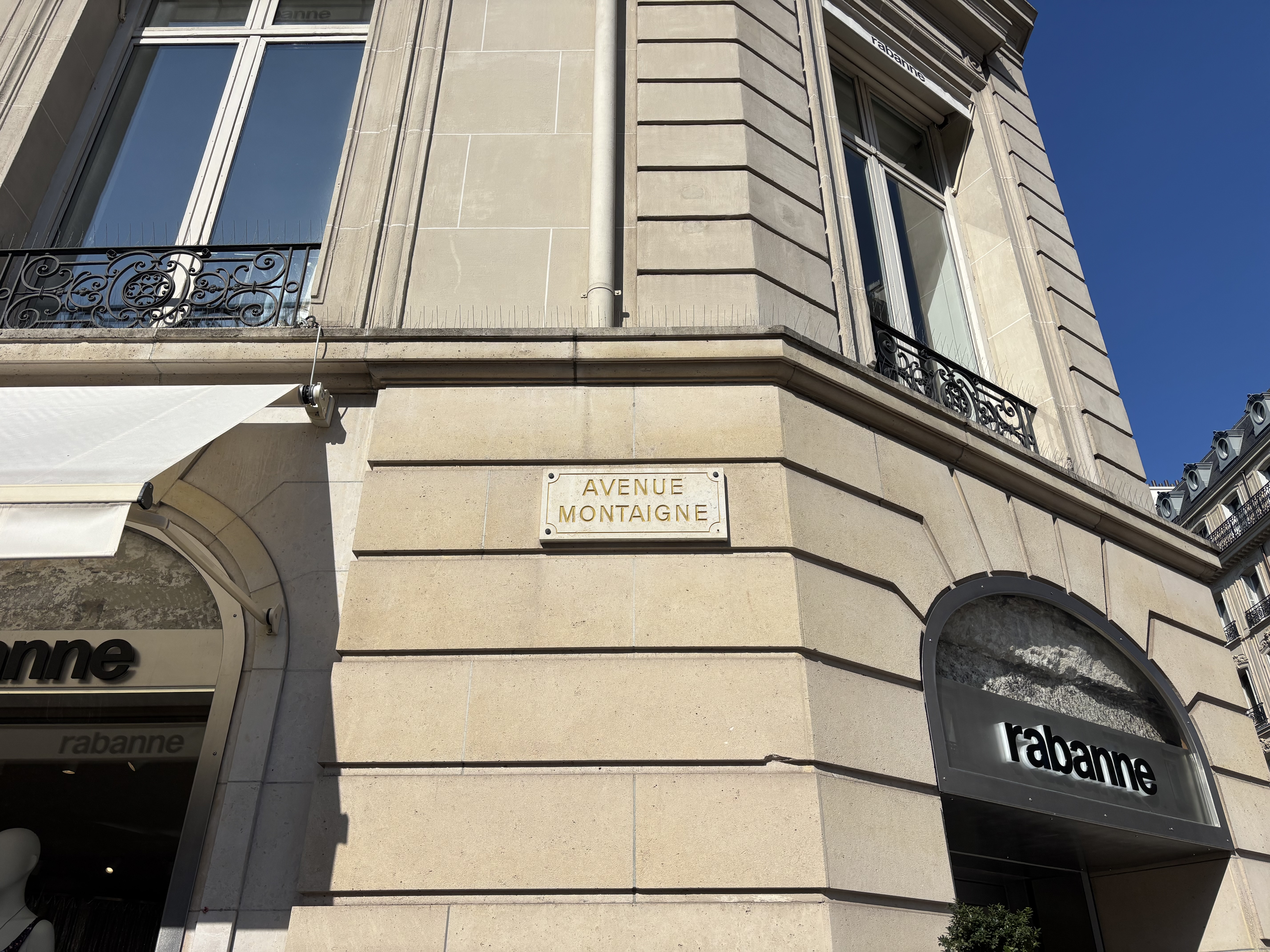
Later in the 18th century, a city attempted to establish Paris with the tin signs, which turned out to be fragile, impractical, and had to be renovated. In 1729, a decree was issued, directing that names and street numbers be inscribed on stone panels, built into the dwellings. Some of them were preserved in Paris, although they are usually accompanied by modern signs. One of them can be found in front of the famous restaurant L’Avenue in the 8th Arrondissement on the Avenue Montaigne.
In 1779, Marine Krefeld numbered the city from the rue de Gramont in the 2nd Arrondissement, by painting the numbers on the doors, rather than on houses. Numbers were increasing on one side and decreasing on the other, which made the first and last street numbers face each other. The landowners often treated these changes suspiciously for several reasons. Firstly, some considered that such novelties might affect the introduction of new taxes. Secondly, those who lived in wealthy and aristocratic houses did not consider a system that places their homes alongside the huts of ordinary people to be positive.
The Age of Reason
Looking back at history, in general, significant changes in naming Paris streets occurred twice: during the Revolution (1789) and in 1860 when Paris expanded and some directions held several names at a time. Numerous systems also underwent a few changes. For instance, in 1799, a government attempted to implement a modern system, suggesting red numbers on black font to indicate streets parallel to the Seine, and white numbers on black font to denote those perpendicular to the bank. However, it turned out to be heavily confusing and ended up being reestablished with an even and uneven-numbered sequence of numbers at opposite street sides, by the command of Napoleon in 1805. At that time, the signs were not grouped with a single material and were crafted from marble, zinc, porcelain and rarely from wood, differing from what people see now.
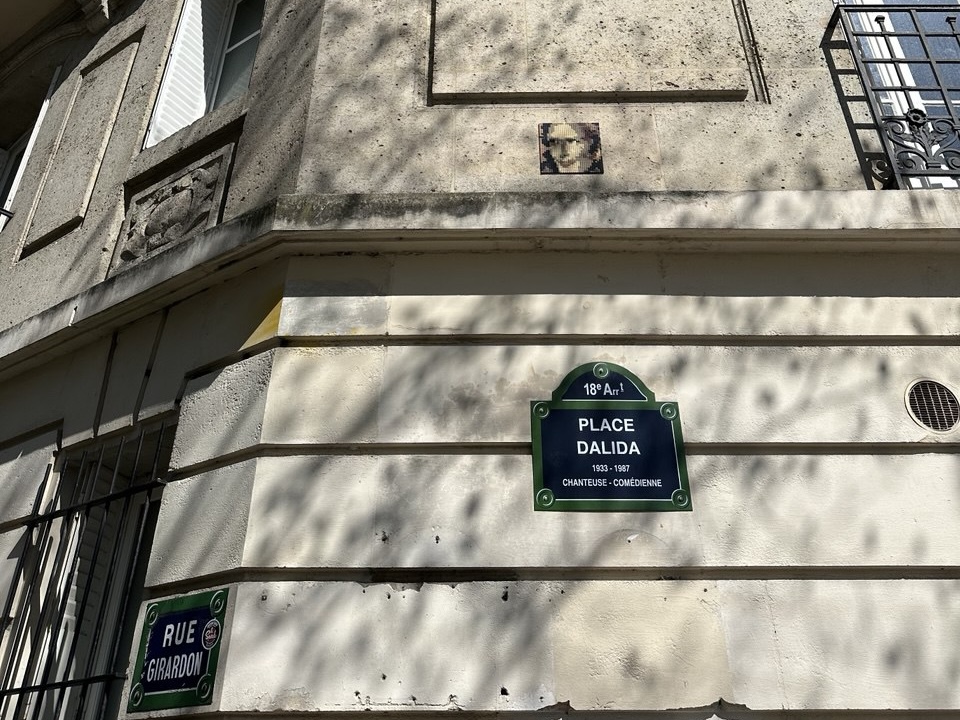
Signs finally took on an appearance similar to that of nowadays in 1844, when a department prefect, Claude-Philibert Barthelot de Rambuteau, agreed to use enamel plates made of lava stone with white font on a dark blue background. Furthermore, from 1847, they came fully into production and use and have remained unchanged to this day; a blue plate with white letters that echoes the street name, by the Prefect of Rambuto. In 1876, the signs also began to display the Paris 20 arrondissements, and from 1982, they started to show information about who the street is named after, which makes exploring Paris even more intriguing.
Learning Paris while Walking
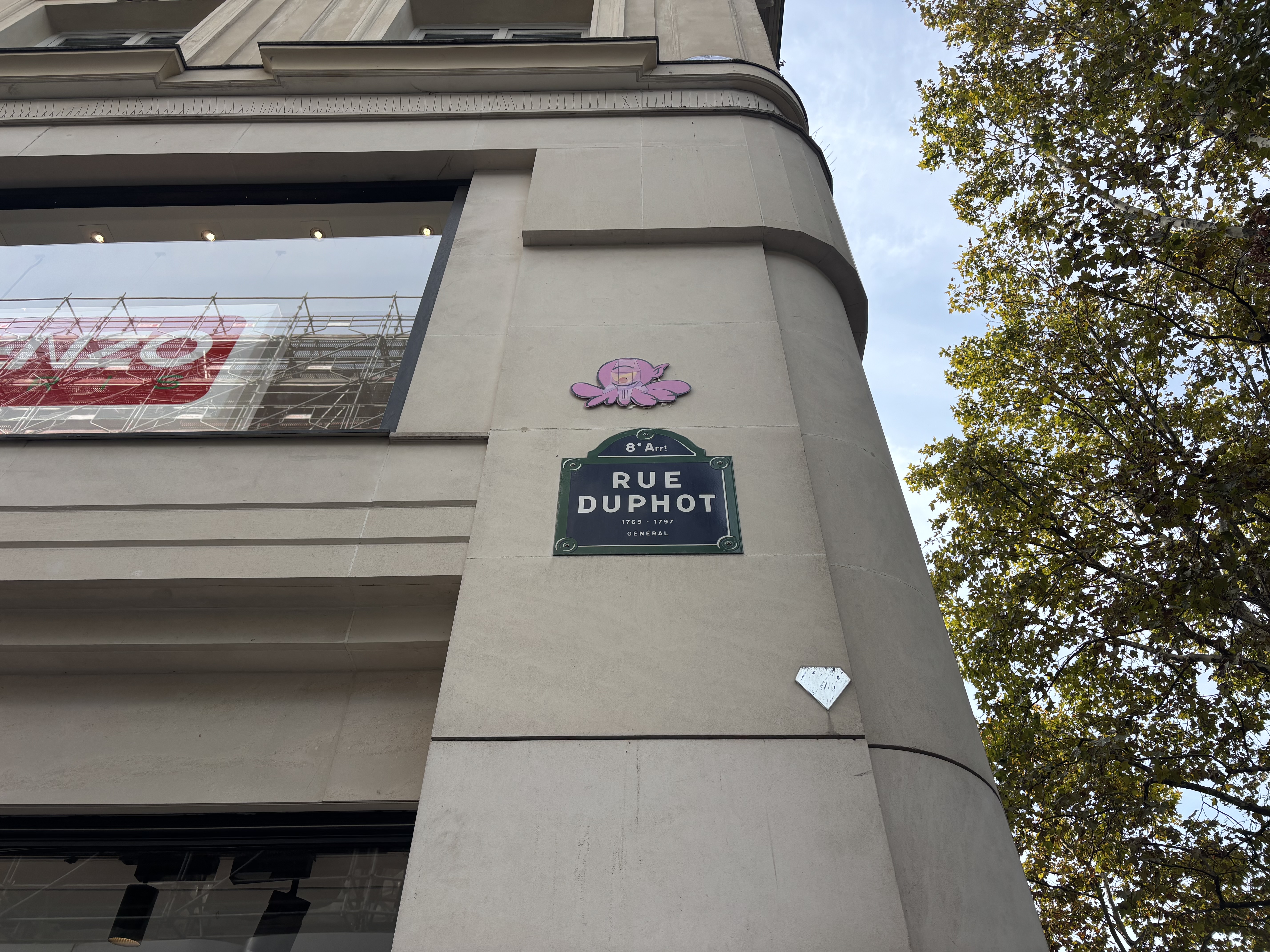
It is always fascinating to wander through Paris' arrondissements, admiring their distinctive charm and noticing the names of those who shaped society, a casual yet successful way to learn more about French culture and history. For example, in the 8th Arrondisement near La Galerie Dior is the street Rue Duphot, which has a sign with the ages 1769 - 1797 and a caption “Général”, indicating that the street is named after Leonard Duphot, a French military leader and diplomat. Additionally, in some areas, signs can be found indicating that this house has water, gas, or is partially furnished. Along with that, not only the signs, but also the walls hold history: Paris is preserving the facades of the buildings, and some feature names and dates that can be drawn directly on the walls of dwellings.
Thus, Paris stands as a city defined by its iconic streets and orderly architectural design, offering a glimpse into the history of France. It is curious to walk around Paris and explore the diversity of street signs, considering the numerous changes the city has undergone to achieve its current appearance. Considering that every implement, from the shade in the fonts, has undergone criticism, this offers insight into the complexity of the landscape and the uniqueness of every corner in Paris, France.