Notes on Hostile Perfumery
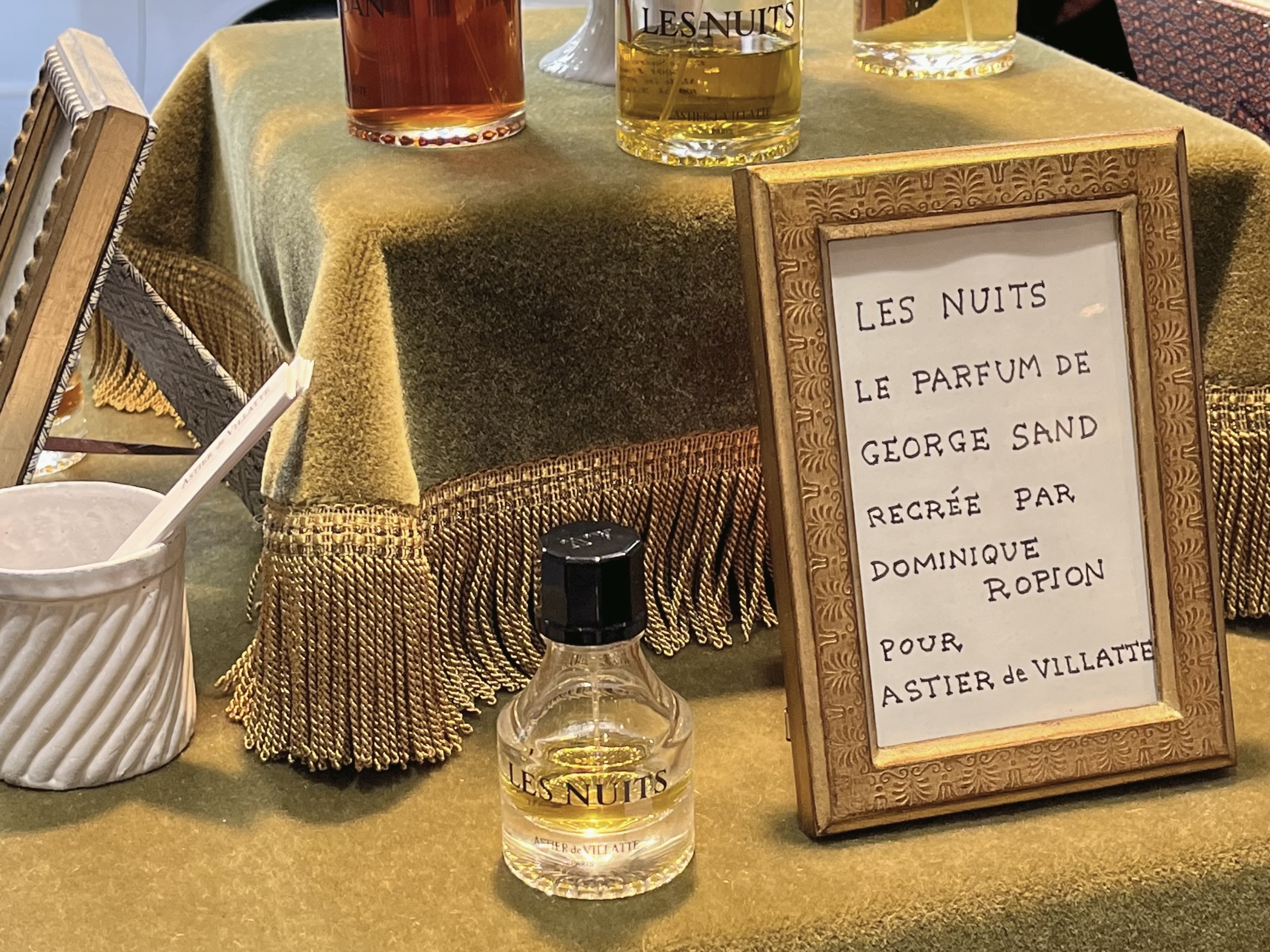
This first time I opened Patrick Süskind's 1985 novel Perfume: The Story of a Murderer, I got stuck on his description of eighteenth-century Paris. Not a single detail is spared with streets reeking of manure, stairwells heavy with rotting wood, sulfurous cabbage, and the list goes on. An age that belonged to plain olfactory violence where humanity rested alongside its own biological breakdown (some might argue not much has changed about Paris but this isn't what this article is about).
Now, fast forwarding three centuries later; it seems modern civilization has not only won the war against putrid smells: it has salted the earth behind it. If you walk into a Parisian department store or café, the air is almost scrubbed into submission. The present day fragrance market is characterized by a sea of frictionless, polite, (sad) beige, sterile white musk, spun sugar, clean linen, and ambroxan which are all designed to make you smell like a corporate boardroom or a luxurious hotel lobby. Very pleasant, totally safe, yet utterly numbing.
My journey into this olfactory mania started where many modern existential crises begin: late-night TikTok doomscrolling. My feed took a detour from its usual memes, makeup, and K-Pop content and made me plunge headfirst into melodramatic, dark curation. It seems netizens were no longer begging to smell like vanilla or citrus anymore. Rather they were staring hollow-eyed at their phones, looking up how to smell like "a chapel where no one prays anymore," a "ghost in a photograph", or like you "wander in graveyards."
At first I thought it was a little funny. But once I opened the comment sections of these TikTok's, they were packed with hundreds of real people sharing links for scents and treating these brooding moodboards like an actual lifestyle. This of course begs the question: why did we go through all the trouble of engineering scenes of absolute cleanliness? Are people happily throwing down hundreds of euros to smell like distilled trash or a damp crypt?
So naturally, as one does, I took to Paris with my notes app to test my own threshold for self-inflicted sensory damage. Make no mistake, I did not have some sort of transcending artistic awakening. Some of these scents were pure, distilled misery.
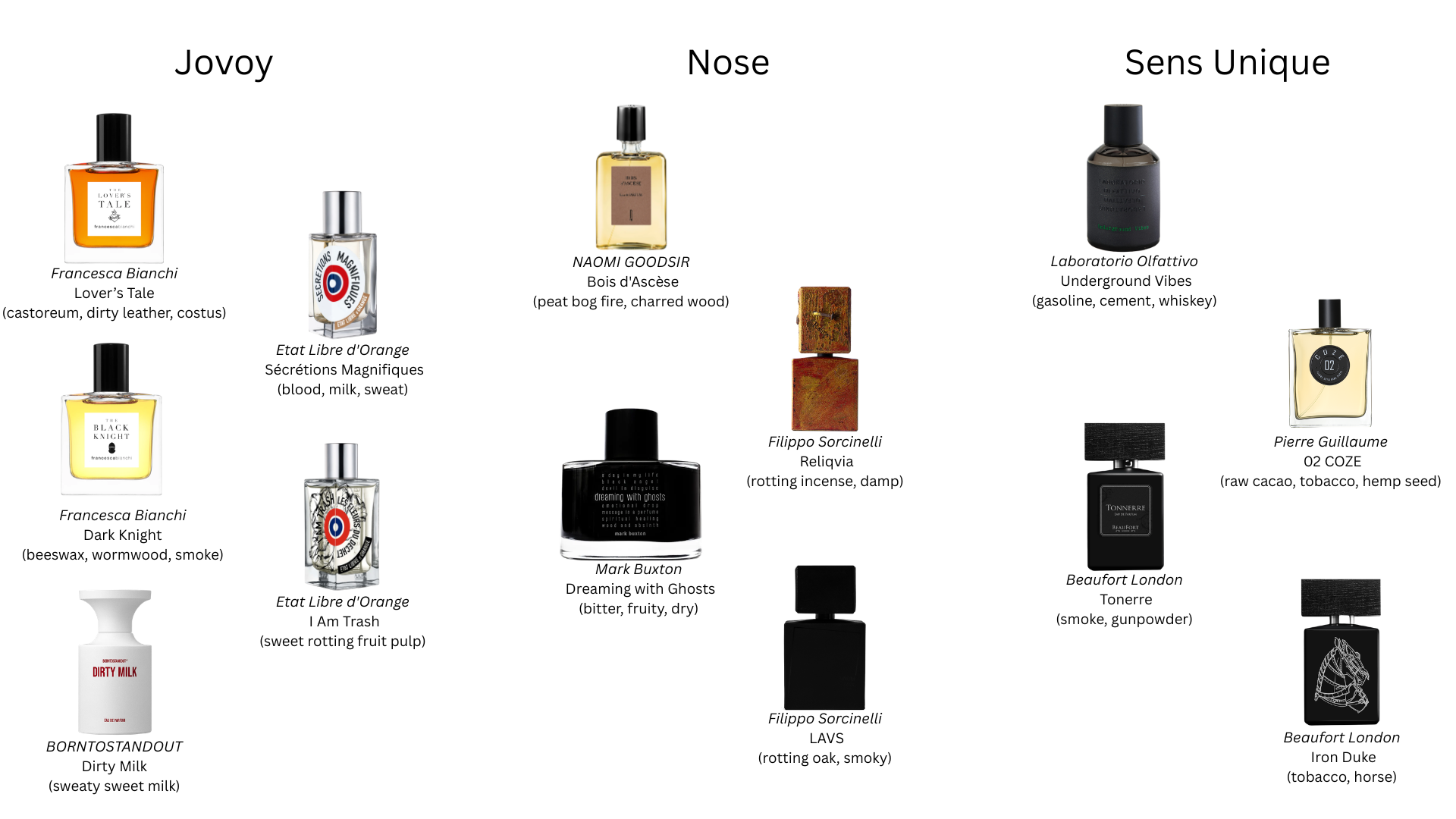
My first stop was Jovoy, a niche perfume shop near Place Vendôme. Loaded with towering dark wooded shelves, and endless rows of heavy glass flacons it looked more like a library for dark aristocrats than a perfume boutique. The blotter I took for Francesca Bianchi's The Lover's Tale gave off a warm, profoundly animal funk of costus and dirty leather that smelled disturbingly like horse sweat. I then turned my attention to BORNTOSTANDOUT's Dirty Milk, I was quite skeptical given that the scent of milk alone makes me gag but I decided to be brave in the name of journalism. It was a stimulating blend of a steamed vanilla cream laced with earthy-sweat warmed undertones that felt intimate and untamed. I was impressed by the complexity of the scent, but wasn't a fan.
Finally, I had found Etat Libre d'Orange's counter, the first scent I sampled was I Am Trash, a perfume that was created from distilled, upcycled fruit pulp and organic kitchen waste. It was surprisingly sweet, I actually quite liked it. I then braved the brand's most polarizing creation, I sprayed Sécréctions Magnifiques, I was hit with the unsettling clash of coppery blood, curdled cream, and warm sweat. Unpleasant to say the least...
Over at Nose in the Sentier, things took an interesting turn. First was Bois d'Ascèse by Naomi Goodsir which smelled like standing right in the middle of a bitter peat bog fire with charred wood smoking in your face. Odd, but not unpleasant. The next scent I sampled was the lowest of lows on this olfactory adventure: Filippo Sorcinelli's Reliqvi. Initially marketed as a soul-stirring scent inspired by the sacred wooden relics of Christ's passion. If Christ's passion smells like a bitter black pitch, a cloud of suffocating smoke, and sour rot, as though you were standing on the charred floorboards of a ruined medieval chapel that has not only been stuck by lightning, but was also flooded with stagnant swamp water that's been left to ferment since 1342 then I would say they hit the nail right on the head!
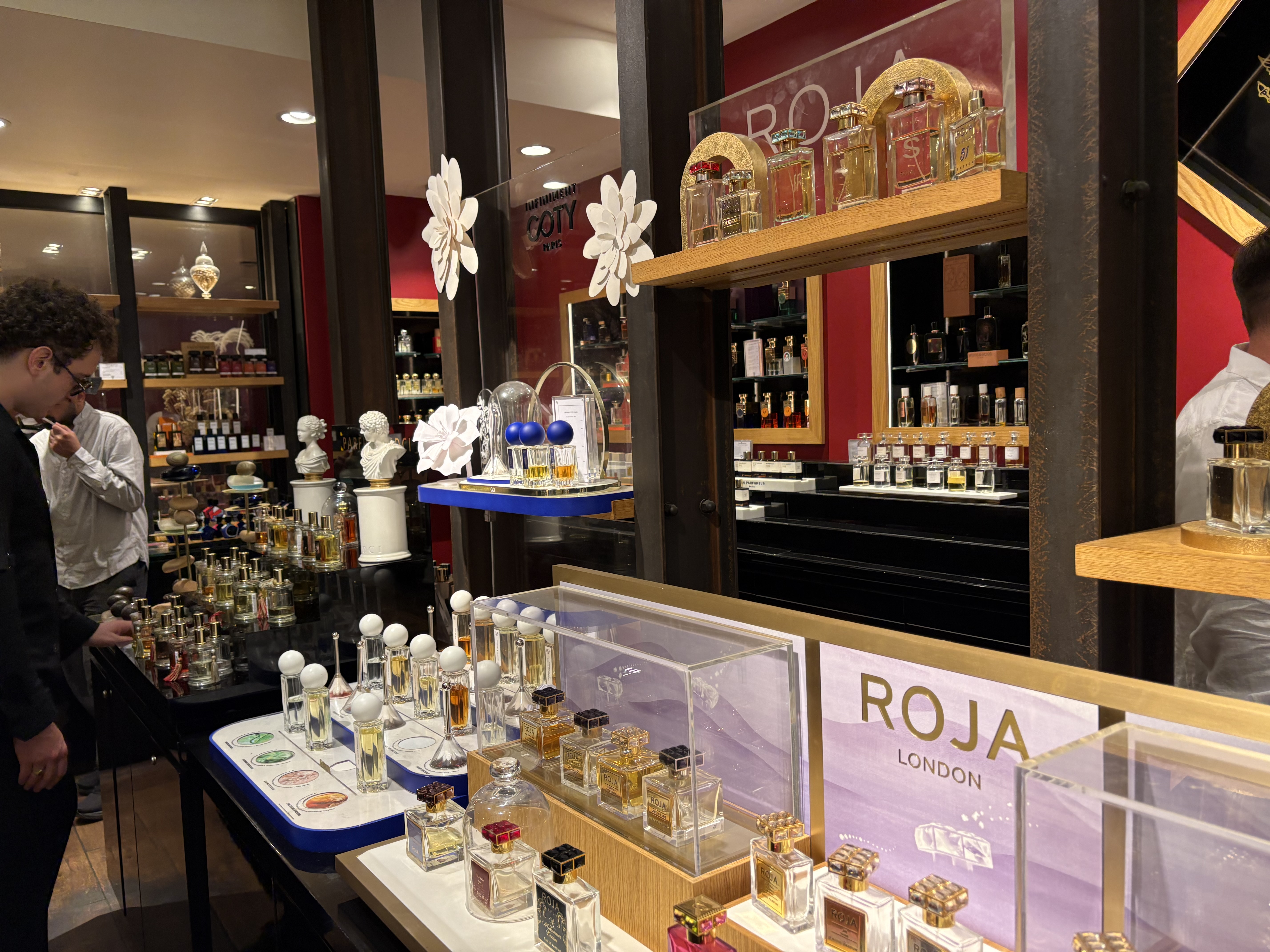
My last stop was Sens Unique in the bustling streets of Le Marais. I picked up Labortorio Olfattivo's Underground Vibes, it hit my nostrils with the bizarre accords of spilled gasoline, whiskey, and cold damp garage cement. Then came Beaufort London's Tonerre. I was immediately hit with the crackling, dry snap of gunpowder, that was then followed by a metallic, almost oily heat that is what I would imagine a scorched cannon barrel smelt like after a naval barrage.
After finishing up, I found myself standing in the streets of Le Marais with my paper strips tucked into my purse in disbelief. I found myself wondering who wakes up one morning and decides that their is daily aesthetic is "fermenting compost heap," "unregulated subterranean parking garage," or "1805 naval catastrophe"?
I once again reached for some of the paper strips I had tucked away in my purse as I was making my way back home. Some of these scents were not "pretty". I sincerely doubt you'll ever get a stranger tapping your shoulder to tell you that they love what you have going on with your cloud of hot gunpowder or damp masonry. But I suppose you could say these scents were magnetic in a way that wasn't comparable to department store sugar bomb perfumes. Call it morbid curiosity. I was at my wit's end.
When I looked into it, biologically speaking, this odd obsession makes complete sense. Smell does not ask for your permission as other senses do. The logical parts of our brains are where senses such as sight and sound get processed, it lets you analyze whatever you're seeing or hearing before you come to terms with it. Scent on the other hand, skips all these rational filters and takes a shortcut straight to your memory, gut instincts, and raw emotion. So when perfumes smell of generic, good old vanilla, your brain registers it as boring background noise and moves on. But when you smell something akin to burnt gunpowder, cold stone, or animal heat, you subconsciously sound an internal alarm before your conscious mind can process it. You focus closely because your brain thinks something real is happening.
And all of this showcases the actual psychology behind these anti-comfort fragrances: they are not selling personal grooming. On the contrary, they sell private architecture.
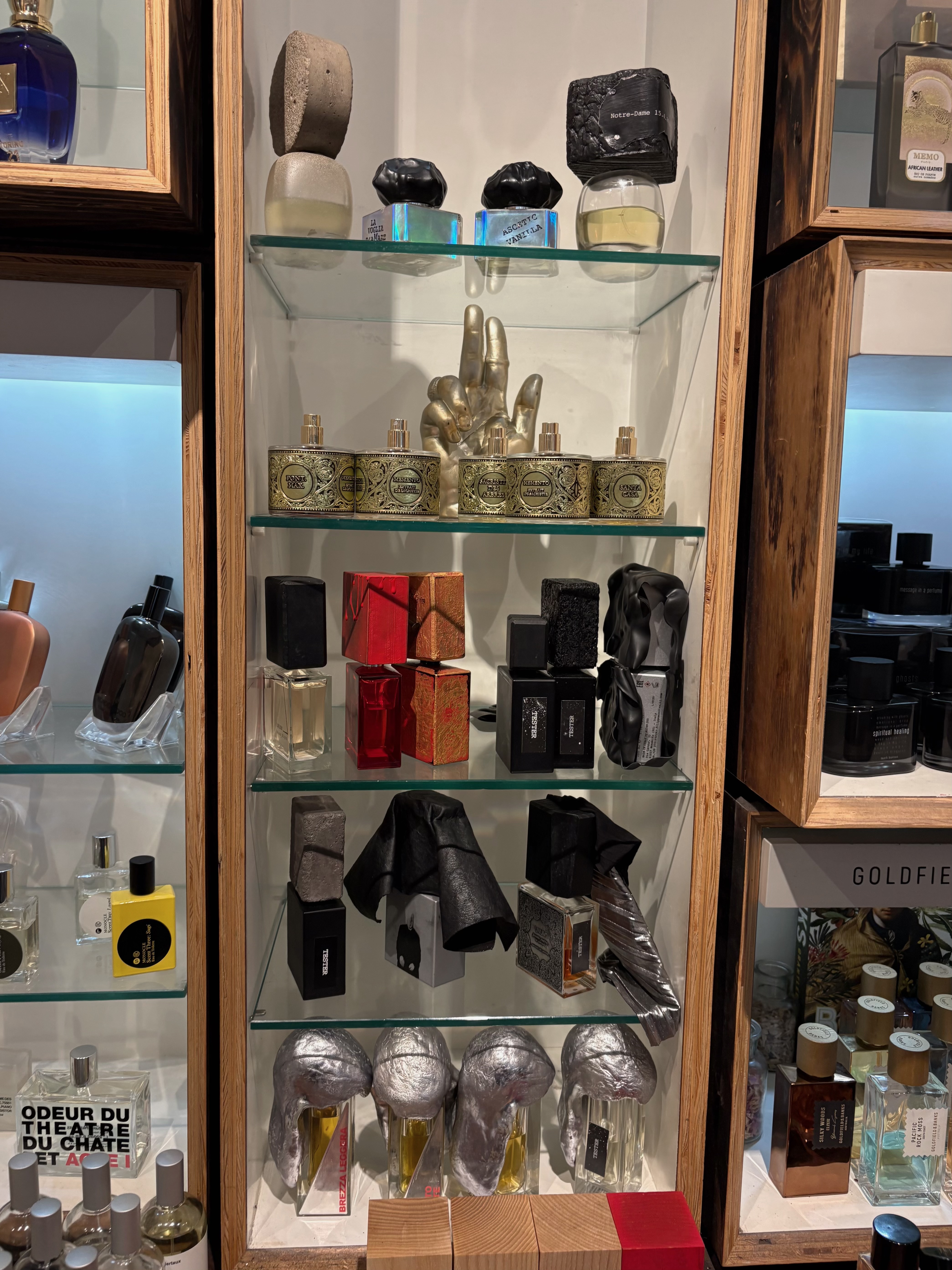
Traditional designer scents are selling you an exterior social mask. You're wearing it because those around will think you are approachable and hygienic. Anti-comfort fragrances flip the script by having you wear scents of dark liturgical smoke or pear fire, creating an act of private world-building. You're ultimately wearing it for you, wrapping yourself in a moody narrative that stays glued to your collarbones.
Of course luxury branding caught on to this and turned it into a status maneuver. Anyone can buy a cheerful, gourmand, crowd-pleasing scent at the store for twenty euros, smelling agreeable offers zero cultural cachet. Cleanliness is boring, ubiquitous, and now cheap.
As an AUP student studying brand management, I have sat through a plethora of case studies on luxury positioning, I usually expect brand signaling to look like premium leather and quiet logos. So when I saw this playing out in the form of olfactory hostility, I was intrigued to say the least. The market is flooded with sickeningly sweet crowd pleasers, its lost its prestige. Ultimate luxury is now manufactured friction. Such as those who have cultivated a taste for weird natural wines that taste like bruised apples, bitter Amari, or raw brutalist architecture, an acquired palate is also needed to wear an anti-comfort scent. Waltzing into a dinner party smelling of wet moss or cold iron is THE counter-signaling flex. You're showing that you have enough social autonomy and cultural confidence that you don't mind alienating half the room.
Maybe Süskind's Jean-Baptiste Grenouille was totally unhinged, but I think he had a point when said that "whoever controls scent controls the irrational emotional machinery of the human animal." Modern mainstream perfumery attempted to build an artificial daycare where nothing smells bad, mortal, or dangerous. But stepping back out into the Parisian evening, clutching a handful of damp stone and burnt gunpowder blotters, the mess seemed pretty nice. We live in a culture deluged in sterile sweetness, true luxury is not smelling clean. It's about smelling complex, and dangerous enough to never be forgotten.