Canal Saint Martin Swimming
The Canal Saint-Martin, in the 10th arrondissement, is a bobo paradise. The archetypal bourgeois-bohemian that frequents the area is known to find great comfort in its familiar wine bars and vintage shops. Perhaps even more exciting to the bobo are the rougher aspects: the omnipresent graffiti, the ability to smoke a joint without fear and the occasional rambling drunk that reminds them they live in a “real city” with “real people.” Gutter punks, AUP students, African immigrants, the canal hosts them all, usually with a beer in hand.
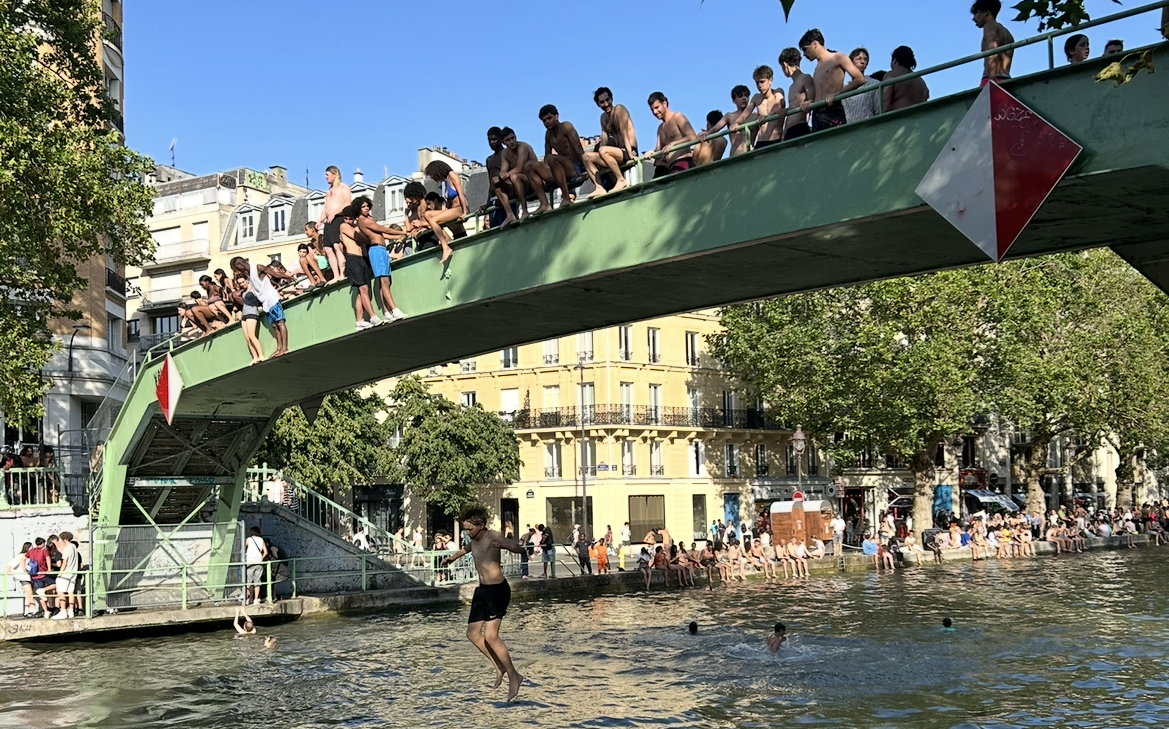
On a hot day in June of this year, the Parisian’s relationship to this narrow waterway changed forever. After days of high heat in the city, many youth in the area began to brave the official swimming ban to find relief in the water. The outnumbered municipal police struggled to chase down the rogue swimmers, many of whom jumped off bridges, some more gracefully than others.
As the fight between the police and the swimmers escalated, so did the weather reports. June 16 was the last day of relative normalcy before temperatures would shift from summer heat to something exceptional. With police struggling to enforce the ban on swimming in a waterway that was safe to swim in, newly elected mayor Emmanuel Gregoire made a decision: Authorize swimming in the Canal Saint-Martin.

Boat traffic was halted and the police were withdrawn, it was an open invitation that I couldn't ignore. I did what any sane Parisian would do: I grabbed my swimsuit and hopped on the metro. As the train roared through the tunnels, I was transported from my quiet corner of the left bank to the place where the drama was unfolding. The city felt alive in a way it never had before, the energy of the crowd possessed me. The rhythmic sound of splashes echoed across the water.
Scenes like this in Paris would have been unimaginable only a few years ago. So how did we get here?
Paris gets back in the water
Paris is a city that has lived many lives, as have its waterways. Parisians swam in the Seine for centuries, but the era of industrialization brought pollution, disease and increasingly dense boat traffic. By 1923 the administration officially banned swimming in the rivers.
As the city moved on, some of the iconic quais where Parisians once swam became express roadways. The tradition had now faded into memory. In 1988, Jacques Chirac promised to make the Seine swimmable within three years, going so far as to pledge to swim in it himself. He later won the presidency in 1995. The Seine remained unclean.
In 2015, Anne Hidalgo announced another attempt, this time with 1.2 billion euros invested in the infrastructure necessary to clean the river ahead of the 2024 Summer Olympics. Unlike Chirac's promise, this one actually happened. After two weeks of positive water tests, on the eve of the Games, mayor Hidalgo swam in the center of Paris. A century after swimming had been banned, athletes were competing in the Seine for the whole world to see.
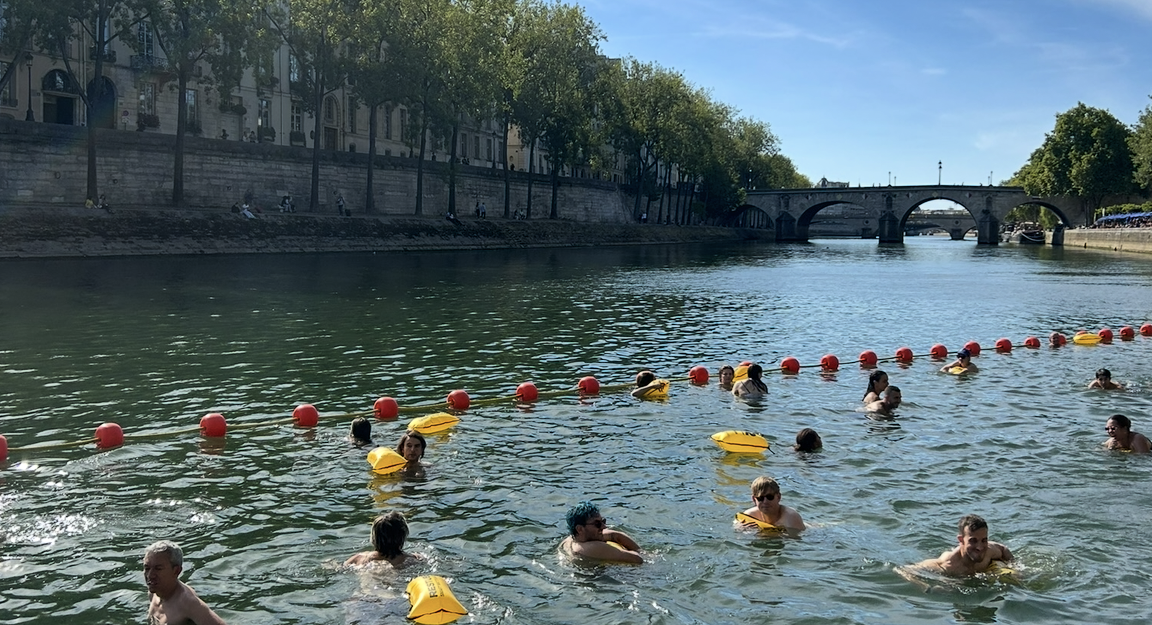
The public however had to wait until 2025. When swimming finally opened, it came with restrictions: Enclosed zones, lines and flotation devices. 100,000 people nevertheless took the opportunity to swim in the river during its first summer.
Previously, a Parisian looking to escape the summer heat had few options beyond payed pools or leaving the city; now, the water that was for so long distant became close again.
Adventures in urban swimming
Although it was great fun, the restrictive nature of the Seine’s swimming in 2025 left something to be desired. I didn’t like having to wait in line, nor being contained to a certain zone. I had the impression that the same managerial forces that organize and regulate modern urban life had followed me into the water.
Only one year after my first dip into the waters of Paris, I found myself at the Canal Saint-Martin, which had similarly been cleaned to permit swimming. Between cigarettes and sips of beer the Parisians plunged into the canal’s refreshing embrace.
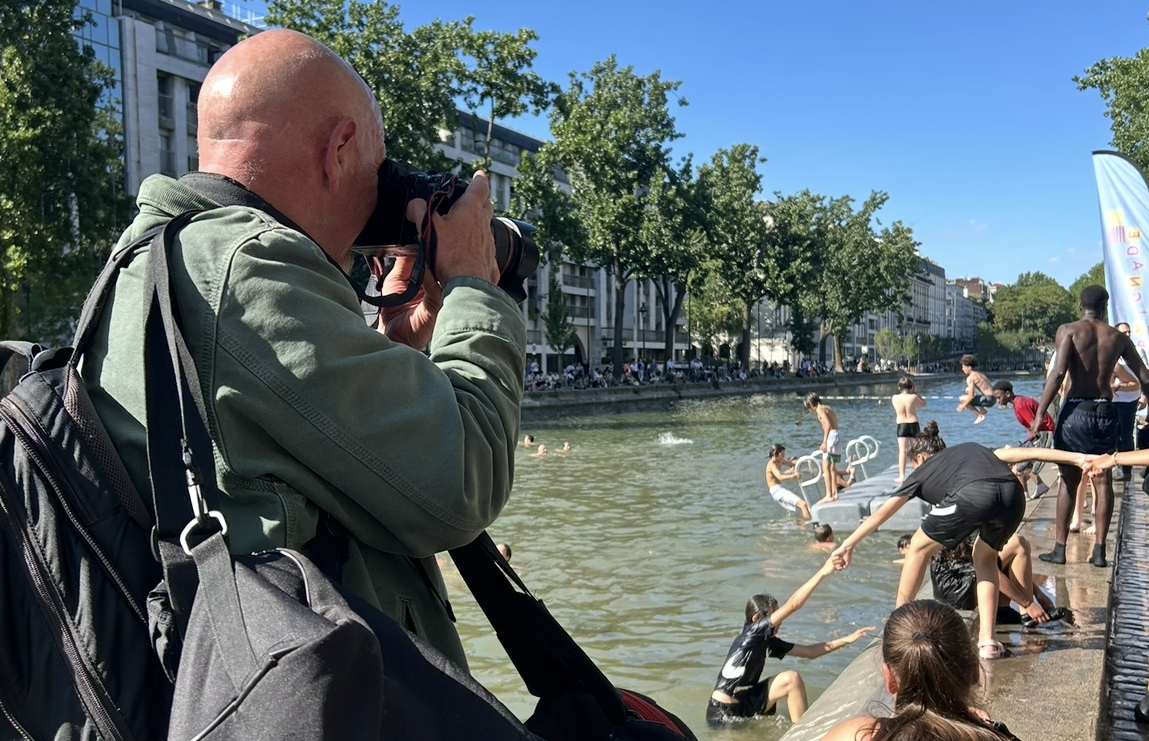
The dreamlike reflection of the blue sky along the water captured my gaze — like two lovers caught in a trance, I saw Paris for who she was. I jumped in freely. Floating in the middle of the canal, soothed by its soft and gentle movements, it felt like the water was as alive as I was.
There was an inescapable magic in the radical transformation of something so familiar. I had sat here many times with friends and lovers. This time my intimate moment was not with the person next to me, but with the city around me.
The young people who forced the city to open the canal may not have considered themselves revolutionaries — but in their own small way, they were. The slow acting bureaucracy was forced to concede to the immediate needs of the people. There were no lines and no guardrails. The Parisian relationship to water was redefined, for a few weeks, the city and the water became one.
Crisis and questions
The heat that drove Parisians into the canal was part of a much larger crisis. Paris is not alone however, many cities across Europe and the world are facing new uncomfortable questions: How will they adapt to the heat, and how much freedom people should have to adapt to it themselves? During the heatwave period of 2026 in France 131 people would drown while attempting to escape the scorching temperatures, one of these deaths took place in the canal itself.
The events at the Canal Saint-Martin leave a lot for the city of Paris to consider. How will safety risks be mitigated? Will more parts of the waterways be turned into swimming zones? How might the affected neighborhoods be protected from disorder?
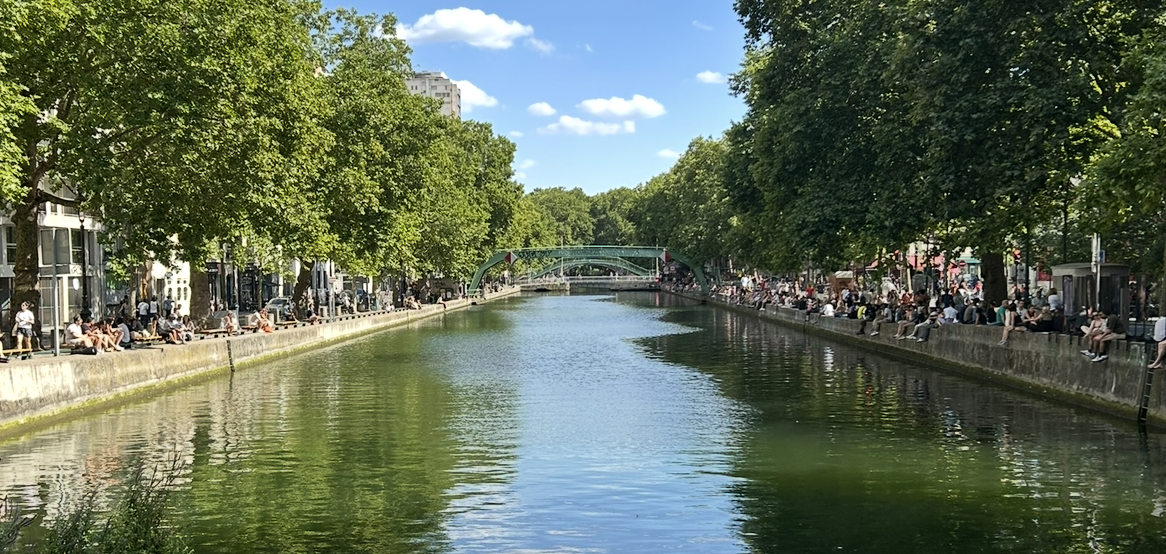
While many questions remain unanswered, one thing is certain: The cleanup of Paris's rivers shows that with enough effort, what is lost can be refound. Rivers that have been unswimmable can be made safe. The urban environment can be reclaimed for both function and pleasure. Through reclamation, cities and their inhabitants are transforming their relationship with the places they call home.
The next morning I had a matcha, as I usually do, and texted my friends to join me later for a swim. On occasion, it's nice to be bobo.