A Parisian Thanksgiving
As an American, Thanksgiving has always been one of my favorite holidays. I have many fond childhood memories of the celebration. From starting the day waking up early in the morning to watch the annual Macy's Thanksgiving Day Parade, to ending it by unbuttoning my pants to allow space for one last bite of pie, the feelings of nostalgia surrounding the holiday have stuck with me.
Growing up, Thanksgiving represented a break from school and an opportunity to visit my extended family. Our Thanksgiving meals often lasted for hours on end as we went around the table sharing what we were thankful for, enjoying every last bite of our meals, and preemptively looking forward to the next day's leftovers.
My family always celebrated at my aunt's house, where she and my grandma would spend days preparing for the dinner. As soon as I arrived with my parents and sister, we were greeted with a delicious mix of culinary smells wafting from the kitchen through the dining room and all the way to the front door. As my family cooked, my cousins and I would snack on finger food, trying to steal bites of stuffing or candied sweet potatoes when the adults weren't looking, staring longingly at the uncooked pies waiting to go in the oven. In the living room, the sounds of a football game would echo through the house while my dad and uncle watched, the whole family growing hungrier as we anxiously awaited the signal that the meal was ready and we could eat.
As an adult, Thanksgiving may have lost some of its childhood charm, but it still holds a special place in my heart. If anything, my memories of the holiday have grown even fonder since graduating from college and moving to France, amplified by the fact that for the last three years, I have celebrated Thanksgiving away from my family and away from home.
Reckoning with a Controversial History
Thanksgiving's origins as a celebration of so-called "friendship" between European colonizers and Native Americans position it as a very North American holiday, one who's controversial beginning has been grappled with by many in recent years.
Like most people who grew up in the American public school system, where learning about the relationship between the Pilgrims and the Native Americans can be boiled down to elementary school lessons centered on drawing turkeys from the outlines of hands, I didn't realize the true nature of the holiday until I was older.
Often associated with the United States or Canada, Thanksgiving is actually celebrated in various countries around the world. From the Netherlands and Germany, to Japan and Liberia, the traditions may vary, but Thanksgiving celebrations, regardless of the country, are commonly seen as an occasion to share gratitude, spend time with family, and enjoy a plentiful feast.
"My favorite part of Thanksgiving is getting to be in the kitchen with some of the amazing women that I love," said Ali Wible, a master's student at AUP. "My least favorite part is having to clean up, but actually, it's the colonialism concept of it. I try to really differentiate it and celebrate it in the sense of being thankful for those you love. I am definitely not celebrating it in the American Pilgrim sense."
To cope with the problematic roots of the holiday, as well as the continued problems of racial and social injustice in the United States, many modern Thanksgiving celebrations have adapted to a changing sociopolitical landscape, one where participants are forced to reckon with the bloody past of America's foundation. This has led to many people adjusting the ways through which they celebrate the holiday, giving rise to new traditions that center friendship and celebrations of positivity over the glorification of colonialist history and genocide.
So, in a world where it is getting increasingly hard to find something to be grateful for, what does it mean to be "thankful" on Thanksgiving? And as someone who is living outside of the U.S., surrounded by other Americans, how can we create new memories and traditions in a culture far from our own?
Ditching the Turkey
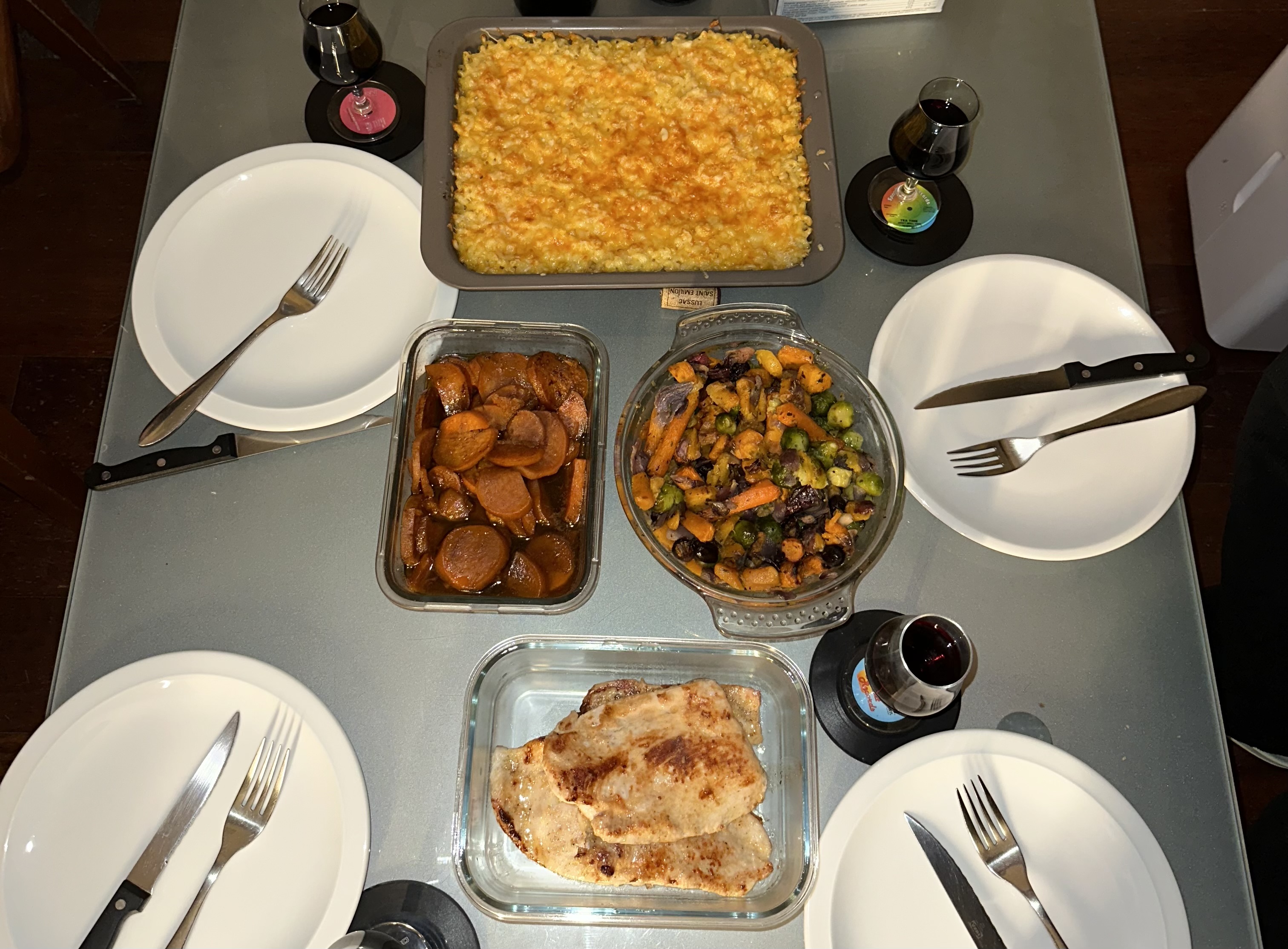
Food is one of the most important parts of holidays around the world, and Thanksgiving is no different. As a life-long vegetarian, the classic Thanksgiving turkey has never been the center of my holiday feast, but I sure do love all the other food classically associated with the meal. Instead of meat, I opt to fill my plate with mac and cheese, veggie stuffing, sweet potatoes, brussels sprouts, and cranberry sauce, constantly getting up for seconds, thirds and (dare I say) fourths.
In France, a whole turkey is pretty hard to find. Unlike in the United States, you can't just go pick it up at any grocery store. Rather, you need to go to a specific boucherie that sells it, or order it from places specializing in American-style foods like the American épicerie, The Real McCoy.
AUP master's student, Katherine Chai, has never been a fan of turkey either, stating that "it's just so dry all the time. You shouldn't have to put three sticks of butter on a turkey." This year, she opted to celebrate the holiday with a rotisserie chicken to save the hassle of trying to find a turkey in Paris.
For those celebrating Thanksgiving in France who want to step away from the traditional turkey, but are unwilling to go fully vegetarian, rotisserie chicken is a popular option, blending a bit of French culture with traditionally American cuisine.
An Ode to Tradition
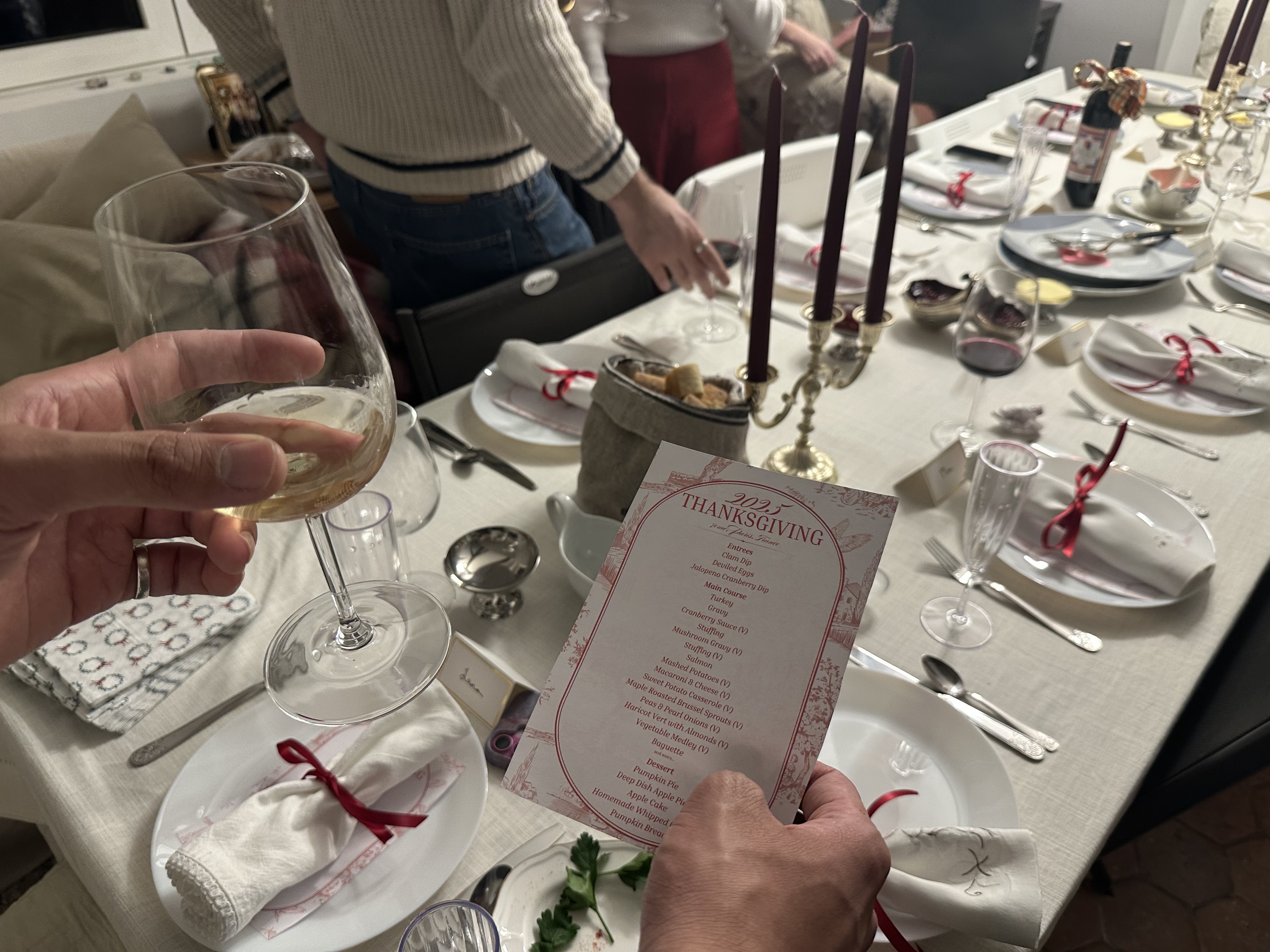
While finding a turkey in Paris might not be the easiest feat, it's still possible to find the ingredients needed for most of the classic American Thanksgiving foods. This year, I am celebrating Thanksgiving three different times, with both Americans and Europeans, meaning I have spent a lot of time in the kitchen over the past few days, cooking for all of the people I love.
When I would celebrate Thanksgiving as a child, the adults were always the ones to cook the meal. Every now and then, I would bake a pie with my mom, but I never had a true understanding of how much work it takes to cook a true feast for lots of people.
Lindsey Jones, another AUP master's student, echoed these sentiments when recounting her holiday plans for this year, saying "I'm not usually a Thanksgiving cook. I am a taste-tester." However, now that she's celebrating away from home, Jones has decided to take on the challenge and try to tackle a mac and cheese recipe, something that feels ambitious for her because "it's a staple" for many Thanksgiving dinners in the United States.
Since moving away from home, I have grown to love the challenge of hosting a large group of friends and cooking for all of them. While I am not the host of any of the Thanksgiving celebrations I am attending this year, I am happy to come bearing multiple bags filled with mac and cheese, sweet potatoes, and pie, all inspired by my grandma and aunt's recipes.
Even though I am celebrating thousands of miles away from them, cooking the foods that I grew up eating makes me feel close to my family, and it makes me appreciate all the work they put into the holiday each year, ensuring that everyone was well-fed and happy.
A Culture of Friendsgiving
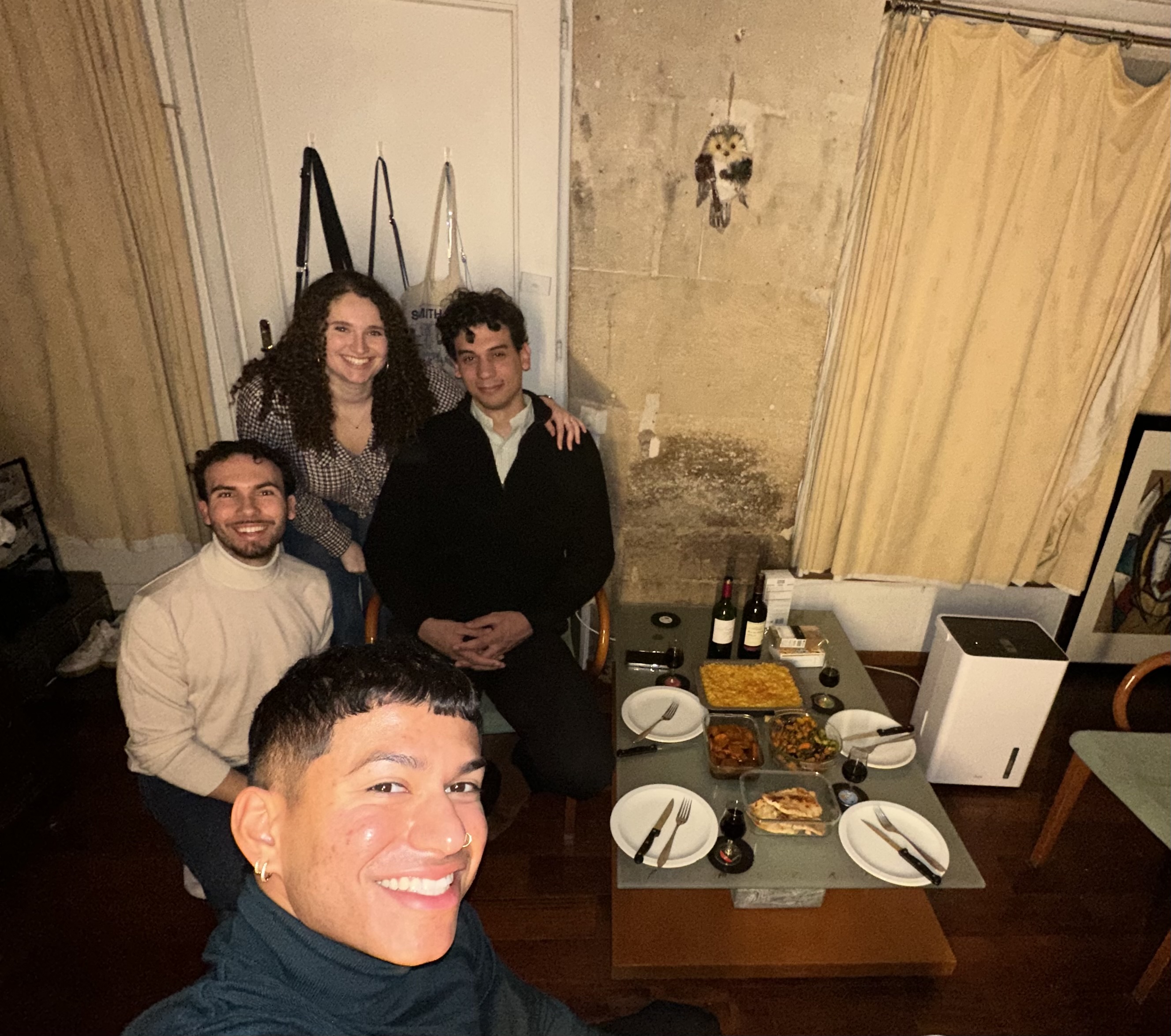
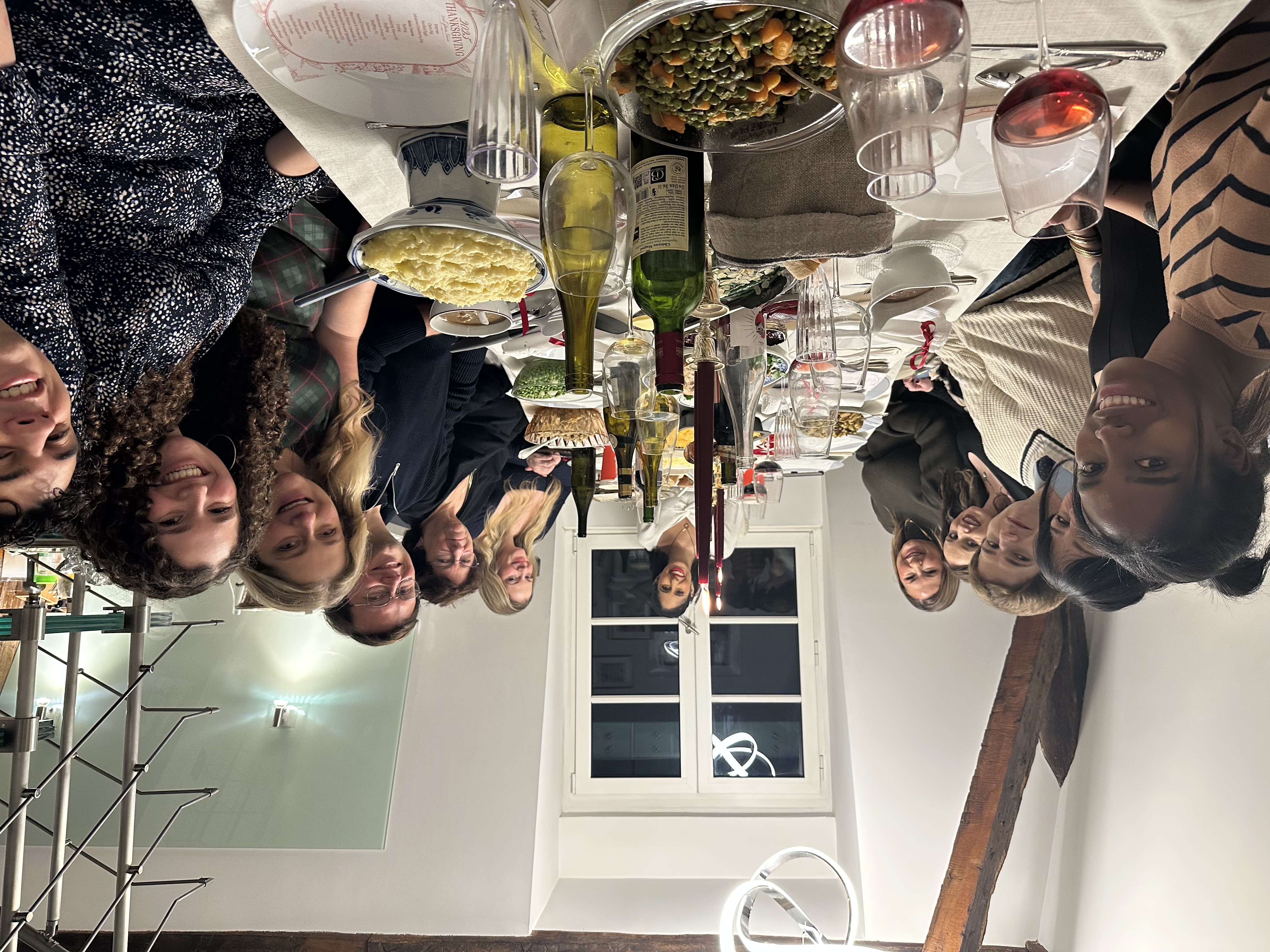
Celebrating a traditionally American holiday in France while away from home and family can feel daunting for some people. As a way of creating new traditions, many AUP students opt for 'Friendsgiving' instead, a celebration of found family and community, that creates a sense of belonging.
Since moving to Paris almost two years ago, Katherine Chai has celebrated the holiday with a Friendsgiving meal, a tradition she started during college in the United States, and has carried with her to France. "It's always fun because we go to an American school, so there are going to be a lot of American students here," said Chai. "And it's also fun for the non-American and international students to come and experience a Friendsgiving and see what it's like."
Participating in holiday celebrations in France allows for a mix of food and cultures, turning something traditionally American into a broader cultural experience that celebrates diversity. Lindsey Jones is also celebrating a Friendsgiving this year with a mix of European and American guests, something she had already done while previously living in France. "The first time I came here, I had a Friendsgiving and it was a lot of fun, especially for the non-Amercians," she said. "They were all excited because they had never done Thanksgiving before. It's fun to participate and it's fun to share. I'm excited, I love this time of year."
For people who have experienced recent loss, a Friendsgiving away from home can also offer a welcome relief for the holiday. Ali Wible comes from a self-proclaimed "big Thanksgiving family" where it was always the expectation that she went home for the holiday. "I've actually never spent a Thanksgiving away from my family," said Wible. However, the recent loss of her grandmother changed how her family decided to celebrate this year.
"Since my grandma passed away, she was like the queen of Thanksgiving, and we just could not imagine celebrating it without her this year and cooking a meal and having her seat be empty," shared Wible when talking about how she is celebrating the holiday. "That's why this year for Thanksgiving, my family has come to Paris and I will be hosting them at my apartment with some of my closest friends."
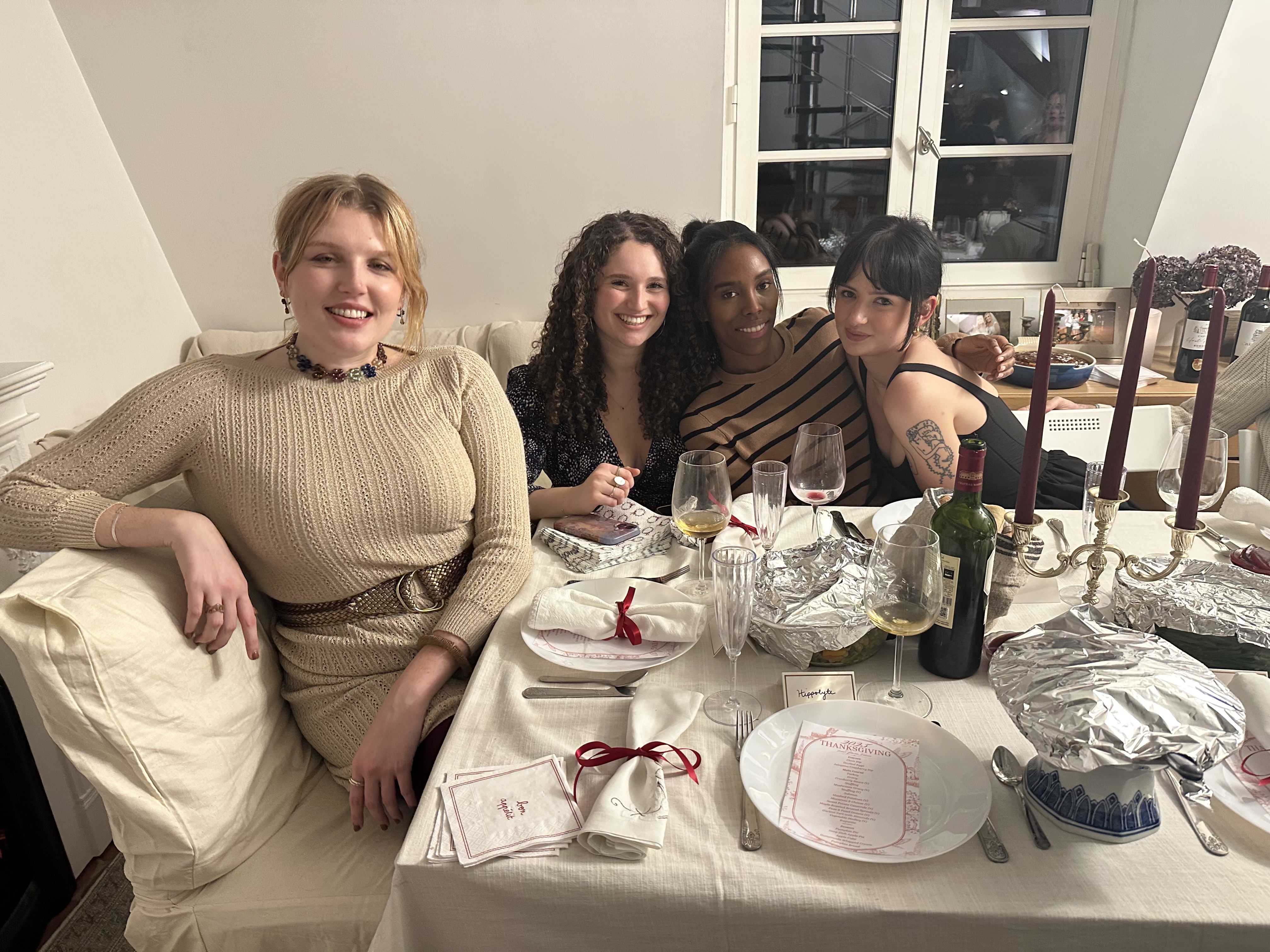
Choosing to celebrate her first Thanksgiving away from home with both her family and new friends, Wible shows how the evolving nature of the holiday can expand across an ocean, encompassing different cultures and generations, to bring them together in light of a grander moment that celebrates more than just the holiday's origin. "For me it means carrying on traditions. I grew up wanting to be just like my grandma, being in the kitchen with her as a kid," said Wible. "Now that she's gone, I feel like Thanksgiving, and carrying that on, is carrying her torch and keeping her alive and the things that were important to her."
While I have not lost any loved ones recently, I could still relate to the sentiments expressed in Wible's words. No matter how far away I am from my family, being able to celebrate Thanksgiving gives me a chance to honor our traditions, recreating recipes, retelling stories from my childhood, and reminiscing about all the years that we spent celebrating together.
When asked if she had any other thoughts about celebrating Thanksgiving abroad, Wible said, "Thanksgiving to me is not about America, it's really about giving thanks for those in your life and that you love."
So, even though Thanksgivings in Paris might look a little different than they do in the U.S. (mine have a lot more wine and cheese), the evolved core values of the holiday can still look the same. No matter where in the world you are celebrating Thanksgiving, or Friendsgiving, this year, the most important thing you can do on this holiday is take a break, even if it's small, and surround yourself with great food, lovely people, and lots of gratitude for those that mean the most in your life, near and far.