Don’t let the Pigeon Inside Your House
There’s a quiet joy in being disconnected. Stepping outside on a sunny afternoon without your phone in hand. Walking, breathing, existing, interacting—fully in tune with yourself and surroundings. Then, eventually returning home to a space that feels private, secure and yours.
Your home holds the things you treasure. No matter how long you are gone, you trust that what lies inside remains untouched. That trust depends on one simple rule: you do not let strangers wander freely through your house.
And yet—what if a pigeon appeared on your porch each day?
It looks harmless and familiar. It watches you come and go, and you ignore it. But one afternoon, you leave the window open. When you return, the pigeon is inside your home. Still harmless, you think as it watches quietly from the corner.
Until one day, you come back to find your home ransacked—drawers emptied, objects used, boundaries crossed. Everything you once considered private has been accessed. The pigeon, in plain sight, looks back at you before flying back out the window.
This is how we treat our digital lives.
If you read Don’t Let the Pigeon Drive the Bus, then you may have suspected the mischief behind its persistence. But without that level of literacy, it’s easy to suspect nothing. The same dynamic exists in the digital world: without digital literacy, the systems shaping our lives remain largely invisible.
Our phones, laptops and smart devices are extensions of our homes—spaces where we store our identities, locations, biometric data, health and financial information, beliefs, behaviors, relationships and memories. And yet, every day, we unknowingly invite pigeons inside.
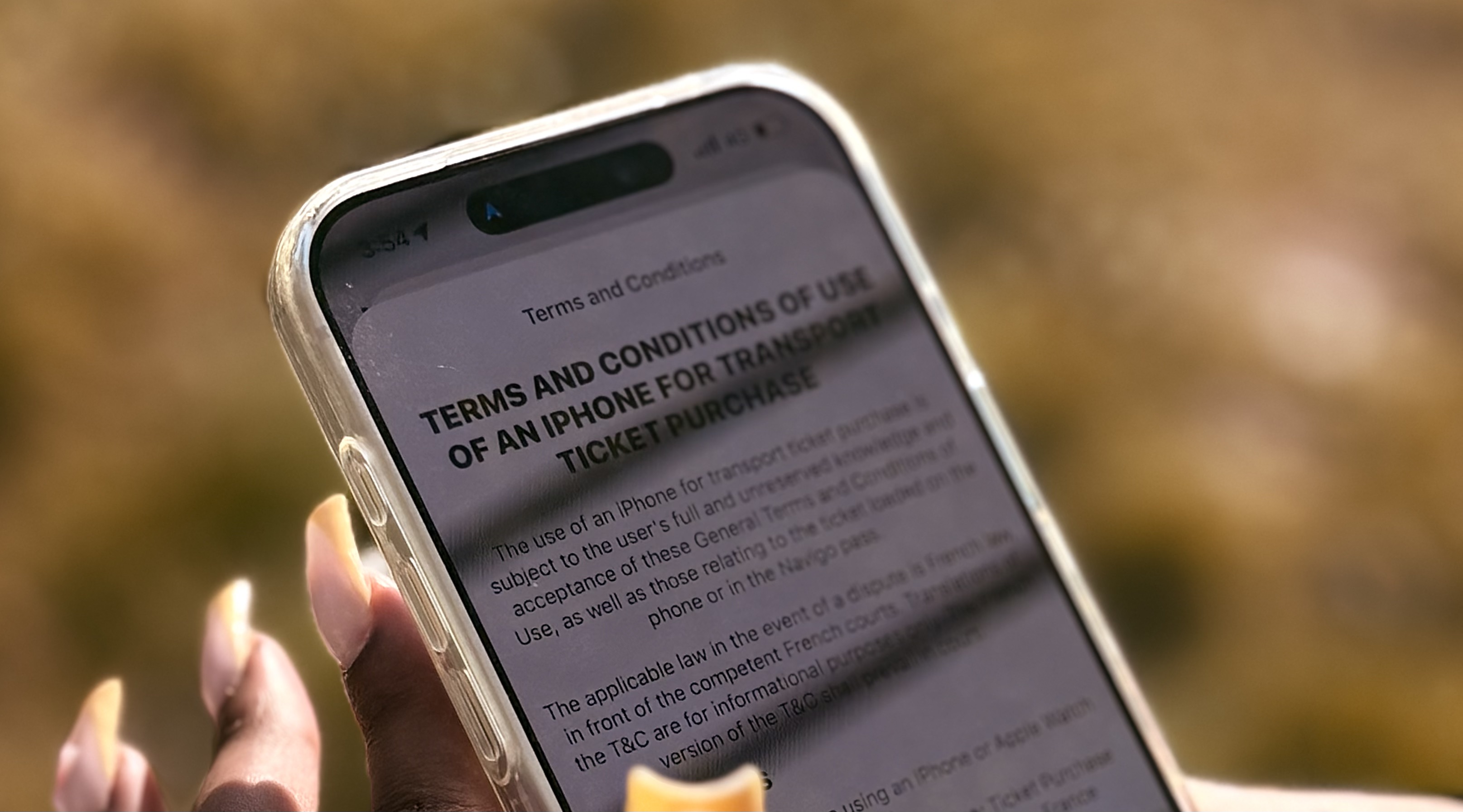
Data privacy notices flash across our screens in dense legal language, disguised by a convenient one-click “agree.” We don’t accept the terms with full understanding of the cost, but rather because participation in modern life, instant access and gratification, increasingly depends on consent without comprehension. The result is not an informed choice—it is coerced convenience.
Your data has become a commodity. Without digital literacy, meaningful consent becomes an illusion, and everyday participation becomes a form of surveillance.

Surveillance as the New Normal
Every interaction with a digital platform—every search, click, location ping, movements, emotions, habits or biometric scans—feeds algorithmic systems designed to predict and influence human behavior. These systems are protected by opaque corporate governance structures and justified by narratives of innovation, efficiency and connection. This process is often described as surveillance capitalism, an economic model in which personal data is commodified to generate profit. The value does not come from what users knowingly share, but from what can be inferred, aggregated and sold at scale.
Under the rise of digital authoritarianism, power is consolidating into fewer hands—corporate, political and technological—at the expense of democratic accountability and human rights. The gap between those who control infrastructure and those who merely use it is widening. In 2025 alone, companies such as Amazon, Apple, Alphabet, Microsoft and Meta generated nearly $2 trillion in combined revenue, illustrating the immense economic power concentrated within the digital economy.
Historically, economic power has always shaped social hierarchies. After World War II, the working and middle classes were increasingly redefined as consumers. Today, as personal data becomes a valuable resource, consumerism has evolved into a system where human behavior itself becomes a commodity.
Digital transformation is being built on top of this same capitalist foundation—this time not through territorial conquest, mass violence, industrial labor, but through the mass extraction of data. Instead of extracting land or labor, modern digital systems continuously extract information about our lives, often invisibly and without meaningful consent.
A small number of technology companies now control much of this infrastructure. Platforms operated by Google, Meta, Amazon, Microsoft and Apple shape how information is accessed, how social relationships are mediated, and how attention is monetized. Their business models rely on maximizing engagement, often through algorithmic systems that reward speed, outrage and emotional response. Over time, this produces information overload and dependence, rather than informed choice.
Social platforms are engineered to maximize engagement through dopamine-driven feedback loops—likes, notifications and infinite scrolling. Human experience itself becomes raw material. As sociologist Nick Couldry describes in his book, The Cost of Connection (2019), this is not merely data extraction—it is “the appropriation of life.”
Surveillance is now framed as convenience, personalization or security where location tracking becomes “safety” and biometric identification becomes “efficiency.” Smart devices promise connection while quietly normalizing constant monitoring. Not only is your data collected, but opting out increasingly means sacrificing convenience, connectivity and personalization—the crème de la crème of modern life.
The danger is not only what is collected, but who bears the cost.
Consider workplaces where employees are required to install monitoring software on personal devices to track productivity or location to keep their jobs. Or consider students who must use proctoring software that records their faces, eye movements and home environments to take online exams. Participation in essential services—education, employment or communication—often requires accepting intrusive surveillance systems.
For individuals with fewer financial resources, opting out is rarely a realistic option. A worker may not be able to refuse a monitoring app required by their employer. A student may not be able to afford alternative software or devices that protect privacy. A community relying on a single telecommunications provider may have no alternative platform available.
Forced acceptance of surveillance deepens inequality. In this way, data governance becomes a new axis of power—one that determines who has control over information, autonomy and digital participation.

When “Connectivity” Becomes Extraction
Governments operate within this system as they increasingly partner with monopolistic corporate entities for data access, surveillance infrastructure and policy implementation. In unregulated or under-regulated environments, this creates fertile ground for exploitation where these entities “readily cooperate with the repressive arm of the state in the form of its military, intelligence and police functions.”
Whistleblower Edward Snowden revealed the existence of extensive national surveillance programs within the United States that relied on cooperation between intelligence agencies and private technology companies. His disclosures illustrated what scholars have described as a “military-digital complex,” a network of secret collaborations between the U.S. government and more than one hundred technology corporations. Documents revealed that companies including Microsoft, Google, Yahoo and Facebook provided access to data from tens of thousands of individual accounts every six months to the National Security Agency and other intelligence agencies. It is clear how closely intertwined corporate technology infrastructure and state surveillance capabilities can become.
In countries without strong data protection frameworks, the risks can be even greater. Nearly one-third of countries worldwide still lack comprehensive privacy or data protection laws. Many nations across parts of Sub-Saharan Africa, Southeast Asia and the Pacific, as well as smaller island states and emerging digital markets, operate without fully developed regulatory frameworks governing personal data. In these contexts, large technology initiatives are frequently introduced as development or connectivity solutions, even when they enable extensive data extraction.
One prominent example was Facebook’s Free Basics program, which offered limited internet access through a platform-controlled portal to low-income users in developing nations. Marketed as a humanitarian effort, the program effectively positioned Facebook as the internet itself for millions of users. Because the platform controlled which websites users could access, it created a closed digital environment where Facebook determined what information was available. Critics argued that this undermined privacy, competition and digital sovereignty—the ability of a nation to control its own digital infrastructure, data and technological development.
The program launched in over 60 countries, and more than 60 digital rights organizations warned that the program risked enabling large-scale data extraction without meaningful consent. Sustained advocacy and public protest eventually led to the program being banned in India, marking a rare and significant victory for digital rights activists.
The consequences of weak digital governance extend beyond privacy as algorithmic systems can reinforce bias, amplify misinformation and entrench existing inequalities.
At the same time, emerging technologies—such as artificial intelligence used in surveillance, policing or military contexts—are being deployed without accountability, faster than the legal frameworks designed to regulate them. We witness global violence documented in real time: wars supported by AI-enabled targeting systems, supply chains dependent on exploited labor to produce batteries and devices and genocides livestreamed through smartphones.
These developments raise urgent questions about accountability, transparency and human rights in an increasingly automated world.
Knowing Your Rights Is an Act of Resistance
Resistance begins with education, empowerment and conscious participation. International human rights law and European Union digital governance frameworks recognize that privacy, dignity and autonomy are fundamental digital rights. Under these legal frameworks, individuals are entitled to protections including:
-The right to privacy and protection from arbitrary interference (UDHR Article 12; ICCPR Article 17)
-The right to access, correct, erase and transfer personal data (GDPR)
-The right to be informed about how data is processed and shared
-The right to explicit, revocable consent
-The right to notification in the event of data breaches
-The right to bodily integrity, particularly in relation to biometric and health data (EU Charter Article 3)
-These rights only matter if they are known—and exercised.

Closing the Window
Closing the window and protecting your life begins with awareness. Knowing what you are accepting when you unlock your phone and agree to its privacy terms and conditions. Understanding that your data is valuable because you are valuable. Choosing platforms and practices that respect human dignity rather than exploit it.
But it also means knowing when to close the window.
Our bodies and nervous systems were not designed for constant alerts, electromagnetic exposure and endless streams of information. Disconnecting is not withdrawal—it is regulation. It is reclaiming autonomy in a world that profits from distraction.
So, do not let the pigeon inside your house. Not because it is evil—but because your home, your body and your data deserve boundaries.
Author Bio
Alisia Simmons is a scholar and professional at the intersection of technology, international human rights law, and sustainable development. She is pursuing an M.Sc. Human Rights and Data Science at AUP (Pre-law), where she also serves as President of the Human Rights & Technology Think Tank under the UNESCO Chair for AI & Human Rights. Her academic and applied work explores how data, digital infrastructure, and governance systems can advance equitable development and strengthen institutional resilience.