Attendance Anxiety: When Being Absent Affects Your Grades
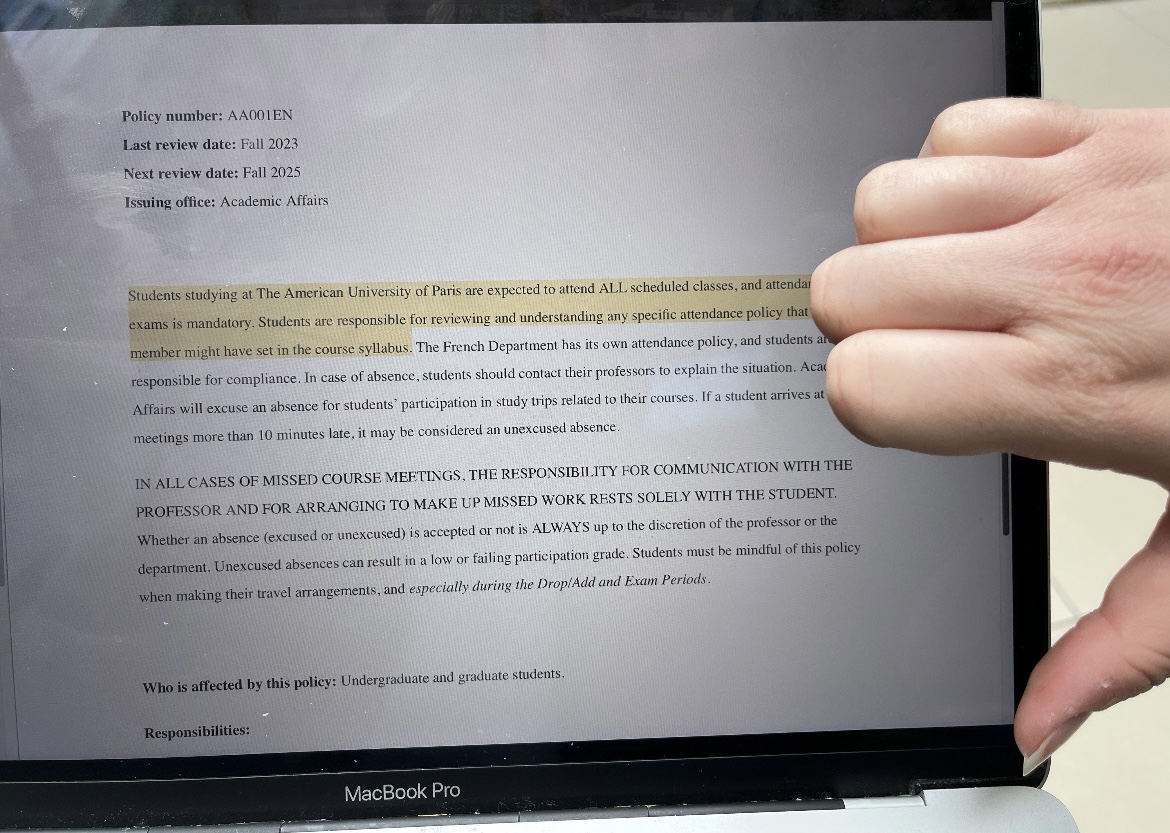
Attendance at AUP feels strict and scary; the official Attendance Policy page states that students must attend all scheduled classes and exams. Even being ten minutes late can count as an unexcused absence. Missing too many classes can lead to lower participation grades and can eventually lead to course failure. It sounds serious, and for many students, it feels strict.
Professors also have the freedom to set their own attendance policies in their syllabus. That means every class can be a little different, and it is up to students to keep track of what each professor expects.
"It really differs depending on which department, with French, their attendance policy is super strict ... but overall in psychology it differs depending on the professor." says Alina, a senior who studies at AUP.
Students Say It Feels Too Harsh
Some students at AUP think the attendance policy is too harsh and could be more flexible. Paris is full of surprises, such as late metros, strikes or health issues relating to physical and mental health that can easily cause students to miss class. But unless an absence is officially excused, the decision often depends on the professor. This can leave students feeling unsure about how their absences will affect their grades.
"Sometimes, I do feel like we are being treated like high schoolers," says Ashley, a senior at AUP. "We are adults. If I miss, maybe a handful of classes due to personal reasons without an official excuse, but I still participate regularly in class and do my work, it shouldn't affect my grade drastically."
Ashley's experience reflects a common feeling among students: many value attending class, but they want the policy to acknowledge the realities of living and studying in a busy city like Paris. Delays, stress and unpredictable schedules are part of our daily lives here. Some students also feel that the policy should acknowledge that sometimes we have days when we don't feel well, even if it isn't a physical discomfort. Some days, mental health plays a major role in whether a student is able to show up and fully participate, especially with the stress we tend to carry.
For many, the issue is not about skipping class or being careless but about wanting a policy that understands the full picture of student life, one that balances responsibility with a little compassion.
Communication Can Make a Difference
The attendance policy does encourage students to communicate with professors. If a student knows they'll miss a class, they are expected to reach out to their professor and take the responsibility of catching up on class activities and work. The Office of Academic Affairs notes in the policy that arranging make-up work is "solely the student's responsibility."
"Some professors are chill, some are not ... If you know that you can miss classes, talk to the professor directly" says Alina, a senior year student at AUP. "if you have problems with mental health, which can affect attendance ... I have noticed that with most of my professors we have this conversation (when she communicates about missing classes) ... all of them thank me for telling them that ... they know it is not because I don't care about class."
We all have days where we need a mental health break, and she explains how being honest has helped her a lot. Her experience shows how important communication is for AUP's attendance policy. By talking with professors beforehand, students can often find support and understanding instead of receiving penalties. While the policy itself feels and sounds scary, communicating with professors has a better outcome and makes the policy itself sound less intimidating.
Looking Forward
The attendance policy at AUP may feel overly strict and intimidating, but that does not mean it has to stay that way. As conversations about mental health, student well-being and academic pressure continue to grow, many hope the policy will evolve to better reflect the realities of student life. However, clear communication between students and professors is important when one does need to miss a class, whether it is due to mental health, personal issues or other situations. Communicating with your professor can also be a stronger part of how attendance is handled in the future.
Students want an approach that recognizes responsibility but also understands that life can sometimes get in the way. As AUP continues to review its academic policies, there is room for more flexibility, clearer expectations and stronger support for students who face challenges outside the classroom. However, Health Services at AUP does offer support and sends out reminders now and then that one can talk to someone at school in case of severe stress or other issues.
Ultimately, looking forward means imagining an attendance policy that encourages honesty, communication and compassion while continuing to keep academic standards strong.