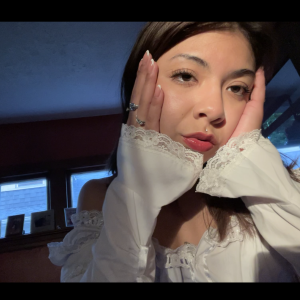
Art, Labor, and Liberation at Théâtre Chochotte
Théâtre Chochotte's history
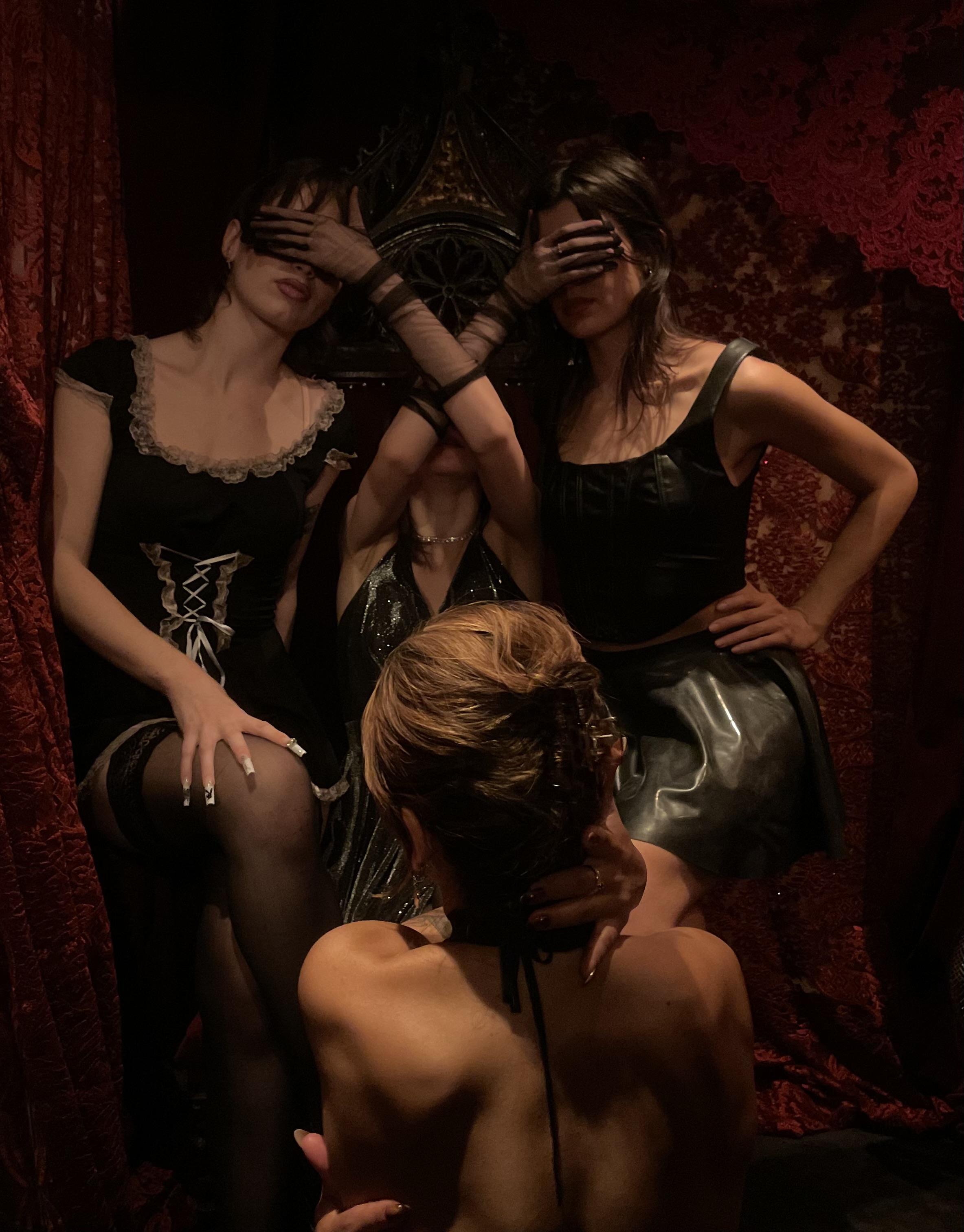
Tucked into the cobblestone pulse of Paris's sixth arrondissement stands an erotic theater with a story as provocative as its stage. Built in 1986 on Rue-Saint-André-des-Arts, Théâtre Chochotte was once the decadent dream of an infamous fashion designer known only as Madame.
After years spent dressing women in silk and desire, Madame decided to undress them — but for liberation. Her vision was simple and scandalous: where the naked body could become art, where eroticism was not merely spectacle, but expression.
This is no Crazy Horse. Chochotte trades grandeur for intimacy, spectacle for substance — a velvet cocoon glowing with sensual rebellion. Each night, beneath the soft light and the hum of anticipation, dancers transform the stage into a living canvas of body and motion. “She once dressed women – and then undressed them – in the name of creative freedom,” Mademoiselle.
When Madame retired from her cadre of les filles, she passed the reins to Mademoiselle, better known as Anaïs — a former dancer turned dominatrix whose story reads like a hymn to Parisian reinvention. With a fortune earned in the underground erotic arts, Anaïs purchased the theatre she once performed in.
Chochotte became a sanctuary. It became a stage for women to choreograph their own power.
When we spoke, Mademoiselle (Anaïs) recalled the moment everything shifted:
“It was when I first held the flogger,” she told me. “The rest was history.”
That instant—the tactile charge of control, rhythm and release—opened something within her. She began to see domination not as a darkness, but as a discipline, a performance of confidence and care. She speaks of the theatre as both a refuge and a challenge: “This is a place where we have full liberty to express ourselves,” Mademoiselle said. “You should take advantage of that freedom, without limits, and see how far you can take your career—as a dancer, as a performer, as an artist.”
To Mademoiselle, performance is a kind of strategy—one that requires nerve and nuance. “It is a chess game,” she mused. “Except you are the pieces. The clients are the board. You move through them—a labyrinth of desire and attention—and you decide where the power goes.”
She insists that good art requires risk. Her hiring philosophy is simple: she looks for originality, not imitation. “When I see a girl perform,” she said, “I don’t want Crazy Horse glamour. I want rawness, creativity—a sense that {the dancer} is discovering herself while performing.”
Though she dreams of expanding the theatre someday, Mademoiselle admits that Chochotte’s intimacy is its soul. The space—small, crimson, perfumed with history—is what makes the experience sacred. “If we grew too big, we might lose that sweetness,” she said softly.
For now, she is content to keep the lights low, the stage small, and the art electric. As both owner and former dancer, Mademoiselle inhabits a rare duality: boss and confidante, visionary and veteran. She understands the exhaustion behind the glitter, the risk behind the smile. “I know what it is like to dance for someone,” she told me. “That is why I protect my girls. I’ve been them.”
Nana: the black panther of Chochotte
If you find yourself at Chochotte during the evening changeover — that twilight hour when the day yields to neon — you might glimpse Nana, the theatre’s self-described wild card.
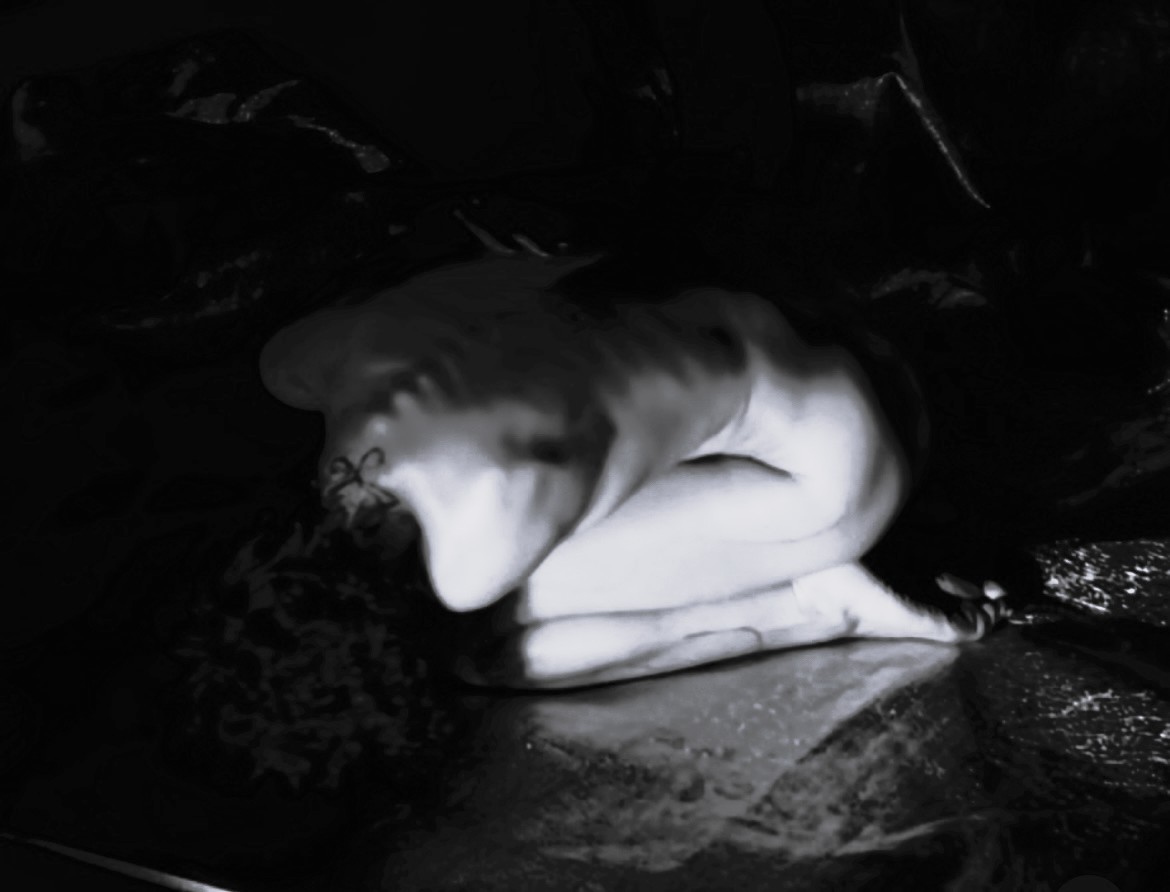
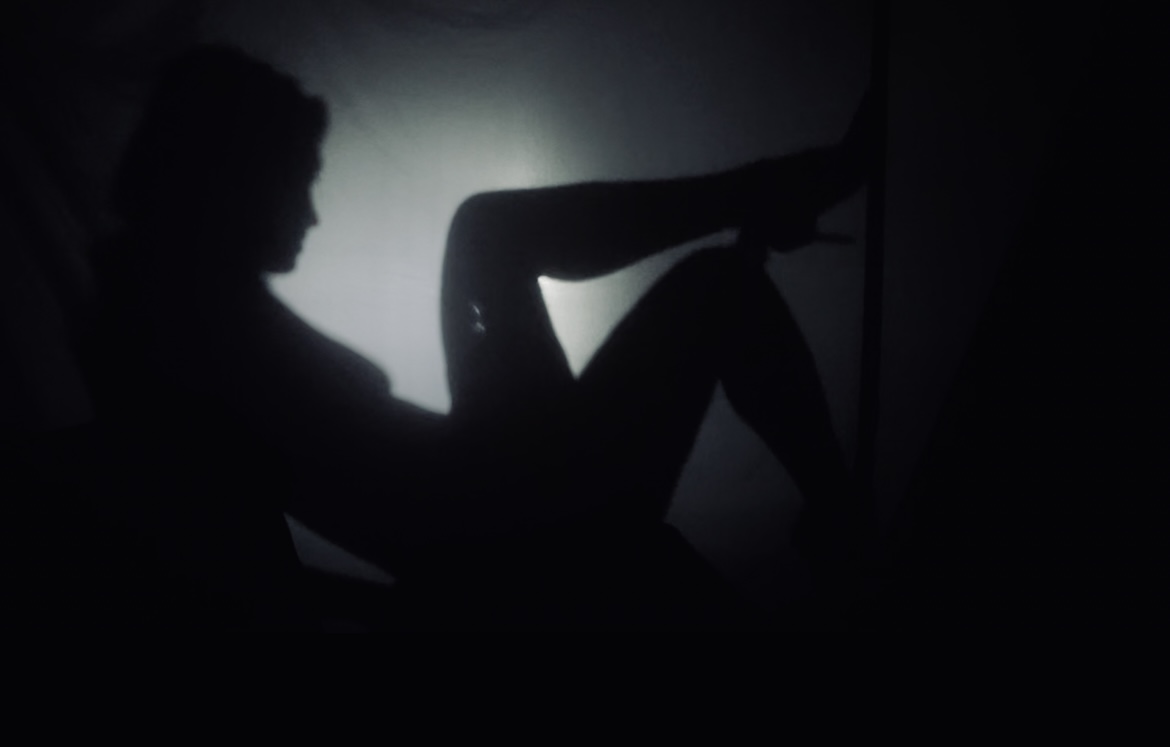
Her shows feel less like performance and more like ritual: a blur of silk, sweat, and rhythm. One night she balances her jambes de biche (doe-like legs) in a near-impossible pole routine; another night, she commands the light itself, angling a lamp toward her face in near-darkness. Sometimes, she floods the stage with water, dancing through the liquid sheen like a creature reborn.
“Cloaked in blue, red, or green light, Nana is Chochotte’s black panther — feral, feminine, unforgettable.”
Nana first heard about Théâtre Chochotte from another stripper. “I wanted to work in a strip club,” she recalled, “but she told me it would be better to develop my character at this theatre first.”
Her curiosity was both physical and artistic. “I’ve always been into gymnastics and acrobatics,” she said. “I wanted to move my body again — to find something that combined dance, cabaret, and that sense of self-expression.”
Trained as a scenographer, Nana’s approach to performance is rooted in visual composition. “Scenography is about mastering the stage,” she explained. “I used to design spaces for others — in museums, opera houses — and now I wanted to step onto the stage myself, to see what I could do.”
She quickly found that Chochotte’s stage was unlike any other. “The performances are all different,” she said. “We follow certain rules, but each girl expresses herself in her own way — through her movement, her music, her story. That’s what makes this place so alive.”
What she hopes audiences take away from her performances is simple but profound: “Intensity and creativity,” she said. “When people tell me they felt that, I know I did my job.”
Offstage, the theatre’s sense of sisterhood surprised her most. “I’ve never seen such an amazing sorority,” she said, her voice softening. “The girls are strong, confident, and incredibly kind — both with each other and with themselves. It’s like being in a family. Sometimes it’s intense — we’re together all the time — but we communicate, we express things. When there’s tension, we talk, we understand, and we move forward.” She paused, smiling. “To me, it’s like we’re under each other’s skin. Working here feels like being in a uterus — warm, protective, natural.”
On the question of confidence and vulnerability, Nana reflected deeply. “At first, I gained confidence through the clients’ vulnerability,” she said. “They trusted me enough to make themselves vulnerable — to share their desires and their intimacy. That helped me understand that my own vulnerability could be a strength too. On stage, I’m confident. My body gives me strength. My real vulnerability comes from my thoughts, my emotions, my private life. But that’s also where I grow.”
For her, Chochotte has never felt unsafe. “I’ve rarely seen trouble here,” she said. “If anything, I’ve learned to feel calmer, more grounded. I used to be very competitive, always pushing to be perfect. This place taught me patience, gentleness, and how to stop feeling guilty about simply experiencing things.”
Nana's artistry now feels like a synthesis of everything she has learned. “This job taught me that I do know how to dance — how to move,” she said, laughing. “It’s a place where you explore fantasies and creativity. As an artist, I’ve learned to combine my skills to serve the audience better. As a worker, I’ve learned communication. As a person, I’ve learned to be kind to myself.”
When she thinks about her future, Nana hesitates. “This theatre will always be a part of me,” she said. “But will I still be dancing here in ten years? Honestly, I don’t think so. Still, whatever I do next — this place, this experience — it’s in my bones.”
Sacha: the angel reborn
A fallen angel with piercing blue-green eyes, she descends Chochotte’s infamous red stairs in a Trixie-inspired coat that appears to be lifted straight from The Matrix. As Massive Attack’s Angel swells through the room, she becomes a vision — moving like oil and water, elusive and unstoppable.
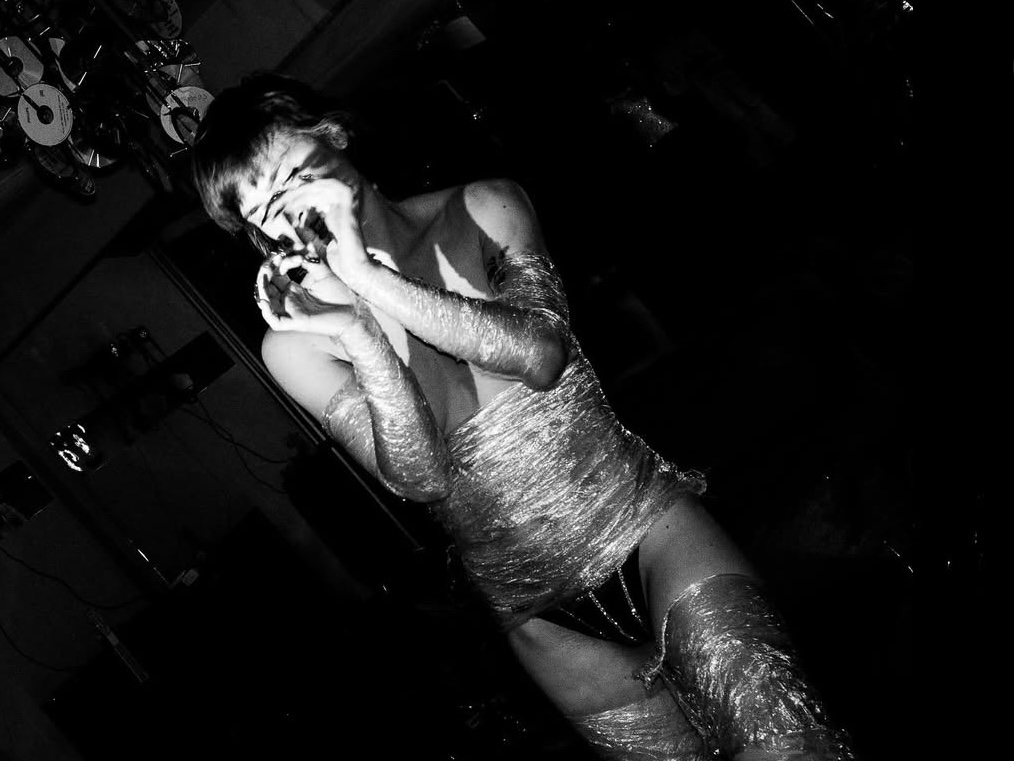
Her act, Plastique, is a study in transformation. Layer by layer, she peels away a tar-like costume to reveal a cellophane skin beneath — fragile, suffocating, and glistening. It’s less striptease than self-exorcism, a choreography of metamorphosis.
By the end, she stands free — shimmering, breathless — as if she’s shed the world’s expectations in one sweep.
After the show, Sacha speaks with the kind of confidence that doesn’t need to prove itself. Before Chochotte, she worked in escort services.
“One of my sugar daddies mentioned this place,” she admits, smiling. “A theatre where women could create rather than just perform.” What convinced her wasn’t the pay — though she notes the goal for many dancers is to earn l’intermittence du spectacle, France’s performance artist unemployment program — but the promise of autonomy.
Liberation and labor
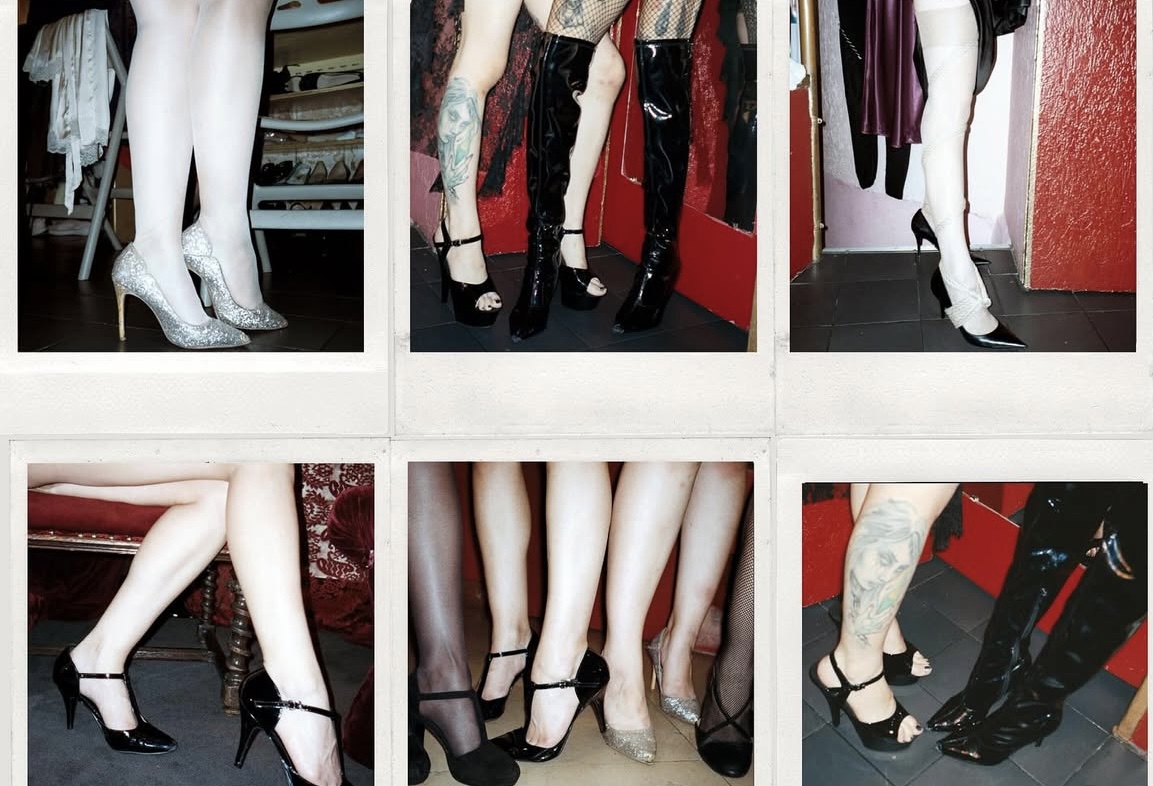
To qualify for l’intermittence du spectacle, dancers like Sacha, Nana, and moi perform seven times a night: four or five solos lasting up to eighteen minutes, plus two duets. Everything done with at least 5–8 inch heels, full set of makeup, nails done, and a variety of costume changes having to be done within the span of 15–20 minutes between each show.
Then there are private shows — les privates — where clients pay for intimate, often improvised encounters. These encounters — personal performances, duets and privates — require a lot of emotional and physical labor. Our bodies are our money makers, so if we are not mentally or physically well, our job can be extremely stressful and we might end the work day with a sense of defeat and no extra money gained from privates or tips.
“We WORK,” Sacha laughed.
“People think it’s all glitter, but it’s really glitter and grit," I added.
Each dancer's pay is fifteen euros an hour, and thirty percent from private shows. If a tip passes fifty, half of it goes to the theatre. The glamour, it seems, is a luxury taxed by labor.
Still, Sacha speaks of discovery, not defeat. “I realized I like to be watched,” she told me. “There’s power in that — in showing your vulnerability. But you have to be confident, even when the audience’s energy isn’t.”
When asked if she feels like two women, Sacha the performer and Sacha the person, she shakes her head. “I used to krump,” she says. “I don’t plan much. I just let my body speak. Even when I try to be sexy, the krumping still comes out.” She laughs, a little wild, a little wise.
For all its contradictions between empowerment and exploitation, intimacy and performance, Théâtre Chochotte remains what Madame intended it to be: a space for revelation.
Here, women are not merely seen, they stage the act of being seen. They transform eroticism into authorship, desire into discipline, nudity into narrative.
Perhaps that was Madame’s genius all along. To not just undress women, but to strip the world’s assumptions about them. Beneath the red velvet curtain, amid the soft perfume of sweat and spotlight, there’s something revolutionary happening.
At Théâtre Chochotte, the body isn’t just an object of desire — it’s a work of art.
Author's note
As a future sex therapist, researcher, and medical professional, I place great importance on informed consent and ethical transparency. Prior to conducting the interviews, I debriefed each participant regarding the purpose of the interviews, the intended publication venue and the objectives of this project.
All participants provided verbal consent for the use of their chosen photographs, recorded statements and interview materials. These measures were taken to ensure the protection of each participant’s confidentiality, identity and the integrity of their contributions.
Written with unabashed admiration for the belles of Chochotte — from Angel, to those who know me best.