
Understanding Alcohol Culture at AUP
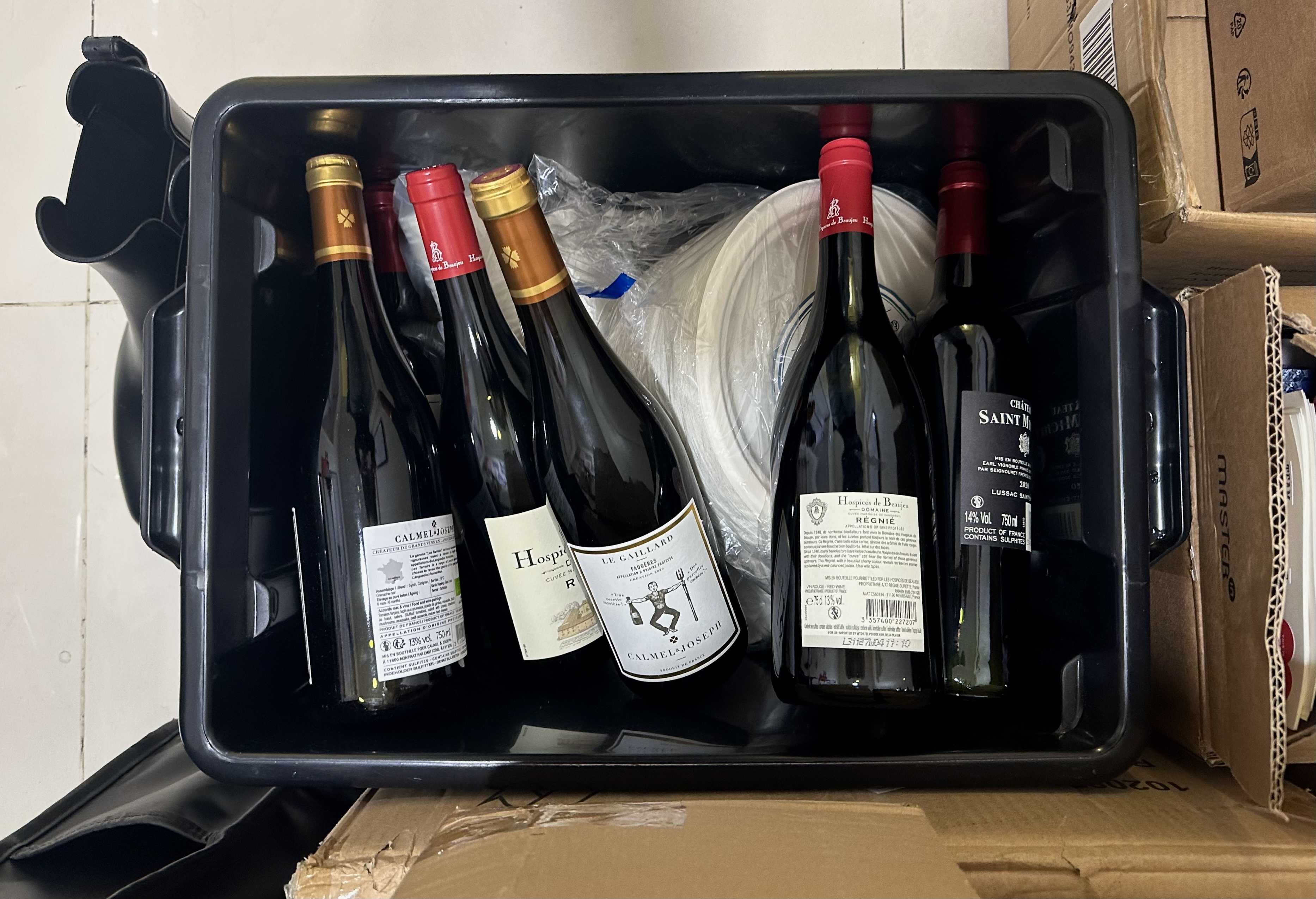
Until 1956, French school children were served wine with lunch. Decades later, that ritual finds a quiet echo at the American University of Paris, where student clubs still pour glasses of wine on campus under university budgets and bylaws. From launch parties to mixers and academic panels, alcohol has become a fixture of university life.
At a recent “Meet the Treasurer” workshop, one question stood out: How much of the university’s student budget goes toward alcohol — and should there be limits? Despite the frequency of campus events serving wine and beer, neither the AUP Student Government Association (SGA) Constitution nor the Student Handbook addresses alcohol-related spending or consumption, prompting questions about transparency and accountability.
A Budget with No Mention of Alcohol
Every Wednesday, senators review and vote on proposals from student clubs, many of which include requests for wine or beer. Yet no formal cap or spending guideline exists. SGA manages a six-figure budget — €60,000 for clubs, €28,000 for social activities, €2,000 for senators and €10,000 for the Executive Board.
“There’s been no indication of a specific cap for categories like food or drinks,” said Camille Davis, Student Leadership Program Manager at AUP. “Sometimes the Activities and Clubs Committee gives feedback to make sure the budget makes sense given the size of the event — to make sure it’s not overly excessive.” She added that senators occasionally ask practical questions about alcohol, though less about consumption.
French Tradition Meets an American Institution
Serving wine and beer at student events reflects differences in local policy and student culture. “The fact that we live in France changes who we are as an American university,” said Kevin Fore, AUP’s Dean of Student Development. “Most American universities are based in the United States, where the law says you can’t drink alcohol until you turn 21. Here, that’s not the case.”
“Alcohol isn’t taboo. It’s part of the culture, and I’d even say part of education,” Fore continued, noting that moderation and inclusion guide AUP’s approach. “Hard alcohol is not allowed on campus. When we do have alcohol at student events, it’s about having another element of the culture at that event just like you'd want to have cheese. It just shouldn't be the focus and it shouldn't be an excess.”
He highlighted adjustments to longstanding events: “World’s Fair used to be a popular tradition where the focus shifted to alcohol. We changed the rules so only a certain percentage of the budget — about 10% — can be used for alcoholic beverages.” Similar changes, like replacing alcoholic beer with non-alcoholic options at the annual Boat Party, reflect this balance.
Marc Montheard, Vice President of Student Services, agreed: “Any consumption on campus is, I wouldn’t say controlled, but supervised — staff are there to monitor.” He emphasized accountability: “The treasurer is expected to ensure that the approved budget has been respected. If a club submits a deceitful budget, I’d expect they wouldn’t be reimbursed.”
Montheard explained that while many universities allocate a budget to their student government, what may differ at AUP is the amount of money distributed directly to clubs. He noted that some institutions keep tighter administrative control over student activities, while others, like AUP, delegate more financial authority to students. “Making them responsible and accountable is also another way of educating students,” he said.
Still, the absence of an explicit alcohol policy raises questions about how consistent oversight truly is. When asked whether AUP plans to implement clearer spending limits in the future, Montheard said, “Not that I’m aware of.” Fore and Davis echoed that sentiment, indicating they were also unaware of any policies under discussion.
Funding Transparency and Student Awareness
Several students said they were surprised by how much of club funding goes toward alcohol. “Some club leaders have told me they’re not sure why so much is allocated for alcohol and so little for other things,” said Rahel Ladwig. Grishma Shrestha added, “I don't think I've ever heard about the funding of club events... I wasn’t aware that there's a pretty substantial portion... That’s very surprising.”
Raneem Grira, senior, Student Government President and founder of AUP’s Astronomy Club, highlighted transparency concerns: “If you took a little statistic look at all of the budgets from last year and what percent of those budgets were alcohol — a good 25% of that money was alcohol out of that €100,000. That's my guess. But it has to be at least around that number. That’s crazy. Every budget that kind of comes around, it's like at least 10 to 20% of it is alcohol. It’s our money. This is something that we should acknowledge, but we don't really ever talk about — whether good or bad.”
Ladwig emphasized tailoring guidelines by event type: “There’s a difference between a big social event where serving alcohol makes sense and an academic club meeting or discussion where it doesn’t.” Azul Espinoza, third-year student and VP of Casita, echoed this: “Alcohol is expensive, so we’d rather spend our budget on food that represents our culture.”
Student Observations and Experiences
“When I first came here as a freshman, I was shocked to see people drinking in the student café at 1 p.m. on a Wednesday. I was like, what’s going on? Don’t you have class?” said Asha Bimitriev Wiratnanto, third-year and Student Government Vice President.
Ladwig noted moderation in her club’s events: “Three bottles for twenty-five people,” always accompanied by non-alcoholic options.
Grira also recalled a Grad Gala anecdote: “The guy [server at the venue] was like, ‘Never in my life have I seen a group of people consume this much alcohol before.’ And Asha and I just looked at each other and burst out laughing — like, this is France! The country of wine! And we still managed to surprise them.”
She highlighted the gap between student realities and administrative perception: “Every club leader has had this conversation. When they say this is a non-existent problem, it’s because they’re not listening to club leaders enough. Administration probably is blind to it — and it’s not their fault. They’re not there themselves.”
Rules, Grira added, are inconsistently applied: “There’s supposedly a rule against hard liquor, but I couldn’t even find it in writing. I was just told it verbally.”
Cultural Lens and Campus Inclusion
Alcohol also intersects with students’ international identities. Shrestha observed, “Americans under 21 are often more excited to drink or more focused on it, while Europeans or those who didn’t grow up in America are more relaxed about it because it's normalized for them.”
Grira reflected on her multicultural upbringing in Tunisia, Texas and Dubai: “In my brain, alcohol is associated with the West.”
Wiratnanto added, “It does make it feel more European, for sure. Here it’s common to go to an event and have a glass of wine, or go out with your friends and have one,” noting France’s lower drinking age encourages students to drink more frequently than in the U.S.
Wiratnanto noted participation shifts by class year, saying, “First-years are more inclined to go to campus events for alcohol than the older students… Even if there is alcohol, there is less and less participation as you are older at AUP. But nevertheless, I think people still enjoy events either way.”
Grira summarized the ethical complexity, saying, “It’s interesting that it’s so normalized. No one sees it as a problem or hazard — but ethically, it’s still a question.”
Reputation and Broader Perspective
Several students noted AUP’s drinking culture shapes its image. Ladwig said, “When you look up AUP on Reddit or university finder sites, there’s always a comment about alcohol consumption, which is really interesting because that's not the first thing you expect when you search for a university.”
Wiratnanto noted, “It definitely changes how parents and new students see the school. It can create a negative connotation for the university, but it’s also part of the culture, so you can’t really fight with that.”
Grira discussed pushback when challenging norms: “A lot of people can put you down as a student who’s too loud or not falling in line… I’d rather be seen as a bit too loudmouthed than just shut up and go along with things. With an alcohol policy, it may seem small, but it’s connected to other issues — if you let this slide, eventually it all comes out.”
Ladwig called for broader discussion: “It would be great to have a deliberation process — a real discussion about it — because I think it’s a huge topic that we sometimes negate.”
A Glass Half-Full
As debates about transparency continue, AUP balances its French environment with American identity. Grira emphasized regulation rather than prohibition: “The issue is the behavior around it not being regulated, rather than the actual consumption or existence of it. All we need is just a couple guidelines. Nothing crazy.”
She added that even clubs heavily centered on alcohol, like the Wine Society, have included non-alcoholic options. Grira suggested requiring soft drinks and water whenever wine is served: “You can’t just have wine only. Students who come to events shouldn’t be required to consume their only option being alcohol.”
Grira reflected on the social impact: “A student who might be sober, struggling with alcoholism or can’t be around alcohol for religious reasons is basically excluded from the majority of events here. That breaks my heart.”
Wiratnanto noted rules can guide behavior while preserving tradition: “We shouldn’t change the constitution too often, because then it kind of delegitimizes it. Ideally, students submit amendments through the Judiciary Committee. If it’s approved, it goes to the Senate in the spring for a vote. Any student — not just senators — can submit an amendment.”
Town halls could complement this: “We’re planning to hold a town hall once budgets are done so we can focus more on discussion and student concerns… Budgets take up so much time — we want to have more conversation and less just voting.”
Some students remain concerned about excess: “Sometimes there’s so much leftover that people take it home, and I don’t think that’s necessary,” Wiratnanto noted. Others accept alcohol as embedded in campus life, Shrestha said, “It’s definitely a privilege. Not a lot of universities would even permit students to drink on campus… It’s kind of one of the pillars of our events.”
For now, as long as moderation remains the norm and guidelines are enforced, AUP’s glass — and its policies — remain half full.


