Paris Falling into Beauty Trends
Between Glow and Pressure
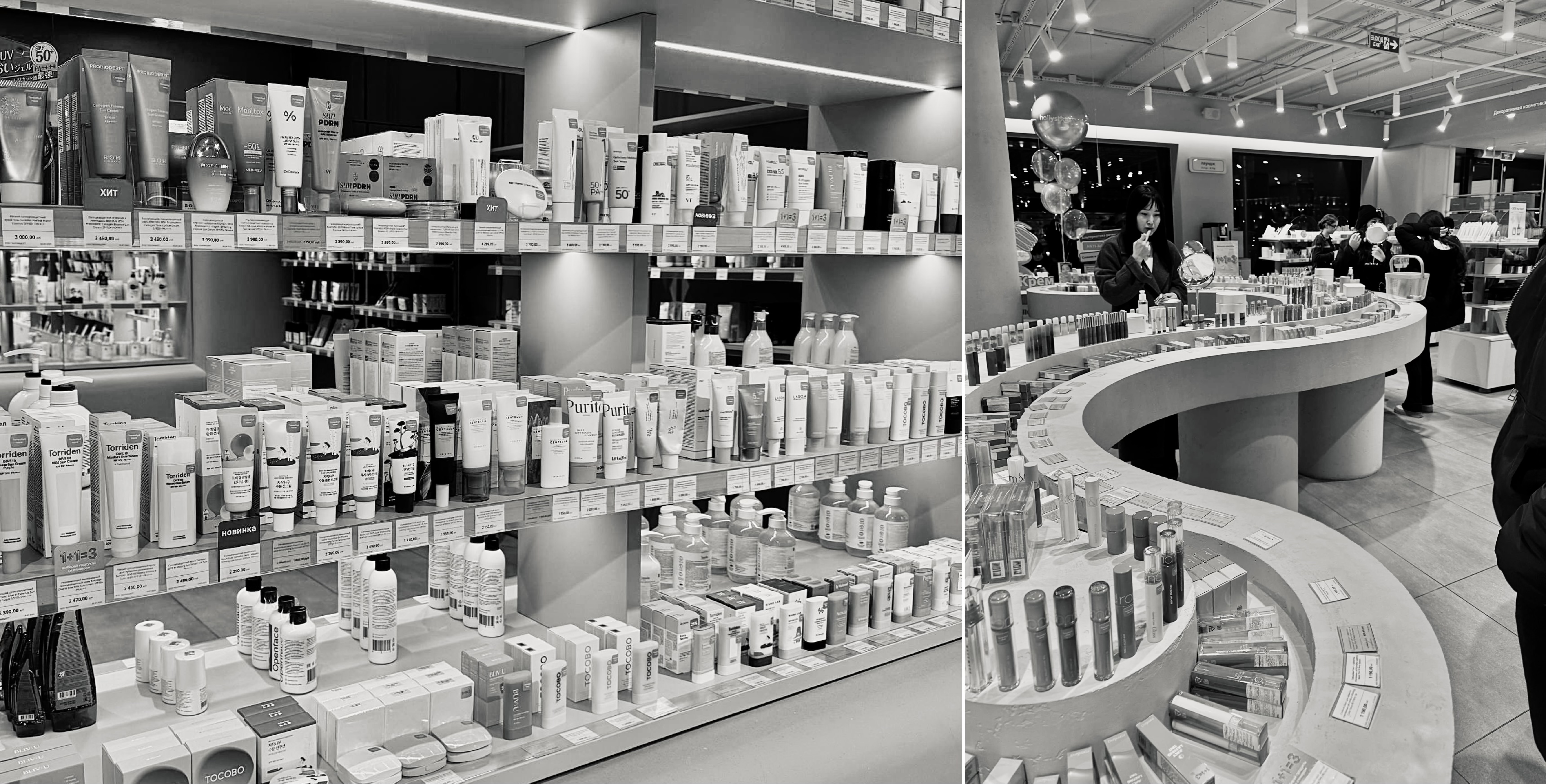
Walking around Paris and bumping into a K-beauty (Korean Cosmetics Store) has become very casual. Over the past few decades, the beauty market has undergone significant changes as Korean beauty has spread worldwide. When thinking of the traditional beauty market in Paris, what comes to mind are the French pharmacy brands, Sephora with European and American products, but very rarely Korean. Despite the conservative culture, Paris has been warm and welcoming and available to foreign K-cosmetics over the last year. People are hustling and bustling around the trend, yet it serves societal biases. It seems like, while trying to achieve the perfect skin gloss, young people are losing a realistic grasp of what a healthy appearance looks like.
The Rise of the Phenomenon
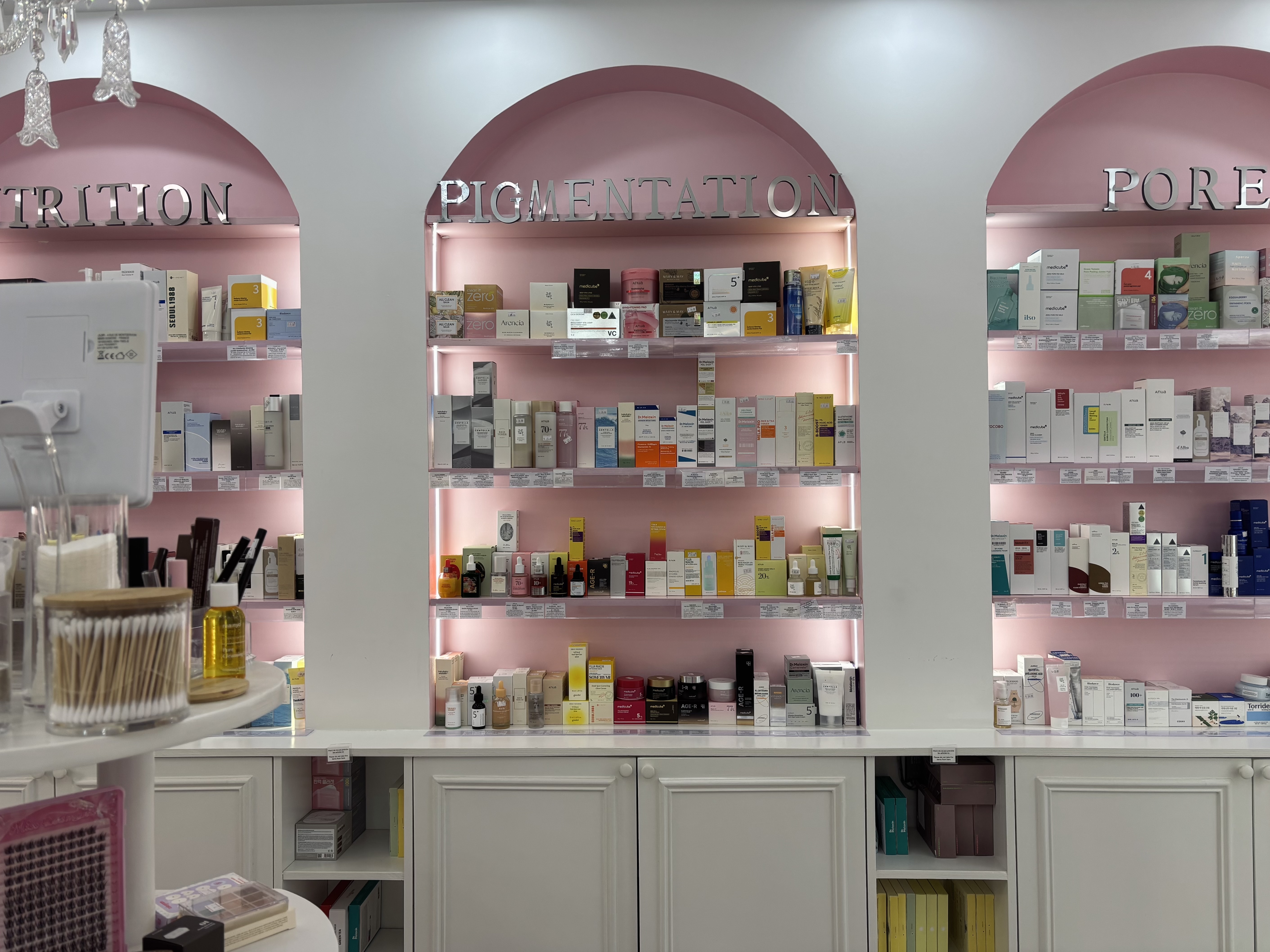
The Korean cult of perfection hides behind the aesthetic of stores and products. Becoming so viral in South Korea, the boom in appearance has led to the common belief that external attractiveness leads to better employment. It is surprising how, by the age of 30-39, around 31% of women in South Korea have undergone plastic surgery. What is more, the men's beauty market is also developing rapidly, suggesting that perfectionism is spreading across genders. Seeing people from different backgrounds makes me think about what forms their identities. The line between beauty and obsession blurs, where unrealistic images of appearance bring us to personal dissatisfaction. In this scenario, a Hallyu, in other words, “Korean Wave”, forces the lookism prism across young women. In other words, a cultural stereotypical preconception based on prejudice, where people follow biased expectations of beauty.
Recent statistics highlight: “K-beauty products generate over $9.3 billion in global exports annually.” Parisian land, unlike my earlier assumption that it would remain traditional, has welcomed K-beauty stores in growing numbers. Remembering how, a year ago, in a French Cosmetics boutique, a consultant did not know what a hydrogel face mask was, it has now turned over. It seems to be a big stage for a city to step aside from traditional expectations and move forward with global trends.
From my perspective, people are attached to beauty coverage, and Korean Cosmetics are strong in creating images. Whenever an item looks good, it boosts mood and becomes part of the routine. K-beauty is bright, often pink, with smooth lines and soft materials. My cousin Anna said that she gets joy from cool coverage, and that "the variety of any products is crazy.” Sounds like something relatable to many of us, but should people question the worthiness of those beautiful appearances? To me, trends indeed bind young people to societies and facilitate interactions. However, behind the pros remains the loss of identity. Varavara is one of the people who always knew the trend's limits and noticed the other side of Hallyu, saying, “I really try to stay mindful about K-beauty, don't forget about the uniqueness of each woman." She shared how some of the production might take place, but "remember yourself first."
Moving to the brand's policy, the Marketing of K-beauty forms consumption behavior. A 10-step skin care routine is not a scientific necessity, but rather an unnaturally created ritual to make people buy more. In this reality, it seems to me that women, especially younger girls who have only just begun to take cosmetic care of themselves, can easily fall into a trap of endless novelties. Fortunately, more influencers are beginning to accept that a minimalist skin routine is more efficient and are encouraging people to consume products more consciously. Finding yourself under pressure of society to be more responsible, but at the same time, constantly seeing the abundance of everything in Paris gets tricky.
Paradoxity and Danger
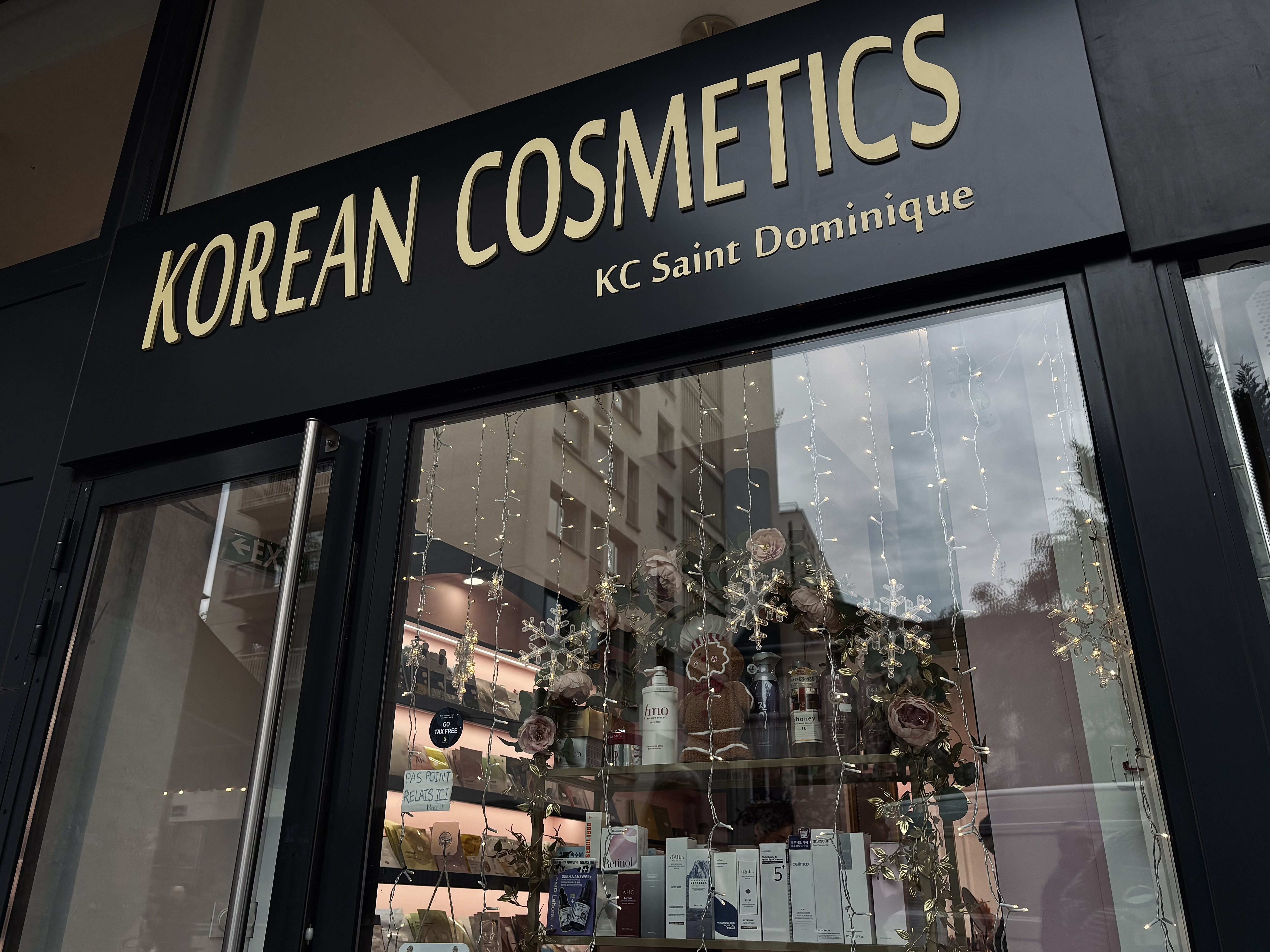
With more plastic surgeries rooted in Korean culture, the standards are showing to be unrealistic, especially for the European market. We should learn to accept the features of all skin types we are born with. Some things can not be changed, and this journey is all about learning yourself. In a multicultural society where 29,000 Koreans live in France, being abroad means exploring the world's diversity. What seems to me important is finding who you are, while having an opportunity to choose and be inspired by the environment. With stores available throughout the city, and one on Rue Saint-Dominique next to the AUP Campus, we can easily lose our grasp of ourselves. We are rich to learn about the world, trends, and cultures, but remember how the external voices might not reflect your inner reality.