Don't Leave the Room
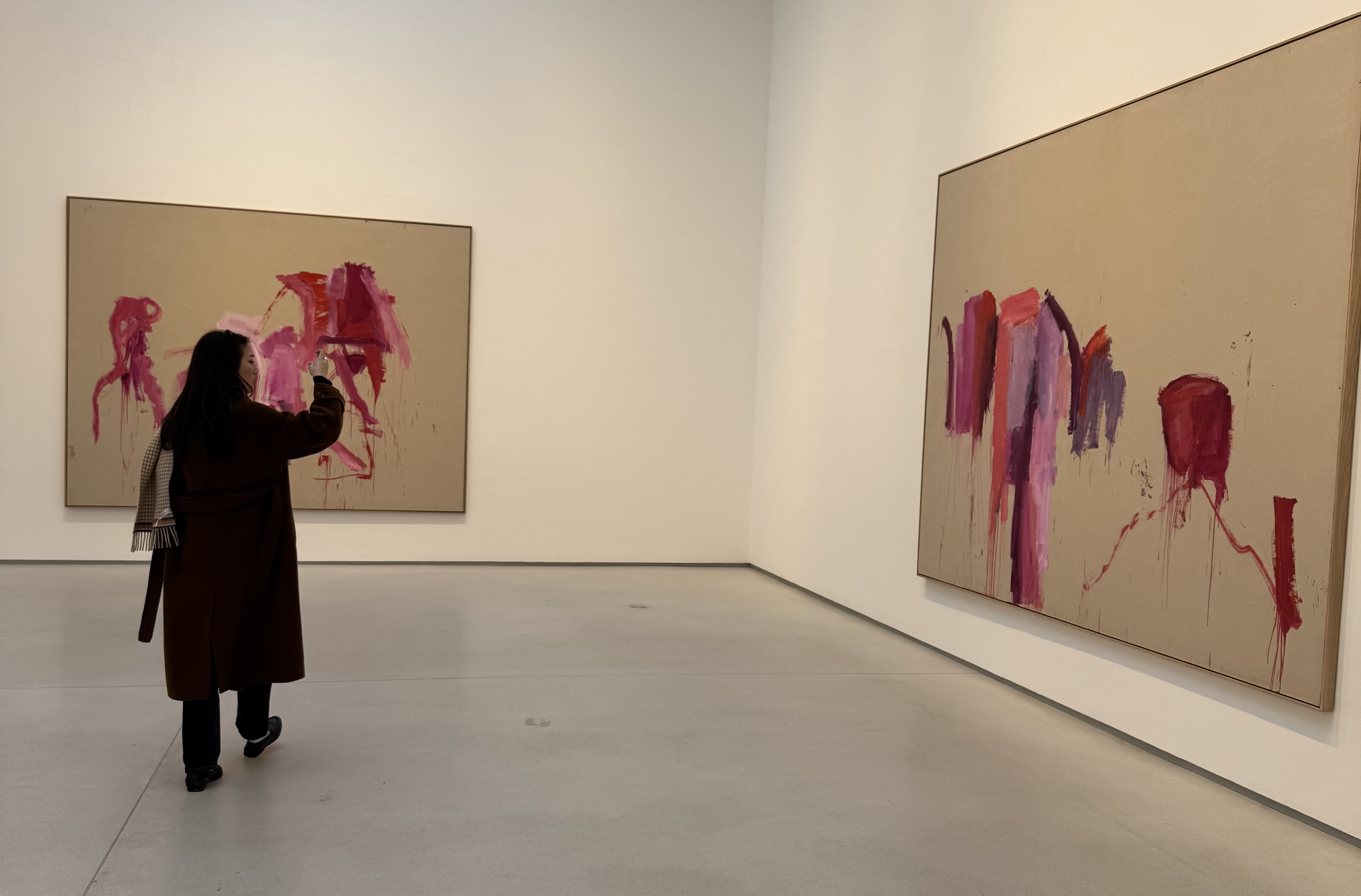
Geh nicht aus dem Zimmer, translated to "Don't leave the room" by Martha Jungwirth, is an exhibit nuzzled in the trendy neighborhood of Le Marais in Paris. The exhibition highlights Jungwirth's decades-long career and her growing recognition within the international contemporary art world. Born in Vienna in 1940, Jungwirth emerged in the 1960s, a time when the European and American Art scenes were overwhelmingly male-dominated. Although she was associated with important avant-garde moments early in her career, her work did not receive the same institutional support or visibility as many of her male contemporaries. Now, more than sixty years into her practice, she is finally entering what critics describe as a "canonical status".
I walked into the exhibit with a friend, and we immediately drifted apart as we entered our own worlds of art, reflection, and perception. When you first walk in, a huge piece hangs dead center in the room, and what struck me immediately was the choice of color. Long gestural brush strokes of pink, purple, and shades of red made me feel emotions of intimacy, femininity, and power. Rather than feeling random, the brushstrokes felt intentional and confident. It was a peek into Martha's brain, and felt truly tied to a part of her past.
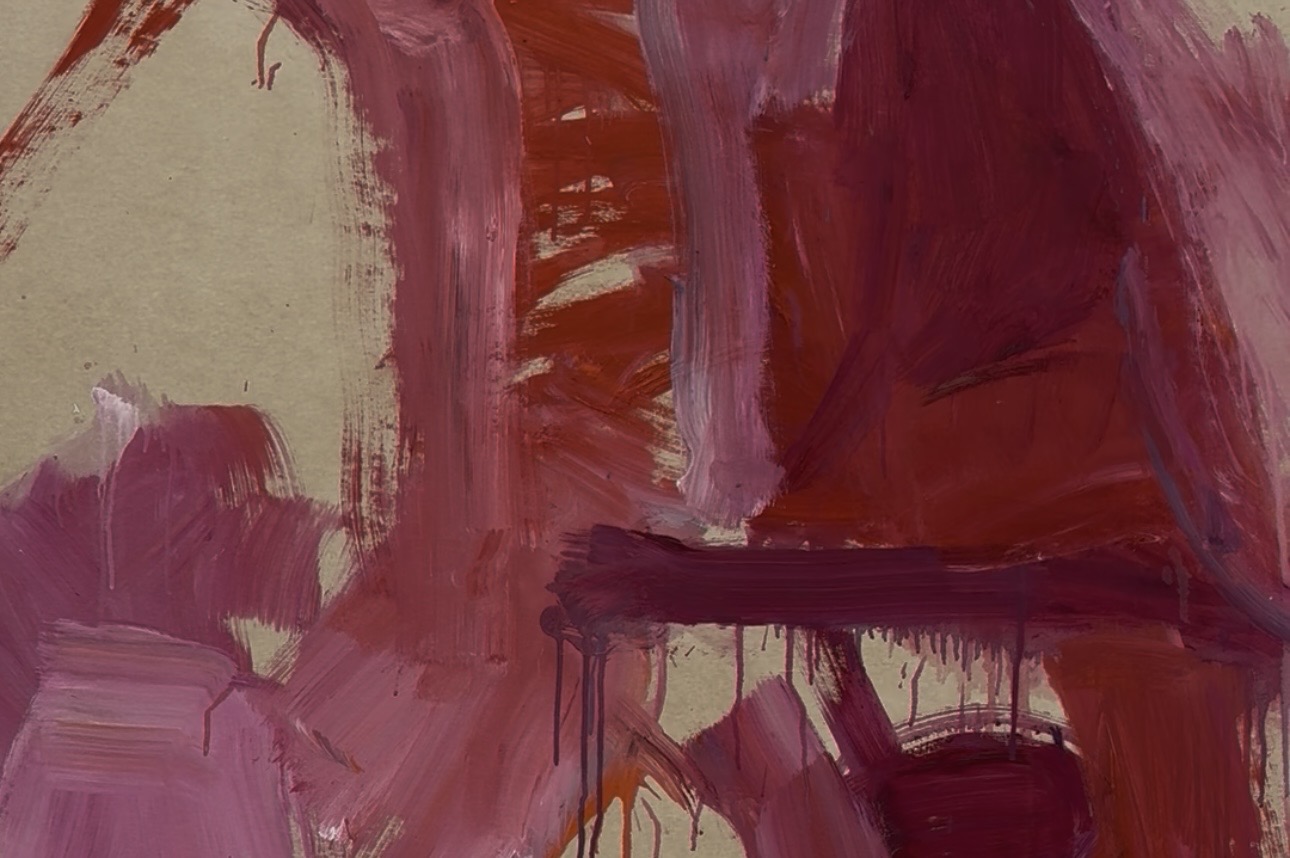
These bold, colorful brush strokes struck me as a metaphor for her life and career. For over six decades, her art has balanced the line of impulse and control, vulnerability and authority. I interviewed art curator Raina Chen, who noted, "She is coming into this canonical status, and for a women, it's revolutionary because the apex art group during the 1960s in the states was really male-dominated." That historical context reshaped how I experienced the exhibition. Seeing her work celebrated in a major Paris gallery felt powerful. Not only as an artistic achievement, but as a testament to resilience within a system that long sidelined women.
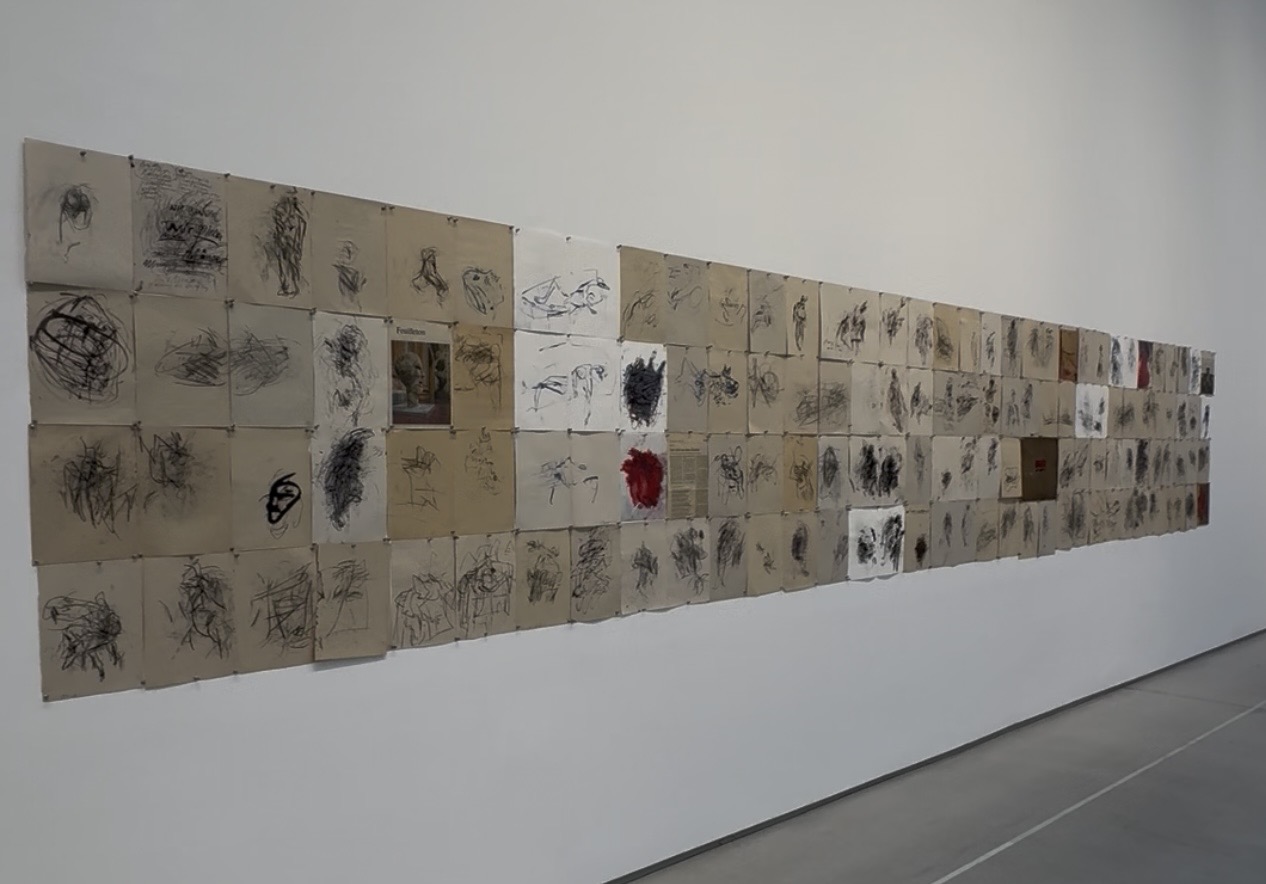
Another piece that stood out to me was a graph-like paper installation, consisting of harsh black-and-gray sketches that felt angry and chaotic. The sketches were paired with torn-out newspaper-like pieces that felt so personal and immersive, like walking into an unbound diary that traces her creative process. She sees her drawings and paintings as extensions of herself, where the colorful strokes of paint are propelled by her emotions and movements.
Overall, this visit changed the way I think about contemporary art. I used to believe contemporary work was overly abstract and difficult to access. However, this exhibit reveled how deeply emotional and autobiographical abstraction can be. Jungwirth's use of bold, traditionally "feminine" colors becomes an act of quiet defiance within a male-dominated art history. Her paintings are not just aesthetic experiences; they are assertions or presence.
For AUP students, this exhibition matters because it reflects themes of gender, power and cultural recognition, and the politics of visibility. As students studying in Paris, we are surrounded by artistic institutions that shape global narratives. Seeing a woman artist finally receive the recognition she deserves encourages us to question whose voices are amplified and whose are delayed. Jungwirth's work reminds us that persistence always pays off, even if it takes decades.