For $129.00 Buy Your New AI BFF!
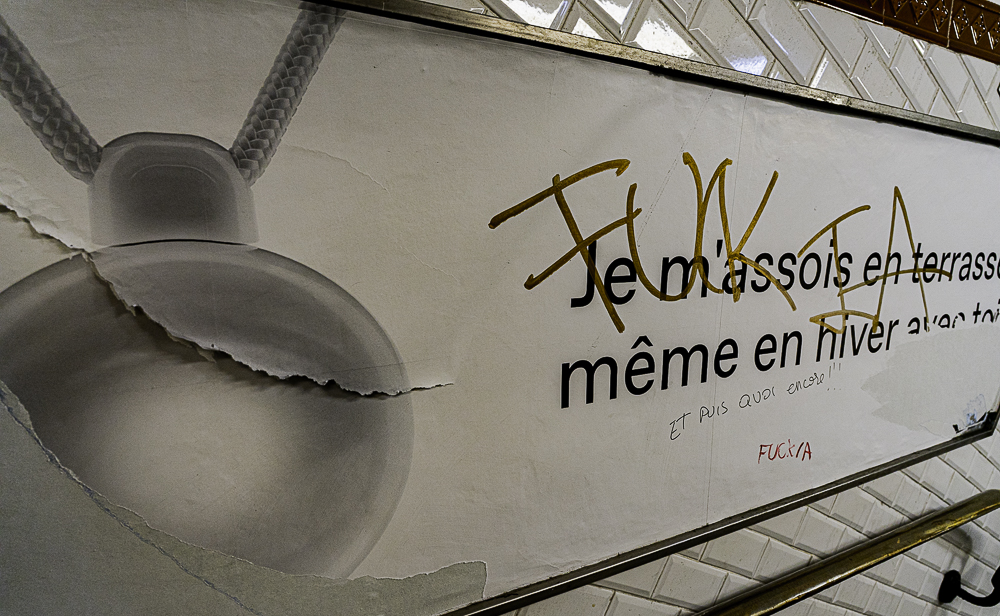
A new ad campaign is taking over the Paris metro. This is the same campaign that flooded the New York City subway system a few months ago. The ads are rather elusive, defining a Friend and showcasing a necklace. What is this? What is being sold? Why is the ad ripped to shreds or defaced beyond legibility?
This new advert gives no answers, only one website: Friend.com. Upon exploring the website, it becomes apparent that it hosts A.I. chatbots called Friends. The website defines its chatbots in the Q&A section as, "Friends are digital beings hosted by friend.com. You can chat with them anywhere - on your phone or laptop - and with their impressive memory, they will remember everything you say." This advert is actually for an artificial intelligence designed to take the place of flesh-and-bone human friends. This has inspired outrage among people across New York and Paris.
What is a friend?
The company is a startup founded by 22-year-old Harvard dropout Avi Schiff. Avi Schiff is no stranger to creating in online spaces, as he previously won the 2020 Webby Award for Person of the Year at 17 for his work on an online COVID data tracker. He created Friend.com and was the mastermind behind the massive ad campaign. The company, Friend, is a seed startup with big investors like the founders of Solana and Pace Capital. The first being a crypto and blockchain network, and the latter a venture capital firm. Friend is considered an A.I. wearable company, producing necklaces equipped with Bluetooth speakers and powered by processing from the Google Gemini 2.5 model. This necklace, priced at $129.00, will record and process what it hears from its surroundings. This feature is always active, "passively listening" while it is on. This new product has not only the eye of investors, but the eye of scrutiny.
Who is a Friend?
Schiff created this product as a type of social service. In his mind, the loneliness felt by the general public is an ongoing issue that needs to be addressed. Schiff has seen Friend as the new device that is here to help cure this endemic, like Ozempic. Schiff sees this loneliness problem as very similar to the ongoing health crisis that is currently going on through first-world countries, "It's like Ozempic, ideally, everyone would run around in circles and eat their vegetables, but that's not going to happen. Ozempic fixes the problem. Is it so morally reprehensible?" While this issue may seem to be easily handled in Schiff's eyes by his new technology, the moral question looms over the product. Many find the device's security and safety to be an issue.
Friend ad on Paris metro
A.I. Advert / Image Credit: Sydney Valenzuela
As stated on the Friend.com website, the device is constantly listening and processing with the Gemini 2.5 model. This has raised a few eyebrows about the security of the Gemini 2.5 model and its ability to become an always-present, impartial third party. A study run with multiple A.I. models (including ChatGPT, Claude, and previous Gemini versions), found that Gemini 2.5 was the most compliant when handling unsafe prompts and topics. The responses generated by Gemini 2.5 proved to handle topics such as stereotypes, hate speech, animal abuse, cruelty, and stalking worse than the previous models of Gemini. This concern for A.I.'s response is not the only worrying thing, as the information processing alone is a black box. In the Friend privacy disclosure, it states that Friend may record audio that may contain, "Personal information that is inappropriate, illegal, or unethical to collect." The privacy policy does later say it will "endeavor to filter inappropriate data out of its data collection."
Who needs a Friend?
In this day and age of miracle tech, Schiffman has sought out to replace human connection for a final collect price of 129 USD. It has sparked more than a simple controversy, igniting hundreds of vandals to respond. In the Parisian metro, it is hard to find an advert for Friend, or Friend.com, that isn't defaced or torn apart. The idea of an emotional support chatbot is not one that the community has taken lightly to. Here, amongst students, many already outsource outline creation and essay brainstorming to chatbots; it can feel like an encroachment. Local American University of Paris student, Alexa Lastiri, warns against the increase in A.I. in everyday life: "The small complexities of life are slowly being ironed out by exporting mental labor," she remarks, "it could lead to the atrophy of those cognitive muscles." This was a deliberate choice on the part of Schiffman, making this shock the advert. He told Fortune magazine he'd purchased the current ad campaign as a way to spark interest: "I purchased Zeitgeist, an international destination." This startup required 11 million USD, which is massive compared to the firm's total of 77 million USD raised by the firm. It begs the question of whether simply paying mind to A.I. is the same as letting it devour the minimal thought labor of our day-to-day lives. Schiffman finds it a small victory, but what does it spell for the future of A.I. in everyday interaction?"