Renovation or Mutilation? Student Reactions to the New AMEX Café
“Have you seen what they did to the AMEX?”
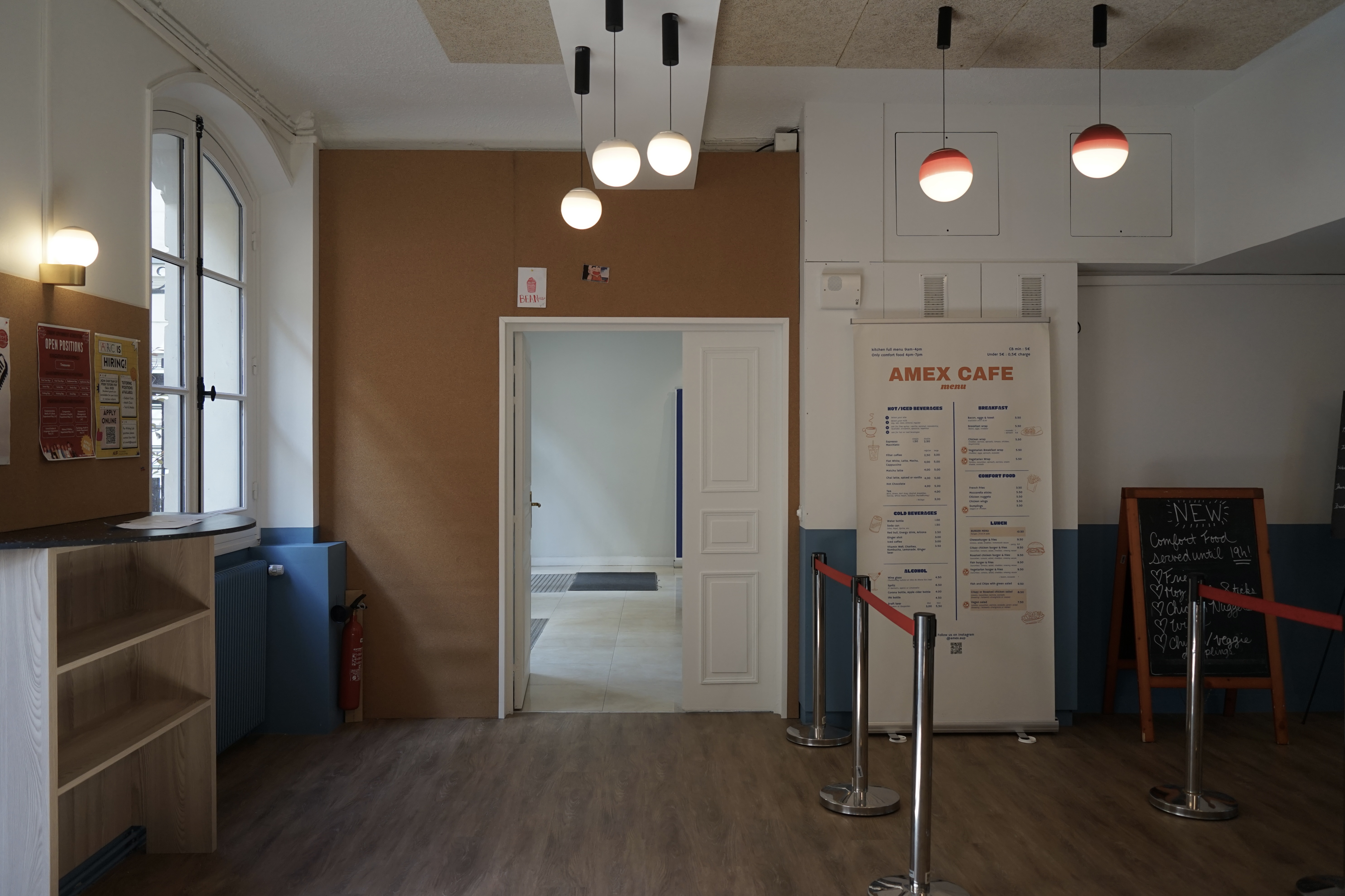
After the mandatory 'how was your summer?' and 'what courses are you taking?' This was the question most in need of an answer. I was startled by it the first time I was asked. I had not, in fact, 'seen what they had done,' and the eagerness with which it was asked, distinct from the almost Pavlovian energy of the typical beginning-of-the semester questions, was somewhat disconcerting. When I did eventually investigate the campus café, I understood the avidity.
This is not the first time the AMEX has been overhauled. Its familiar form, with the color-coordinated bookshelves and mismatched chairs, was the result of renovations in 2015 when the café moved to the current location from its original place in the now-defunct Bosquet building.
This year's changes have a less obvious function. David Horn, Director of Campus Planning and Facilities, claimed in an interview that the space needed to be modernized to “cater to students’ social needs,” promising vaguely that these changes will “strengthen the student experience.” The concern over student socialization is a sentiment echoed across official statements about the renovation. In an email to the student body last fall, President Stephens listed the goals for the changes to the ground floor of Combes: “(1) enhance opportunities for connections, (2) improve social spaces and (3) modernize spaces.” Likewise, Antonin Wateau, Chef at the AMEX, said in an article about the 'refresh,' “I really want to have students feel comfortable and to create a cozy environment for student events.”
The Kübler-Ross Model: Student Responses
If the AMEX renovation aimed to provide a more welcoming environment, it seems to have had the opposite effect on students. “They gentrified the AMEX,” senior Wesley Temple puts it strongly, “they wrecked the heart and soul of the place and ripped it out.” Where the 2015 café had been “cozy,” the new AMEX “feels like a psych ward cafeteria.” This appears to be a common belief; senior Grayson Denton described the new vibe succinctly as “hospital cafeteria.” Despite living just around the corner from the Combes building, Denton reported that he would rather go to the Marais to find a more pleasant café.
Most upset by this change may be the café's dedicated regulars. Sophomore Ren Strasnov, although a fan of the changes to the Quai lobby, is disdainful of the corporatized look of the AMEX, which he used to visit every weekday for multiple hours at a time. “It felt more like home than the apartment that I was staying in,” he reminisces, “I just never had any reason to leave because I liked the atmosphere, I liked my friends, I liked the community that it had built.”
For Strasnov, the renovated space is not just bland or sterilized, it's anti-social; “The AMEX before was imperfect in a very human way. It is now imperfect in a very robotic way. And it doesn't feel like it was made for people. It feels like it was made for robot waiters in, like, a dystopian film.”
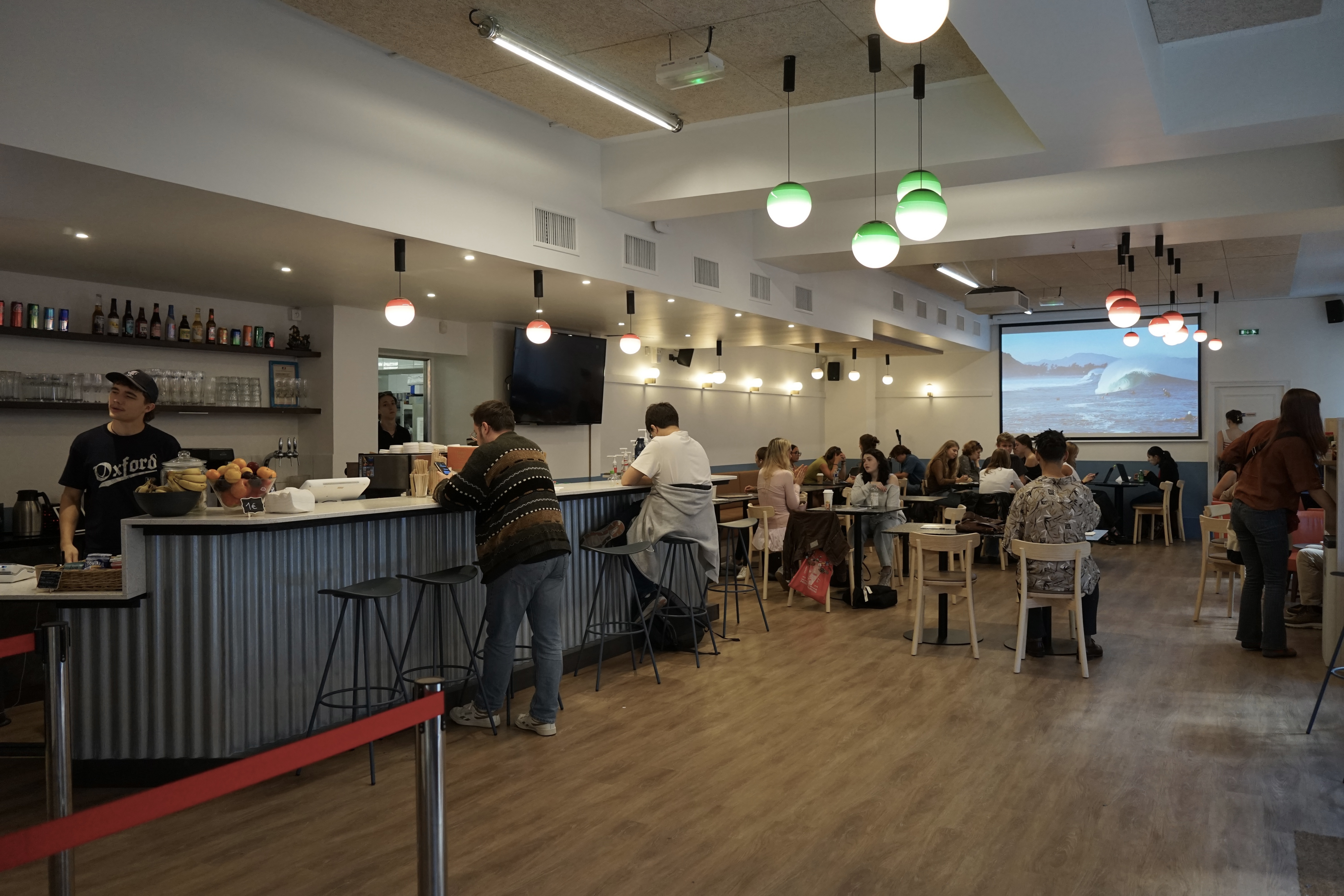
This rejection does not appear to be just fueled by nostalgia, either, as reactions from new students indicate a similar disappointment. Wesley Stephens, a café aficionado who started his master's this fall, was put off by the utilitarian set-up. “I went in there to drink a coffee once, but there was no space, so I left.” I asked if he planned to go back, “Not if I can help it.”
Stephens declared, “I would much rather be in a Parisian café than the AMEX Café. If I were given the choice between the two, there would be no hesitation that I would go to any of my normal favorite cafés.” Enumerating the differences between the AMEX and its local counterparts, he explained, “Where a Parisian café is very, like intimate, sort of close, sort of dim, sort of welcoming. I would describe the AMEX Café and all the opposite ways… very, very bright, very clinical, very medical almost. Like a hospital.”
Likewise, Hedi Zghal, an undergraduate freshman, gave his first impression of the AMEX in a single word: “Soulless.” Where the AMEX became a second home to Strasnov during his freshman year, it is a source of disappointment for Zghal, who was essentially catfished by how the renovation “changed it a lot [from] the pictures [online].”
Rehabilitating the Renovation: Is There Hope?
When asking students, “Have you seen what they did to the AMEX?” the only response that was not wholly negative came from the inside.
Artem Atamanov, a senior and barista/barman at the AMEX, has adopted a pragmatic stance on the redesign. “I think it is [an] improvement in identity and a big, big, big step back in life, presence of life,” explains Atamanov. His memories of the former café are less rose-colored, especially regarding its confused eclecticism, “I just felt that it was all over the place… It tried to be cozy, but everything that I saw was just like, you know, broken and just old. It was just not working together.”
Some detractors, despite their disapproval of the new look, acknowledge similar issues with the old furniture, even if they look back on it with fondness. Strasnov was sentimental for “the destroyed, beaten down, horrific, gross couch that they had.” Temple likewise conceded that the old AMEX “was crowded, and the chairs were old and falling apart, but it had, it had soul, it had character.”
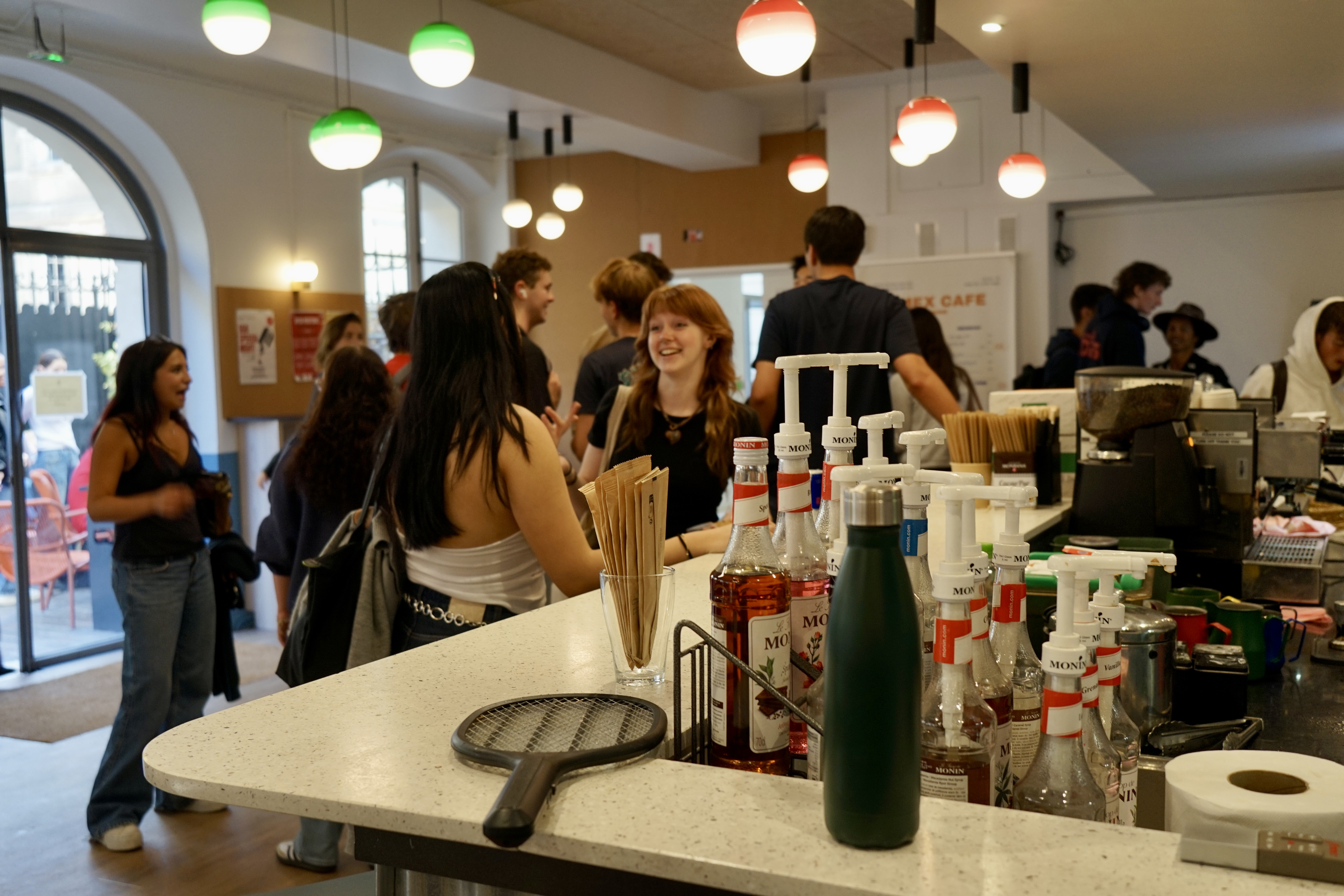
More than any tangible change, any absent bookshelf or missing mural, 'soul,' what Atamnov refers to as “presence of life,” seems to be the AMEX's greatest loss. The café was less renovated than deaminated. It operates now like a zombie, still working, toiling, but the heart has stopped beating. Atamanov finds the pronouncement of 'soullessness' less fatal. “The thing is,” he clarifies, “presence of life is fixable.”
His secret to revival? Student involvement. To him, the AMEX is not a still-moving corpse, but a blank canvas. Optimistic, Atamanov stipulates that if the AMEX is going to flourish, the administration needs the help of students to recover the café's displaced 'soul': “Only in that case, [the] AMEX would actually become way better than it used to be. Because of right now, it's way worse. But yeah, I firmly believe that it has a chance to become a better space.”