
Are Gen Eds Worth It?
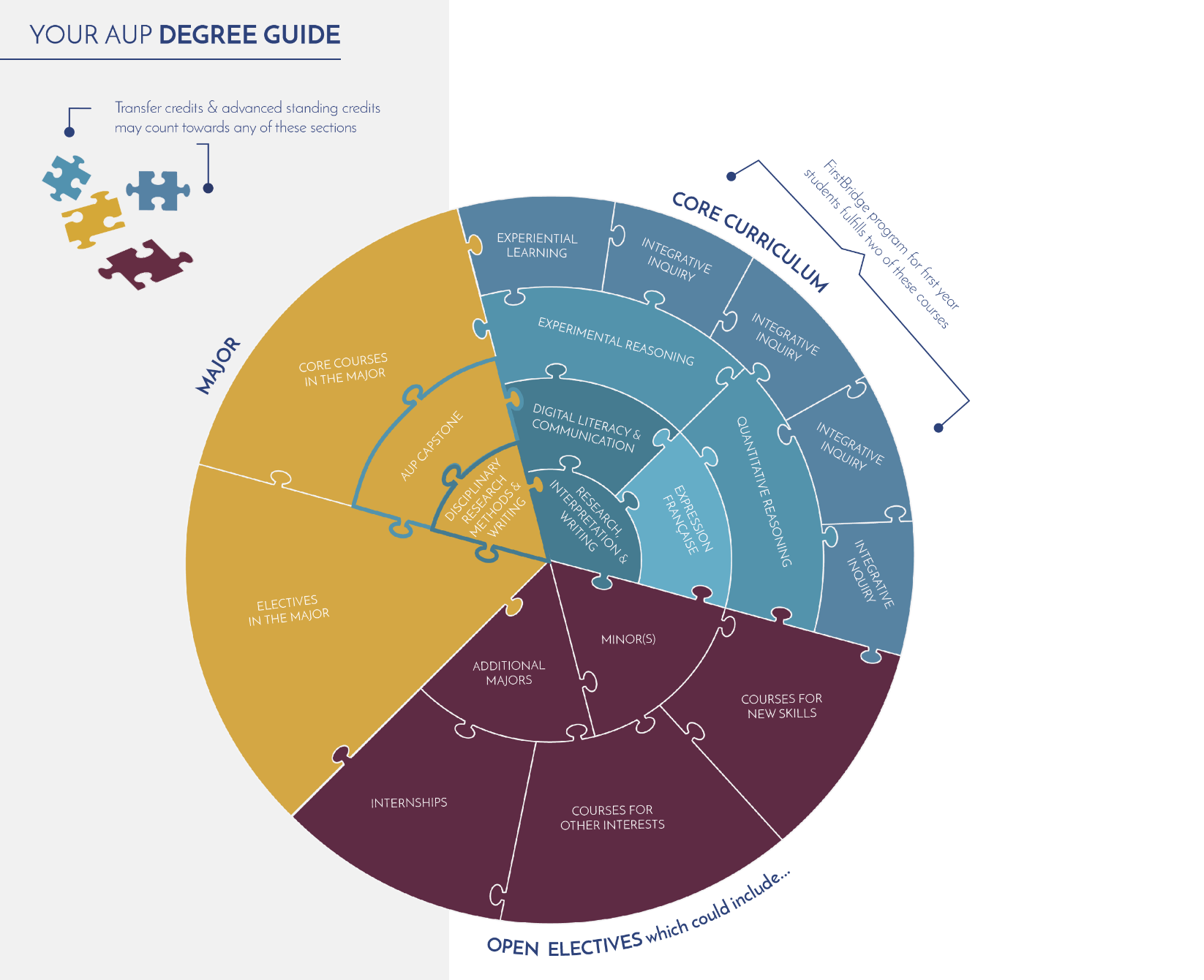
The concept of a liberal arts education comes from the Latin term artes liberales, referring to “the knowledge worthy of a free person," according to the University of Warwick. The idea behind this educational model is to provide students with a broad, well-rounded foundation, ensuring that no matter their field of study, they gain the intellectual flexibility that can only come from diverse learning experiences.
At AUP, this philosophy is embedded in the Global Liberal Arts Core Curriculum (GLACC). According to AUP, GLACC aims to “inspire students to consider global challenges and embrace solutions informed by the spectrum of human knowledge across the humanities, arts, social sciences, and natural sciences.” But how do AUP Professors and students feel about these general education requirements? Are they essential in shaping critical thinkers, or do they have the possibility to distract from their primary academic endeavors?
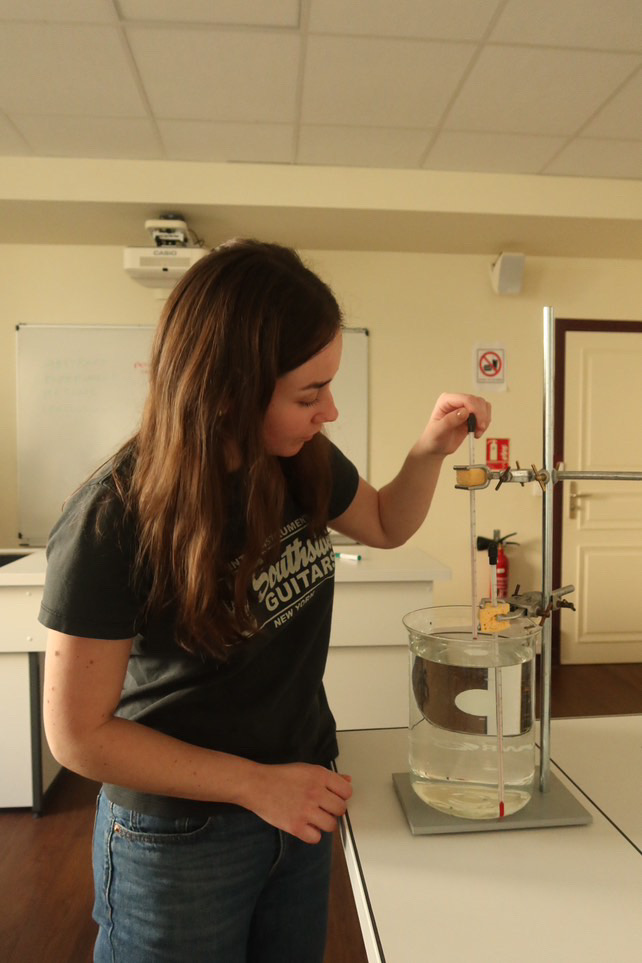
GLACC requires all undergraduate students to take a plethora of classes, including what is referred to as an “Experimental Reasoning Course” that includes a lab period as well.
As a science professor at AUP, Claudio Piani teaches several of these experimental reasoning courses, which include a practical lab component. Piani, who has been at AUP since 2012, believes these courses are integral to developing the broader skills that the liberal arts model emphasizes.
He says, "This is a liberal arts university, and we aim to give students a liberal arts mindset. To bear different modes of thinking, problem solving, etc."
According to the Association of American Colleges and Universities (AAC&U), 93% of employers consider the ability to solve complex problems as very or somewhat important for college graduates, yet only 39% believe recent graduates are very well prepared in that skill area.
Piani acknowledges, “You have all sorts of students in the class.” He continues, “What’s important is that you find ways to make the subject appeal to students who might not be as interested.”
Astronomy student, Isabelle Turpin, aged 20, enjoys astronomy for this very reason, because "Professor Pianai is an engaging Professor."
Moreover, completing the GLACC requirements also means students must take an English course, depending on placement and their prior coursework in high school.
When asked his opinion on such courses, Writing and Criticism Professor Adrian Harding says, “I think the intro-level English classes, College Writing (EN1010) and Writing and Criticism (EN2020), are essential in an international Anglophone university like AUP. They provide a space for students to develop across a whole spectrum of their intellectual capacity, from the basic mechanics of self-expression in English to the furthest reaches of critical thinking in the humanities.”
Indeed, it is through these "mechanics of self-expression" that students are able to transition from graduation into careers. The cover letter, in particular, serves as a prime example of the importance of strong writing skills, which classes like English help develop.
In fact, a 2023 survey of 625 U.S hiring managers by Resume Genius, said, "83% of hiring managers said they frequently or always read the cover letters they received," while, "nearly half said they read an applicants cover letter before they read their resume," showing the importance of a strong foundation in writing.
Yet for some students, core curriculum requirements add pressure to an already intense workload. Emily Nestler, a fourth-year AUP student majoring in Global Communications with double minors in Fashion and Film Studies, shares her perspective: “Every student is different, so I think it’s hard to say that general education requirements are beneficial to all students,” she says. “When you have a clear idea of what you want to pursue after graduation and a busy schedule, sometimes these requirements can feel more like a hindrance than a help.”
Turpin also seconds her point that, "it can be frustrating taking classes that are not related to your major or that are not your strong suit because they have the potential to hurt your GPA."
However, according to AUP President Sonya Stephens, a liberal arts education isn’t just about coursework—it’s also about immersion: “An American liberal arts education is so special,” she says. But at AUP, she believes it goes even further. “I like to call it 'liberal arts plus.’”
The “plus,” she explains, comes from the role Paris plays as an extension of the classroom. “Paris is indeed a classroom in itself,” Stephens says, emphasizing how studying abroad shapes students. “It changes who you are, how you think. It brings new perspectives and redefines the way you approach learning.”
At the heart of AUP is the idea of learning beyond the classroom, with Paris offering more than just a scenic backdrop. “It’s not just about the glamorous and glitzy Paris,” Stephens says. “It’s about engaging with global and social issues around us—the world we all hold in common.”
While the demands of the GLACC curriculum may be challenging for some, the broader goal is to prepare students to become more adaptable, critical thinkers who can navigate the complexities of the global world. By offering a holistic education, AUP aims to equip students not just with academic knowledge but with the tools to thrive in an ever-changing world.


